
 By
By 
In an era defined by aggressive global tightening, synchronized growth slowdowns, and heightened geopolitical friction, Pretoria is rewriting its fiscal narrative. Emerging from a decade of sub-investment grade downgrades and energy crises, South Africa is showing signs of structural resilience that are catching international rating agencies by surprise.
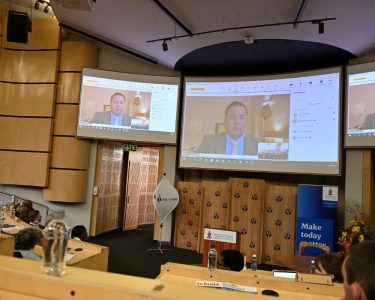
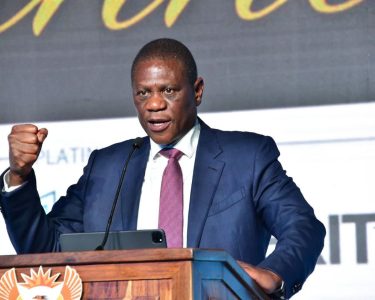
At the Citi Emerging Markets Macro and Credit Conference in Johannesburg today, National Treasury Director-General Dr. Duncan Pieterse laid out an assertive defense of South Africa’s medium-term economic trajectory. Coming just months after the landmark February 2026 Budget—which marked the first stabilization of the national debt-to-GDP ratio since before the 2008 global financial crisis— the briefing offered a deep-dive analysis of how the nation intends to defend its hard-won fiscal credibility against a highly volatile global landscape.
The Geopolitical Litmus Test: Fiscally Neutral Interventions
The timing of South Africa’s fiscal turnaround has coincided with severe exogenous shocks. Just three days after the Minister of Finance tabled the 2026 Budget, a major conflict erupted in the Middle East, sparking an immediate energy supply and price shock. For an economy historically sensitive to global oil spikes, such a headwind threatened to derail the state’s fiscal consolidation plans.
However, the Treasury’s response highlights an evolution in institutional discipline. To shield consumers and logistics chains, the Minister of Finance instituted a three-month fuel levy relief program running from April to June 2026, at an estimated cost of R17.2 billion.
Crucially, Dr. Pieterse confirmed that this intervention is entirely funded by the fiscal outperformance of the previous fiscal year, rendering it fully fiscally neutral. This matches the precedent set during the 2022 supply shock following Russia’s invasion of Ukraine, demonstrating that tactical relief will no longer be funded through expanded deficits or fresh borrowing. The Treasury has firmly mandated that any further relief measures across state structures must be absorbed within existing departmental budgets.
Global Outlier: South Africa stands as the only G20 nation currently carrying a Positive outlook from Moody’s, and is one of only two G20 nations with a Positive outlook from S&P Global—a stark contrast to an overwhelmingly negative global sovereign credit trend.
Deconstructing the Fiscal Anchors and Revenue Upside
The structural transformation of South Africa’s balance sheet rests on two clear pillars: stabilizing and reducing the debt-to-GDP ratio, and expanding the primary surplus. The fiscal outcomes recorded this March outpaced expectations, delivering a third consecutive primary surplus at 1.1% of GDP, beating the initial budget estimate of 0.9%. The main budget deficit dropped to 4.3% (lower than the projected 4.6%) and is on a downward trajectory to hit 3.1% by 2029.
| Fiscal Indicator | Previous Trend | Current Status (2025/26) | Medium-Term Target (2028/29) |
| Primary Balance (% of GDP) | 0.5% (Three years ago) | 1.1% Surplus (Actual) | Projected Growth |
| Main Budget Deficit | 4.6% (Feb Estimate) | 4.3% (Actual) | 3.1% by 2029 |
| Debt-to-GDP Ratio | Persistent Expansion | Stabilized / Peaked | 76.5% |
| Public Sector Wage Bill | Unanchored / Volatile | 32.1% of Spending | De-risked via agreement to 2028 |
To cement these gains, the National Treasury announced plans to formalize these de facto objectives into a binding, statutory formal fiscal rule during the upcoming Medium Term Budget Policy Statement (MTBPS) this October.
This mechanism is designed to structurally lock in recent consolidation, reduce the country’s risk premium, and guarantee policy continuity through political and economic cycles. Early data from the current fiscal year suggests that revenue mobilization remains robust.
In April— the first month of the new cycle—tax revenues exceeded forecasts by R5.9 billion, a 10.1% year-on year increase. This outperformance is further bolstered by highly conservative commodity price assumptions (specifically within Platinum Group Metals) and ongoing revenue collection efficiencies that provide an unquantified cushion to the medium-term outlook.
Insulating Expenditure from Inflation
On the expenditure side, the Treasury has successfully insulated the fiscus from sticky inflationary pressures. The public sector wage bill, which historically consumed a disproportionate share of revenues, represents 32.1% of consolidated spending over the medium term. This massive item has been heavily de-risked via a comprehensive public-sector wage agreement that remains legally binding until 2027/2028.
Concurrently, social grant expenditure is anticipated to contract by roughly R2 billion due to digitized, enhanced beneficiary verification processes. While annual adjustments to grants remain indexed to inflation, any incremental upward deviations will be absorbed through the targeted reallocation of existing funds.
To manage unexpected operational contingencies, a lean R5 billion reserve has beenset aside for the year, supported by the ongoing “Targeted and Responsible Savings” initiative, which systematically rationalizes or winds down underperforming or low-priority state programs.
A Fundamental Shift in Debt Dynamics
Perhaps the most compelling argument for international fixed-income investors is the structural compression of South Africa’s debt yields. Domestic sovereign bond yield curves shifted downward by an average of 240 basis points across all maturities between the 2025 and 2026 Budgets.
On the external front, five-year Eurobond spreads narrowed remarkably from 170 basis points on the eve of the Middle East conflict down to 106 basis points. The risk profile of the state’s debt portfolio has been optimized through an intentional reliance on domestic-denominated issuance, shielding the fiscus from global currency volatility.
Furthermore, while the average term to maturity has been reduced to a tactical 11.7 years, it remains exceptionally long by emerging market standards, ensuring that the pass-through from current high global interest rates remains strictly limited.
The SOE Turning Point: Eskom and Transnet Balance Sheets
For over a decade, State-Owned Enterprises (SOEs) represented the single largest threat to South African fiscal stability via contingent liabilities. Today’s brief indicates that this trend has reached an inflection point.
Eskom: The state power utility is on track to post its second consecutive year of full-year profitability, recording a net profit of R16 billion in 2025 and a stellar R24.3 billion in the first half of 2026. This financial rehabilitation—supported by stricter operational conditionality on state debt relief and higher tariffs—has coincided with South Africa celebrating more than 365 consecutive days without electricity supply interruptions (load-shedding).
With the final major tranches of debt relief concluded in the previous fiscal year, Treasury envisions no further state injections will be required. The operational focus has officially shifted from basic survival to major market liberalization, including the establishment of an independent transmission system operator and the recent approval of license conditions for a wholesale electricity market operator by the regulator, NERSA.
Transnet: While the state logistics and port operator remains net loss-making, its losses have narrowed substantially amid rising freight volumes. Transnet’s debt burden (R156.7 billion) is less than half of Eskom’s (R362.7 billion), and its liquidity needs are fully covered by a comprehensive five-year guarantee program.
Treasury emphasized that no direct equity injections will be made. Mirroring the strategy deployed at Eskom, the state is actively transitioning Transnet from operational stabilization to aggressive structural reform, unbundling the Transnet National Ports Authority and selecting eleven private train operating companies to run across 41 routes on six major freight corridors.
Macroeconomic Rebound and Infrastructure Modernization
The fiscal consolidation effort is backed by an acceleration in real economic activity. GDP growth reached 1.1% in 2025—doubling the growth rate of 2024—driven by sharp expansions in the second half of the year. The Treasury maintains a medium-term growth target of 2.0% by 2028, built upon private sector energy generation and improved logistics.
Real asset formation is also rebounding, with fixed investment data recording two consecutive quarters of expansion in late 2025. Crucially, the budget shows a pivot from consumption spending toward growth-enhancing capital expenditure. Infrastructure investment, upgrades, and refurbishments represent the fastest-growing component of state expenditure, growing at nearly 10% annually over the medium term—vastly outstripping the 3.9% growth rate of overall consolidated spending.
Key Capital Allocations and Innovative Financing Instruments: Commuter Rail Resurgence: The Passenger Rail Agency of South Africa (Prasa) is receiving a R23.1 billion investment in network-wide signalling systems, R7.4 billion for operational line expansions, and R5.7 billion to scale up its rolling stock fleet.
Budget Facility for Infrastructure (BFI): Re-engineered to feature four annual bidding windows, the BFI has cleared R104 billion in total projects. This includes a current R11.2 billion allocation to Transnet to rehabilitate critical iron ore and coal corridors, structured specifically to catalyse an additional R18 billion in private co-investment.
Sovereign Infrastructure Bonds: Following a successful debut issuance in December 2025 that raised R11.8 billion, the Treasury is institutionalizing infrastructure bonds as a permanent component of its national funding strategy.
World Bank Credit Guarantees: A new credit guarantee vehicle launched in partnership with the World Bank will operationalize this year, allowing the state to de-risk private capital in massive mega-projects (such as electricity transmission grids) without expanding state-backed contingent liabilities.