
 By
By 
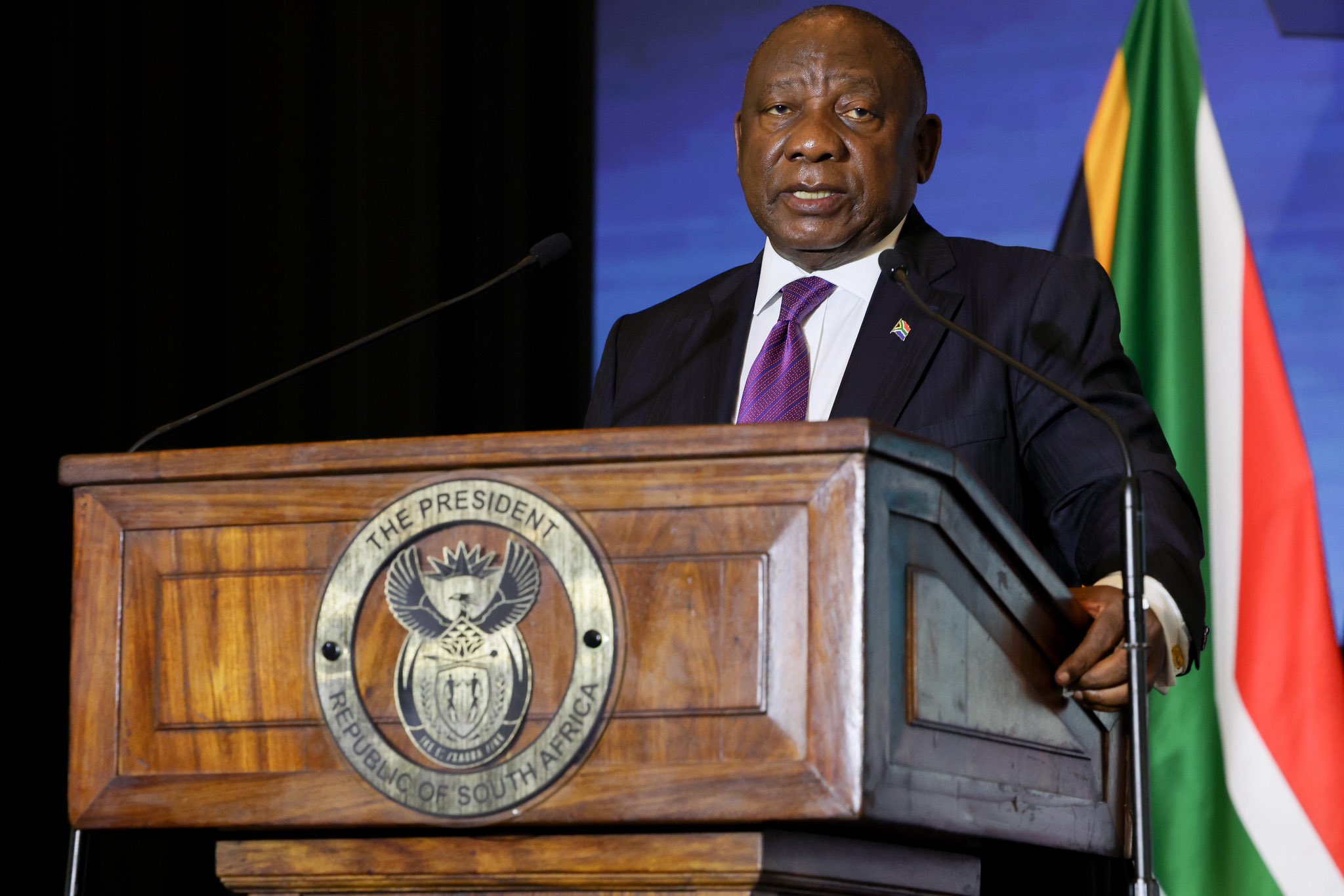
JOHANNESBURG — In a decisive bid to halt a rapidly expanding health crisis, South African President Cyril Ramaphosa has announced a U$5 million contribution to the Africa Centres for Disease Control and Prevention (Africa CDC) to support the continental response to the Bundibugyo Ebola outbreak.
Speaking in his capacity as the African Union Champion on Pandemic Prevention, Preparedness and Response, Ramaphosa addressed a High-Level Meeting of African Ministers of Health, delivering a stark warning about the regional risks while fiercely advocating for African-led solutions.
The outbreak, which is primarily affecting the Democratic Republic of the Congo (DRC) and Uganda, has already claimed more than 200 lives. According to Africa CDC, it now ranks as the second-largest Ebola outbreak since the devastating West Africa epidemic in 2014.
A Continent Under Fire
The geometric progression of the virus is being fueled by a complex web of local vulnerabilities. Ramaphosa noted that transmission is unfolding across borders characterized by intense population movement, political insecurity, humanitarian pressures, and highly active trade corridors. These compounded factors have severely complicated rapid containment efforts, making a coordinated regional response a matter of extreme urgency.
“Africa is once again being tested by a dangerous Ebola outbreak,” Ramaphosa stated. “At a moment of uncertainty, [affected] countries chose cooperation over isolation and unity over fragmentation. This is the Africa we must continue to build”.
The political breakthrough for this unified front occurred at a prior High-Level Ministerial Meeting in Kampala, where the governments of the DRC, Uganda, and South Sudan committed to a shared continental strategy.
Financing and the Race for a Vaccine
A central pillar of the strategy is a massive $319 million continental preparedness and response plan scheduled to run from June to November 2026. The plan aims to simultaneously control active outbreaks and bolster the defenses of at least ten neighboring, high-risk Member States.
Significantly, African nations have already committed to funding approximately ten percent of the required budget through domestic contributions. Ramaphosa hailed this as a paradigm shift in how the continent handles internal crises. “This demonstrates ownership and responsibility,” he remarked. “Africa is no longer waiting passively for others to act”.
CONTINENTAL RESPONSE PLAN AT A GLANCE--------------------------------------------------Total Budget Required: $319 Million (June - Nov 2026)Domestic Contribution: ~10% from African NationsSA Initial Pledge: U$5 MillionTarget Areas: Outbreak control & 10 high-risk statesThe medical challenge, however, remains steep. At the onset of the outbreak, there were no pre-existing therapeutics or vaccines specifically tailored for the Bundibugyo strain. To bridge this gap, Africa CDC and the World Health Organization (WHO) are utilizing an interim medical countermeasures network. Organizations including GAVI, CEPI, and UNITAID are currently fast-tracking clinical trials for promising vaccine and therapeutic candidates.
Ramaphosa used the platform to issue a sharp call to global manufacturers to accelerate research and expand genomic surveillance, emphasizing that Africa cannot effectively fight deadly epidemics without equitable access to diagnostics and treatments.
Mobilizing Capital and Frontline Support
Beyond state actions, the response is seeing an unprecedented mobilization of African private capital. High-profile corporate leaders—including Aliko Dangote, Professor Benedict Oramah, Dr. George Elombi, and Simon Tiemtoré—have stepped forward to back the continental plan. Ramaphosa noted that their involvement signals a vital paradigm shift: the acknowledgment that health security is inherently tied to economic and continental security.
Simultaneously, the President strongly advocated for the protection of frontline healthcare workers, who have endured a exhausting succession of public health crises. He demanded that governments ensure their lives and livelihoods are secured through:
- Ample supplies of high-quality personal protective equipment (PPE).
- Accelerated deployment of additional staff to allow for essential rest and recuperation.
- Provision of necessary tools of trade to maintain high-quality care without exploiting worker stamina.
A Warning to the International Community
While asserting African capability, Ramaphosa made it clear that the international community cannot afford to look away, warning that global health is interdependent.
“The world is safer when Africa is safer,” he cautioned, adding that delayed international support today would inevitably result in much higher human, social, and economic costs tomorrow. He stressed that pandemic preparedness cannot simply begin when an active crisis is already expanding; it requires continuous, systemic investment in local medical manufacturing, emergency operations centers, and sustainable domestic financing.
With Africa CDC and the WHO leading a joint incident management team on the ground, the diplomatic message from Pretoria is clear: Africa possesses the institutional leadership to manage the crisis, but total victory requires speed, trust, and unyielding solidarity.