
 By
By CAPE TOWN — Africa’s emerging green hydrogen economy has officially shifted out of the realm of theoretical planning and into hard infrastructure, committed equity, and execution.
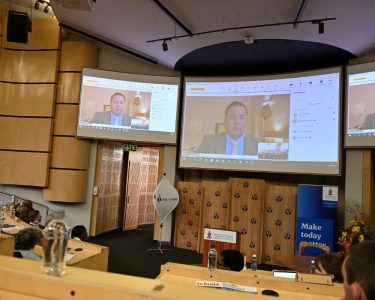
Addressing the African Green Hydrogen Summit in Cape Town via a virtual address delivered on his behalf by Minister of Electricity and Energy Dr Kgosientsho Ramokgopa, President Cyril Ramaphosa declared that the continent is charting a transformative industrial future on its own terms.

Highlighting outcomes from the recent 18th BRICS Summit in New Delhi, the President emphasized that energy security and zero- and low-emissions hydrogen are central pillars for social and economic development.
With fewer than four years remaining until the 2030 deadline for the United Sustainable Development Goals—specifically SDG 7 regarding affordable, reliable energy for all—the pressure to deliver is acute. “Progress is not measured by presentations, announcements or the value of a pipeline,” Ramaphosa told delegates. “It is measured by capital committed, equipment ordered, construction under way, production achieved and customers secured.”
The First Wave: Breaking Ground on Bankability
To bridge the gap between concept and delivery, South Africa has instituted a rigorous national assessment process to standardize bankability and build investor confidence. This has yielded a managed priority portfolio divided into distinct project waves.
The standout anchor for the inaugural wave is Phelan Green Group’s electro-Sustainable Aviation Fuel (e-SAF) project in Saldanha Bay. Having officially reached a final investment decision (FID), Phelan has locked in $100 million in equity alongside a secured commercial off-take agreement. Construction is slated to break ground in the first quarter of 2027, with the first commercial exports expected by early 2029.
Industry experts note that securing long-term demand remains the primary bottleneck for clean hydrogen globally. By clearing this hurdle, the Saldanha Bay project sets a vital commercial benchmark for the continent.
Value Chain Depth and Regional Integration
Alongside the Phelan initiative, five other strategic ventures comprise the initial wave, reflecting a deep industrial value chain spanning regional and domestic markets:
- Coega Green Ammonia Project (Eastern Cape): Completed early preparatory work, advancing toward commercial, technical, and financial closure.
- Saldanha Hydrogen Direct Reduced Iron Project (West Coast): Positioned at the pre-feasibility stage to integrate green hydrogen into lower-emissions iron and steel manufacturing.
- Prieska Power Reserve (Northern Cape): Focused on green ammonia for domestic consumption, currently in active development.
- Green e-Fuels Producers Green Methanol Corridor: Targeting European export demand from a pre-feasibility platform.
- Green Hydrogen Solutions Project: A localized, smaller-scale undertaking directed at South African demand that has cleared front-end engineering design (FEED).
Government and developmental partners will direct focused coordination, investment mobilization, and streamlined project preparation to shepherd these remaining developments toward construction. A secondary wave of projects is already slated to follow.
Beyond a Source of Molecules
A recurring theme of the summit was continental sovereignty over the industrial value chain. Leadership stressed that Africa must not be relegated to a mere exporter of raw electrons, green molecules, or critical minerals. Instead, the sector must anchor broader industrialization—driving local manufacturing of fertilizers, green steel, sustainable fuels, and specialized equipment.
The African Continental Free Trade Area (AfCFTA) is expected to act as a vital catalyst, opening expanded regional markets and fostering integrated supply chains. Furthermore, policymakers issued a direct call for technology partners to establish local research, manufacturing, and training footprints within Africa rather than treating the continent solely as an equipment destination.
As global markets shift amid intense economic competition, Africa’s decisive transition from conceptual blueprints to capital-backed deployment signals a fundamental rewiring of the Global South’s energy architecture.