
 By
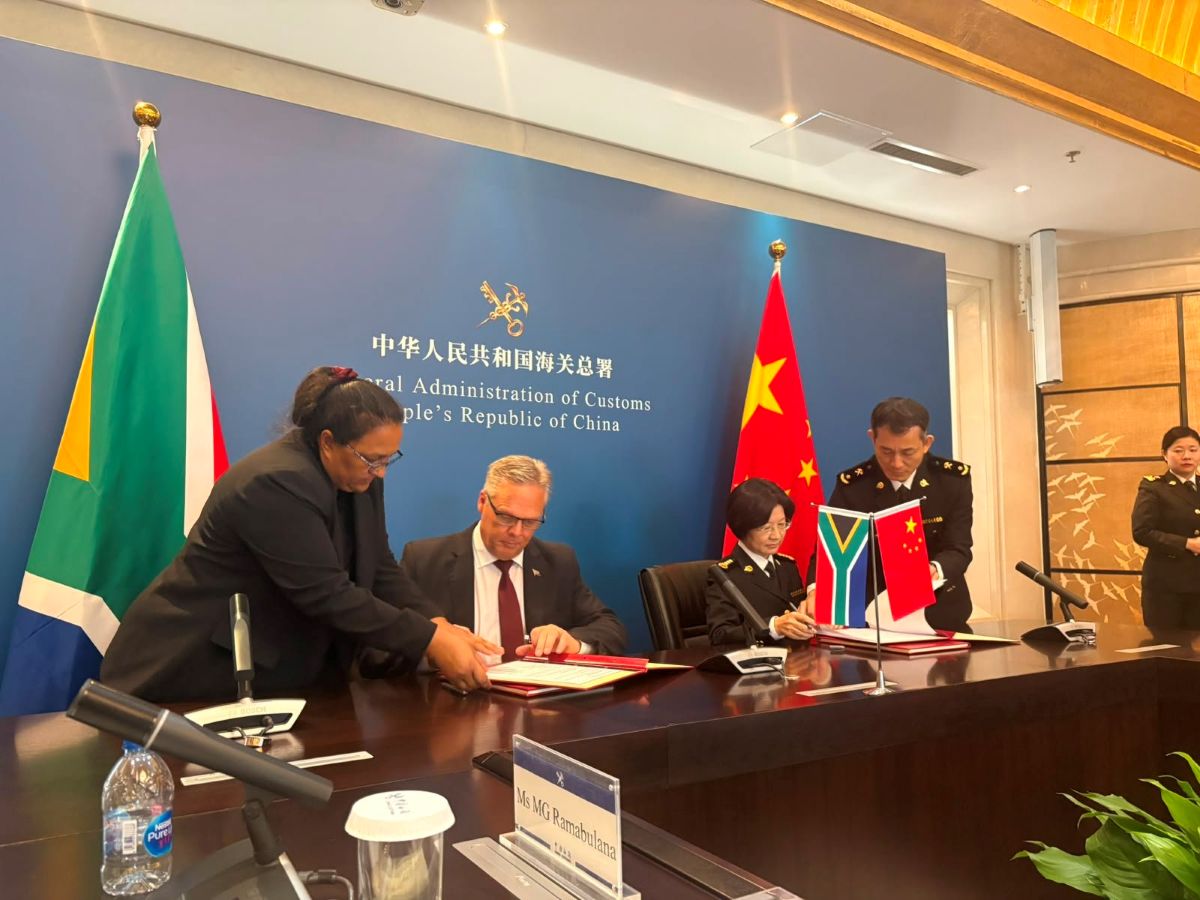
By BEIJING — In a major breakthrough for South Africa’s export-led agricultural strategy, Minister of Agriculture Willie Aucamp has signed a landmark bilateral agreement opening the massive Chinese consumer market to South African cherry producers for the first time.

The protocol on sanitary and phytosanitary (SPS) requirements was officially executed alongside Minister Sun Meijun of the General Administration of Customs of the People’s Republic of China (GACC) on Tuesday during the 9th SPS Ministerial Meeting in Beijing.
The agreement marks a historical milestone in trade relations between Pretoria and Beijing, representing the first time two distinct agricultural market access protocols have been finalized between South Africa and China within a single calendar year.
“This achievement is record-breaking,” Minister Aucamp stated following the signing ceremony. “We truly appreciate China’s efforts to speed up our market access requests for South African agriculture products.”
Tapping into a $3.3 Billion Global Import Market
The trade deal positions South African producers to tap directly into the world’s largest import market for fresh cherries. China’s demand for the high-value stone fruit has surged dramatically in recent years, with total cherry imports reaching approximately 586,900 metric tons in 2025. The market was valued at an estimated US$3.3 billion (R52.8 billion).
A critical driver of value for local producers under the protocol is the alignment with the Framework Agreement on Economic Partnership for Shared Development, which grants South African agricultural commodities zero-percent tariff access to Chinese markets. Tariff-free entry gives local growers a strong competitive advantage in the Asia-Pacific region, enabling them to capitalize on premium seasonal pricing windows in the Northern Hemisphere winter.
Beyond immediate export revenues, the market opening is expected to catalyse substantial domestic investment across South Africa’s cherry-growing regions—notably the Western Cape, Free State, and high-altitude areas of Mpumalanga and Limpopo.
According to estimates released by the Ministry of Agriculture, the opening of Chinese trade routes is projected to stimulate production expansion and directly create approximately 600 new agricultural and pack-house jobs. This aligns closely with the national government’s macroeconomic agenda centred on inclusive economic growth, rural development, and employment creation.
Strengthening Bilateral Agribusiness and Biosecurity Links
The protocol signing forms part of a broader diplomatic mission to strengthen South African agricultural trade across East Asia. Ahead of the ministerial meeting, Minister Aucamp engaged in bilateral talks on September 7 with China’s Minister of Agriculture and Rural Affairs, Zhang Zhu.
During the discussions, both ministers pledged closer institutional collaboration on critical biosecurity measures, specifically around technical protocols for Foot and Mouth Disease (FMD), alongside broader market integration for Southern African produce.
Minister Aucamp also addressed Chinese fresh produce buyers and distributors at the South Africa–China Fruit Trade Business Forum in Beijing, an industry initiative organized by FruitSA to build direct commercial connections between local exporters and Chinese importers.
Blueberries Next in the Export Pipeline
Following the success of the cherry protocol, South African trade negotiators are moving swiftly to finalize their next major trade breakthrough: direct access for South African blueberries to the Chinese market.
The GACC has formally submitted a draft blueberry export protocol for South Africa’s technical consideration. Minister Aucamp confirmed that instructions have been issued to the technical and trade negotiations team to fast-track inputs with the objective of concluding the blueberry agreement before the end of 2026.
“There is more to come between South Africa and China,” Aucamp emphasized, pointing to the advanced state of blueberry negotiations as a sign of deepening trade integration between the two partner nations.