
 By
By 
JAIPUR — In a major step toward standardizing tourism cooperation and accelerating regional growth across emerging markets, the BRICS Tourism Ministers have officially adopted the Jaipur Declaration (Ministers’ Communiqué 2026).
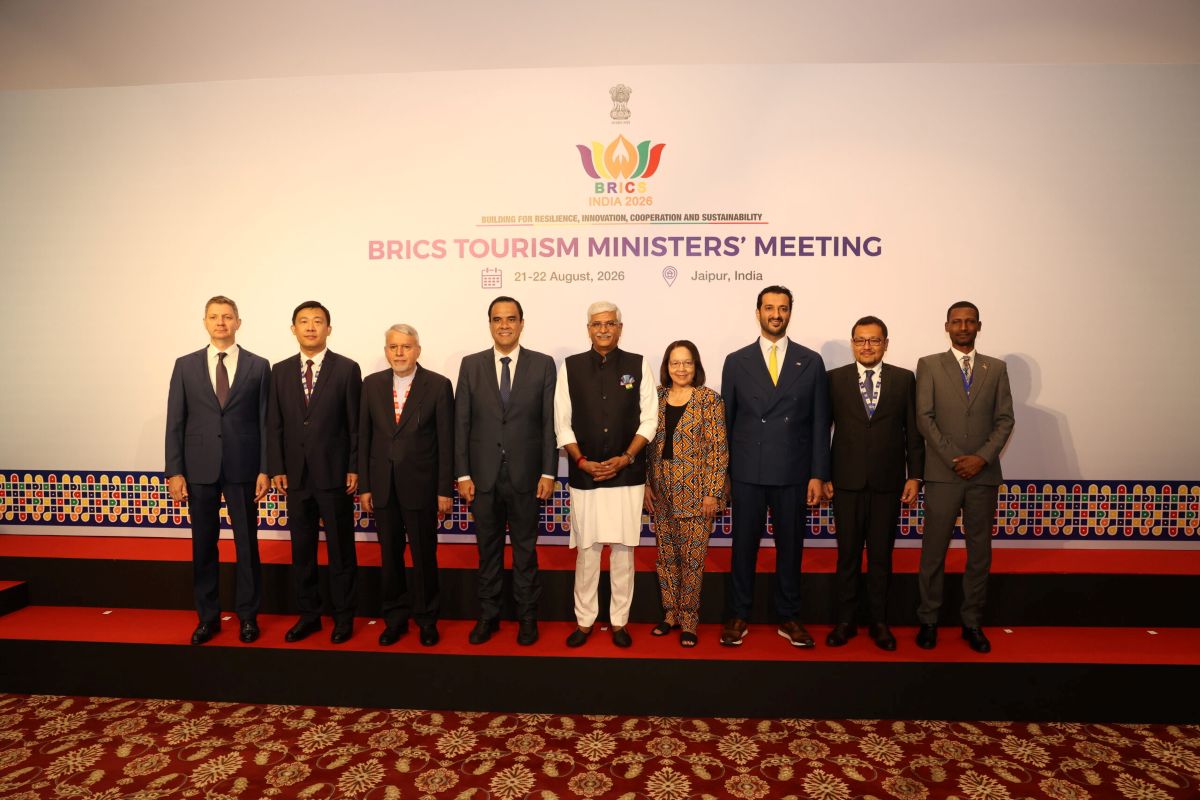
Concluding under India’s Chairship in Jaipur, the high-level summit brought together ministers and delegations from nine member states to establish a unified framework centred on resilience, technological integration, and sustainable economic growth.
The meeting was chaired by India’s Union Minister for Culture and Tourism, Shri Gajendra Singh Shekhawat, marking the completion of the 2026 BRICS Tourism Track. The agenda focused on leveraging tourism as an economic engine, particularly for decentralized growth beyond primary urban financial hubs.
Core Strategic Priorities
The Jaipur Declaration centres on four main thematic priorities developed by the BRICS Tourism Working Group:
- Artificial Intelligence & Digital Integration: Reaching a consensus on deploying responsible, human-centred AI to enhance tourism planning, destination management, multilingual communication, and travel logistics.
- Sustainable & Responsible Tourism: Prioritizing community-centred development, cultural heritage preservation, and environmental protection.
- Skilling & Human Capital: Building cross-border industry-academia partnerships to continually upskill workforce talent within the sector.
- Seamless Travel Facilitation: Boosting data sharing, exchange of statistical best practices, and direct people-to-people connectivity.
Economic Outlook and Regional Impact
Addressing the delegation, Shekhawat emphasized that tourism plays a foundational role in India’s long-term Viksit Bharat by 2047 economic roadmap. By spreading economic opportunity to smaller towns, rural villages, and remote regions, the sector provides direct liquidity to micro-entrepreneurs, hospitality operators, transport providers, and traditional artisans.
| Key Summit Details | Summary |
| Theme | Building for Resilience, Innovation, Cooperation and Sustainability |
| Chairship | India (Union Minister Shri Gajendra Singh Shekhawat) |
| Ministerial Participants | Brazil, Iran, South Africa, UAE (alongside delegations from China, Ethiopia, Indonesia, Russia) |
| Bilateral Engagements | Side meetings held between India and Brazil, Iran, South Africa, and the UAE |
Beyond formal policy commitments, the summit integrated cultural diplomacy to showcase local economics in action. Delegates engaged with curated exhibitions of traditional crafts and community-led initiatives, followed by visits to Jaipur’s major heritage sites, including the Hawa Mahal, City Palace, and Amber Fort. Through these multilateral commitments, the Jaipur Declaration lays the groundwork for a more resilient, technology-driven tourism ecosystem across the BRICS economies.