
 By
By 
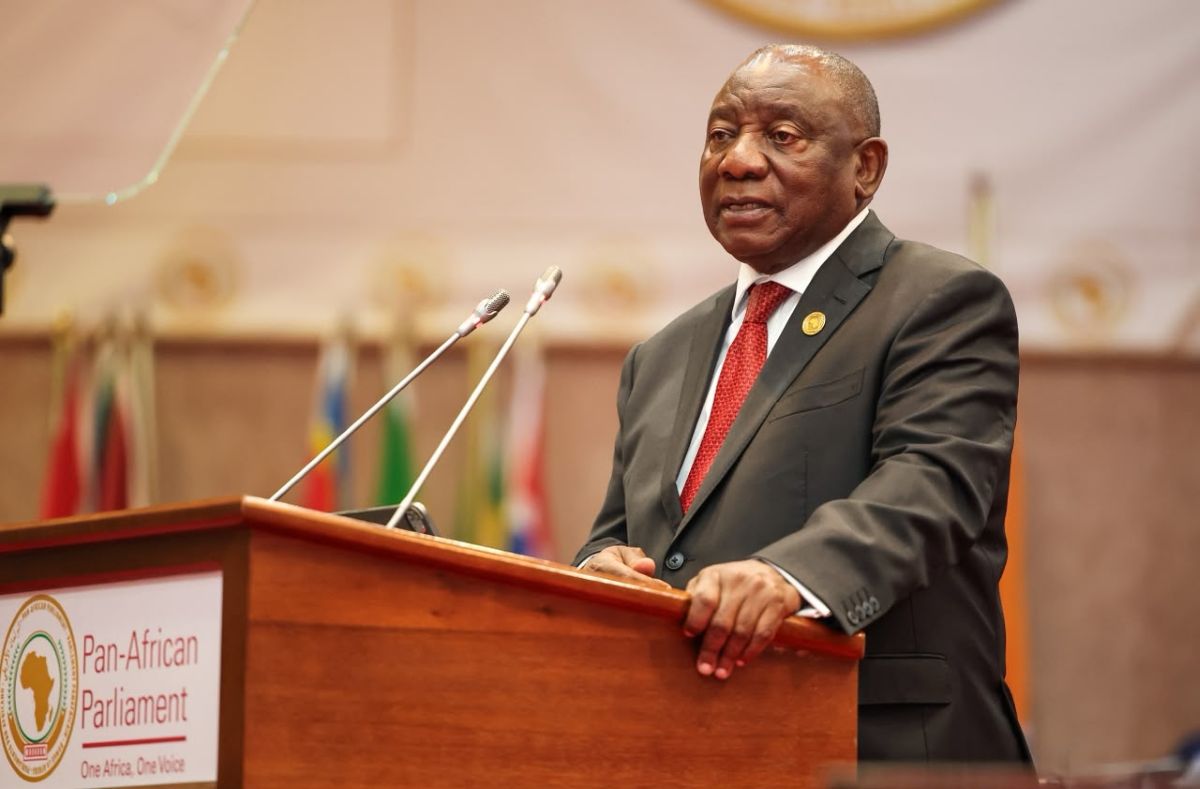
MIDRAND, SOUTH AFRICA — Standing before lawmakers gathered at Gallagher Estate for the First Ordinary Session of the 7th Legislature of the Pan-African Parliament (PAP), South African President Cyril Ramaphosa issued a blunt call to action: Africa’s continental assembly must step up as a firm guardian of democracy and transform paper promises into tangible progress for more than 1.5 billion citizens.
Addressing newly elected PAP President Dr. Fateh Boutbig and parliamentarians from across the continent, Ramaphosa delivered a speech that combined continental solidarity with a pragmatic, hard-nosed policy agenda. His message was unequivocal: in an era defined by global economic headwinds, escalating geopolitical rivalries, and severe climate disruptions, Africa can no longer afford institutional inertia.
A Call for Institutional Integrity and Democratic Vigilance
Ramaphosa’s address comes at a pivotal juncture for the PAP, an institution historically hampered by internal frictions and limited legislative enforcement. Demanding that the body hold itself to the highest standard, the South African head of state insisted that the parliament must lead by example.
“This Parliament must itself exemplify the democratic values it seeks to advance across the continent,” Ramaphosa declared. “It must be a model of integrity, transparency, accountability, responsible stewardship, and fidelity to its own rules.”
Beyond internal governance, Ramaphosa urged legislators to act as a unyielding defence force for constitutional democracy across the continent. He called on the assembly to speak out forcefully against unconstitutional changes of government, illegal extensions of presidential term limits, the erosion of judicial independence, and the plunder of public resources. Democratic governance, he emphasized, is not an abstract exercise, but the prerequisite for sustainable peace and economic growth.
Operationalising the AfCFTA and Tackling Infrastructure Deficits
Central to Ramaphosa’s economic vision was the operationalisation of the African Continental Free Trade Area (AfCFTA). Framing the trade pact as the single most powerful vehicle to dismantle colonial-era economic divisions, Ramaphosa cautioned that signing treaties alone will not construct a unified continental market.
He challenged the PAP to work aggressively with national legislatures to domesticate AfCFTA commitments, streamline customs regulations, and remove persistent non-tariff barriers.
“Agreements alone will not create a continental market,” he noted, urging lawmakers to push for the cross-border transport, digital infrastructure, and payment systems required to allow African businesses to trade seamlessly. The goal, according to Ramaphosa, is to end Africa’s role as an exporter of raw materials and transition into an industrial powerhouse that processes its own minerals, energy, and agricultural yields.
Confronting the Water Security and Climate Crisis
Under the African Union’s 2026 theme—“Assuring Sustainable Water Availability and Safe Sanitation Systems to Achieve the Goals of Agenda 2063”—Ramaphosa drew direct attention to the severe environmental threats confronting African nations. Pointing to the destructive wildfires recently devastating Mediterranean North Africa—including Algeria, Morocco, and Tunisia—he linked extreme weather events directly to the continent’s deepening resource scarcity.
Highlighting that millions across Africa remain without basic access to safe drinking water and sanitation—with women and girls bearing the heaviest burdens—Ramaphosa urged continental cooperation over shared river basins and groundwater systems.
He called on parliamentarians to leverage their budgetary oversight to mandate national investments in water security and climate resilience. Pointing to South Africa’s own National Water Action Plan, Ramaphosa noted that localized water challenges cannot be solved in isolation.

Managing Migration with Dignity, Firmness, and Root-Cause Solutions
In a notable move, Ramaphosa directly addressed the politically sensitive issue of migration, acknowledging the domestic tensions and anti-migrant sentiment that have flared within South Africa.
Without shying away from local anxieties regarding illegal immigration and stretched municipal services, Ramaphosa firmly rejected vigilante violence and prejudice against foreign nationals. He called for a balanced policy framework that distinguishes between undocumented migrants and legitimate refugees or asylum seekers, while urging African governments to address the structural push factors driving displaced populations.
“We have to acknowledge and address the conditions that drive migration in the first place,” he asserted. “We need to work together to address issues like conflict, instability, governance failure, poverty, and social discord… We must work for a future where Africans migrate out of choice and not necessity.”
A Demand for Results
Closing his address, Ramaphosa reiterated South Africa’s commitment to hosting the PAP and advancing the broader goals of continental integration. However, his final words served as a sobering reminder to the assembled lawmakers about the burden of leadership.
“The success of this Seventh Legislature will not be measured only by the debates it holds or the resolutions it adopts,” Ramaphosa warned. “History will judge us not by the speeches we deliver, but by the Africa we build.”