 By
A deepening intergovernmental fiscal standoff is threatening to disrupt driver and vehicle licensing operations across South Africa’s economic heartland, as the Gauteng Department of Roads and Transport (GPDRT) warns of imminent enforcement measures against defaulting municipalities.
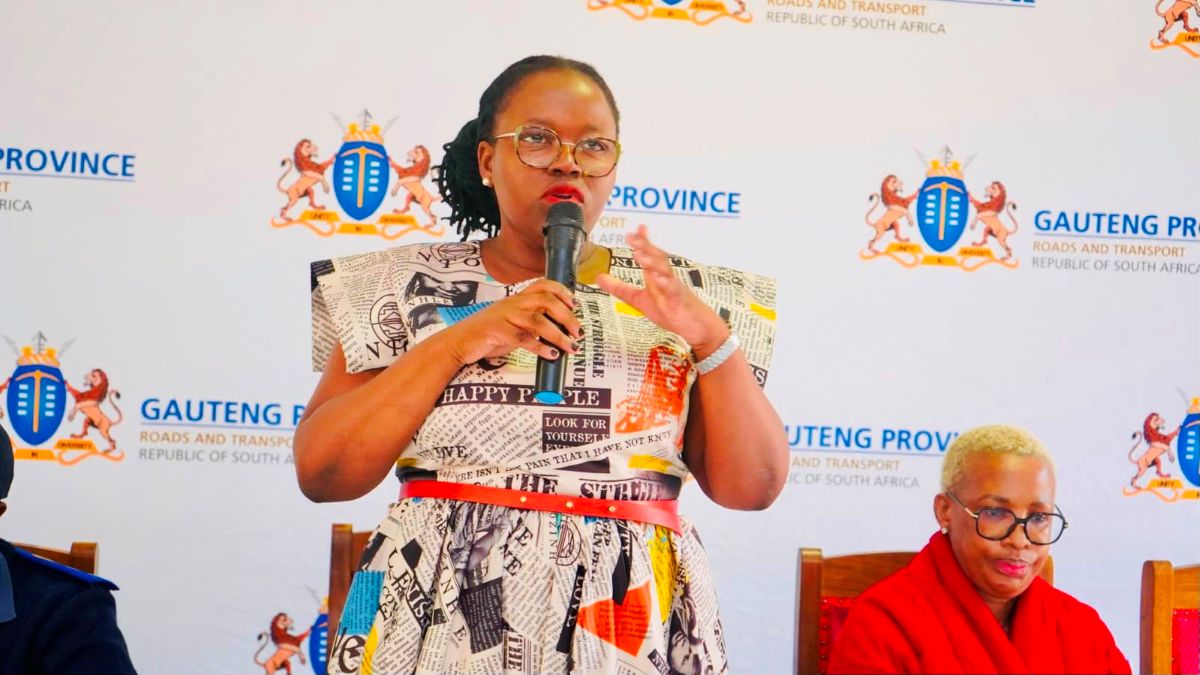
Gauteng MEC for Roads and Transport Kedibone Diale-Tlabela raised alarm over the sustained failure of key local authorities to transfer motor vehicle licensing fees collected on behalf of the Provincial Administration.
According to the department, three major municipalities—the City of Johannesburg, the City of Ekurhuleni, and Rand West City—collectively owe the province approximately R2.9 billion in unremitted statutory revenue.
The City of Johannesburg accounts for the largest portion of the arrears at R1.612 billion, followed by the City of Ekurhuleni at R1.033 billion, and Rand West City at R221.821 million.
Under South African transport governance frameworks, municipalities act as registering authorities that collect licensing fees at the point of transaction, retaining an administrative agency fee while remitting the balance to the provincial government to fund road network maintenance and licensing infrastructure.
Despite formal written demands and prior bilateral engagements, the funds remain unpaid, creating what the department describes as an unsustainable operational deficit. While municipalities retain the collected cash, the GPDRT continues to absorb the ongoing operational, administrative, and system costs required to keep licensing services running across the province.
“The continued non-remittance of revenue is therefore not merely an accounting concern, but a matter that directly affects the financial sustainability and continuity of motor vehicle licensing services,” MEC Diale-Tlabela stated.
To compel compliance, the department is considering a phased reduction in the supply of face-value forms—the secure, serialized documentation required to issue vehicle licence discs, learner’s licences, and driving licence cards—to defaulting municipalities.
Restricting the allocation of face-value forms is a decisive administrative lever; without these controlled documents, municipal Driving Licence Testing Centres (DLTCs) and registering authorities face immediate bottlenecks in processing transactions.
The department acknowledged that curbing the supply of face-value forms will likely trigger operational knock-on effects for motorists and transport operators. Affected municipal DLTCs could experience reduced processing capacity, administrative backlogs, and disruptions to scheduled appointments, particularly for learner’s and driving licence testing.
To insulate the motoring public from service delivery failures caused by municipal non-compliance, the GPDRT is evaluating contingency measures. These include redirecting capacity toward provincially operated DLTCs, expanding access to Smart DLTCs, and leveraging online licensing platforms to maintain service continuity. Motorists have been advised to monitor official departmental channels for updates regarding facility availability and appointment adjustments.
While MEC Diale-Tlabela emphasized that the province remains committed to cooperative governance and is willing to consider structured, formally binding repayment plans where immediate lump-sum settlement is not feasible, she underscored that financial accountability cannot be compromised.
“The public should not be placed at risk of service disruptions because of unresolved financial obligations between spheres of government,” the MEC noted. “Municipalities have a responsibility to remit revenue collected on behalf of the Province, and this obligation must be honoured.”
For the logistics, freight, and commuter sectors in Gauteng, the impasse highlights ongoing cash-flow vulnerabilities within local government administration. With the GPDRT actively monitoring the situation and preparing to implement phased restrictions, the onus now rests on the administrations in Johannesburg, Ekurhuleni, and Rand West City to table credible settlement proposals before frontline licensing operations grind to a halt.