 By
PRETORIA — South Africa is overhauling its commercial diplomacy to put deal-making, foreign direct investment (FDI) and export diversification at the centre of its economic recovery, Trade, Industry and Competition Minister Parks Tau announced on Tuesday.
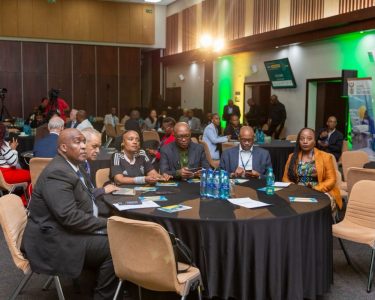
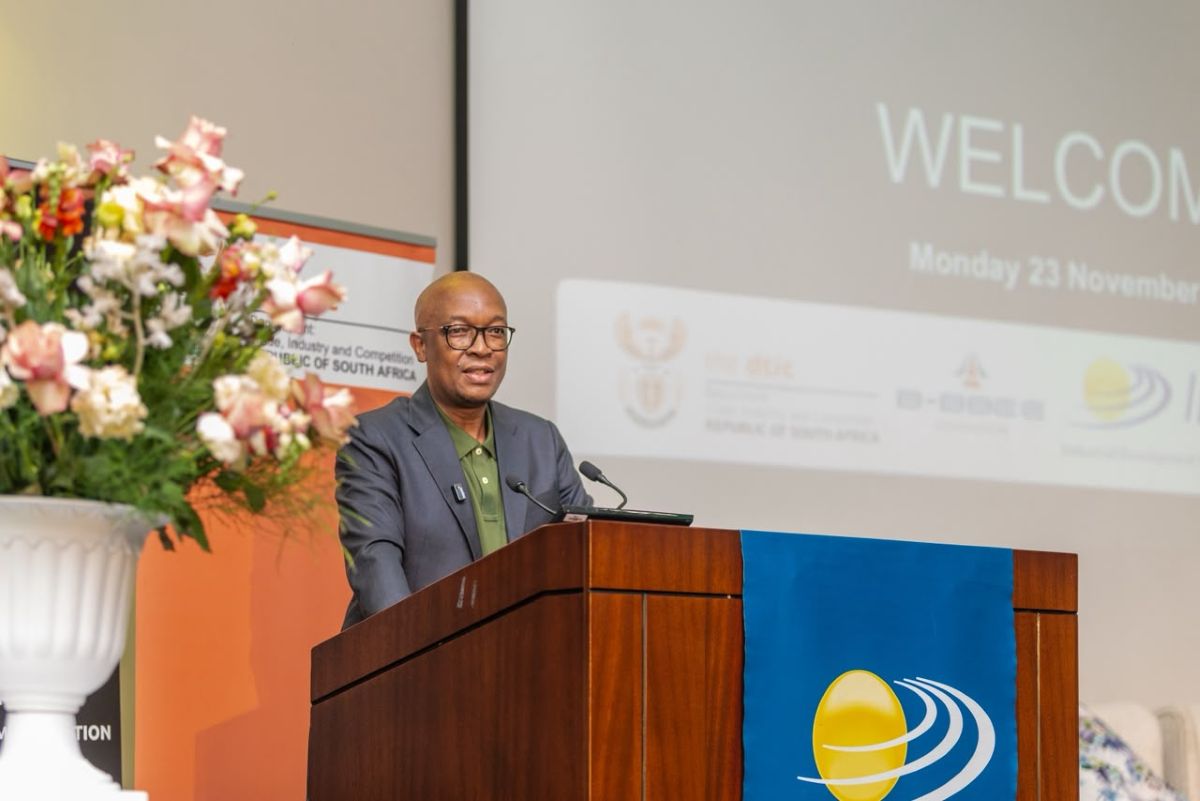
Addressing the send-off of a new cohort of Foreign Economic Representatives (FERs) on November 24, Tau framed the deployment as a “practical relaunch” of the department’s foreign economic office programme. Confronted with shifting global trade routes, rising unilateral trade measures and domestic pressures including sluggish growth, unemployment, poverty and manufacturing contraction, the minister said Pretoria will not wait for international markets to revert to old patterns.
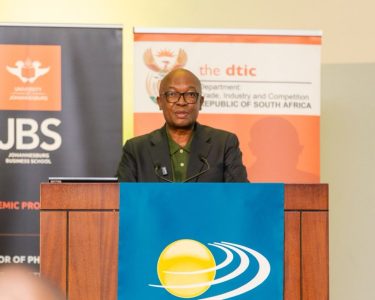
“Today we send off the first cohort of a new generation of South Africa’s Foreign Economic Representatives,” Tau said. “It is a milestone in our commercial diplomacy. It is also a statement of intent. South Africa is going out into the world to close deals, to bring investment home and to win markets for our products.”
Aligning Diplomacy With the Butterfly Strategy
Placements for the incoming cohort are tied directly to the department’s Butterfly Strategy, which aims to diversify where South Africa sells, what it exports and where its capital originates. While maintaining growth in established partners and keeping Africa at its core, the strategy targets 27 key markets across North and South America, Europe, and North and South Asia, alongside deeper engagement with blocs and regions such as ASEAN, MERCOSUR and Eurasia.
To stretch scarce diplomatic resources across wider geographies, the re-imagined programme introduces a hub-and-spoke structure in which 10 offices will cover 30 countries and territories worldwide. Tau noted that representatives underwent a rigorous process of assessment, training and selection before receiving clear, market-specific mandates.
Prioritising Productive Capital Over Mere Goodwill
While acknowledging South Africa’s existing diplomatic ties, Tau stressed that goodwill alone does not generate industrial output or wages. Representatives are expected to act as “force multipliers” alongside head office, InvestSA and the Department of International Relations and Cooperation (DIRCO), converting early interest into tangible commitments.
“You go not merely as officials of government, and not only as economic diplomats,” Tau told the envoys. “You go as deal-makers.”
He urged the cohort to build active pipelines of companies looking to expand, relocate or establish new production bases, and to guide investors from initial discussions through to final decisions by clarifying incentives, special economic zones, industrial parks and regulatory certainty. Crucially, the minister emphasised productive investment rather than transactions that merely transfer ownership of existing assets.
“An investment that only buys an existing asset changes its owner,” Tau said. “An investment that builds a new plant, trains new workers and sources from local suppliers changes an economy. That is the investment we want you to bring home.”
Stepping Up for Smaller Exporters
Beyond attracting capital, the relaunched mandate tasks FERs with helping domestic firms overcome hurdles in unfamiliar markets—ranging from regulatory, health and environmental standards to tariff and non-tariff barriers, as well as language and cultural gaps.
Tau highlighted that these obstacles hit small and medium enterprises (SMEs) hardest. Unlike large corporations able to fund offices in hubs such as Dubai or São Paulo, a family-owned manufacturer in Ekurhuleni or an agro-processor in the Eastern Cape relies on state support to enter foreign value chains. For those businesses, Tau said, the FERs must serve as an on-the-ground office, a source of market intelligence, an entry point and an advocate when trade barriers arise.
A Results-Driven Mandate
Closing the address, Tau—backed by mandates set out by Director-General Simphiwe Hamilton—challenged the envoys to judge their performance by concrete outcomes rather than activity.
- Bring productive FDI into South Africa that expands industrial capacity and creates jobs
- Close deals rather than merely open doors
- Grow exports, open new markets and dismantle tariff and non-tariff barriers
- Support industrialisation, beneficiation, innovation, technology transfer and skills development
- Build strategic partnerships and strengthen South Africa’s economic influence abroad
“Measure yourselves not by meetings held, but by the deals you close and the investment you bring home,” Tau said. “Every investment you secure abroad will be felt at home: in a factory that opens, in a supplier that grows, in a young person who finds work.”