 By
By 
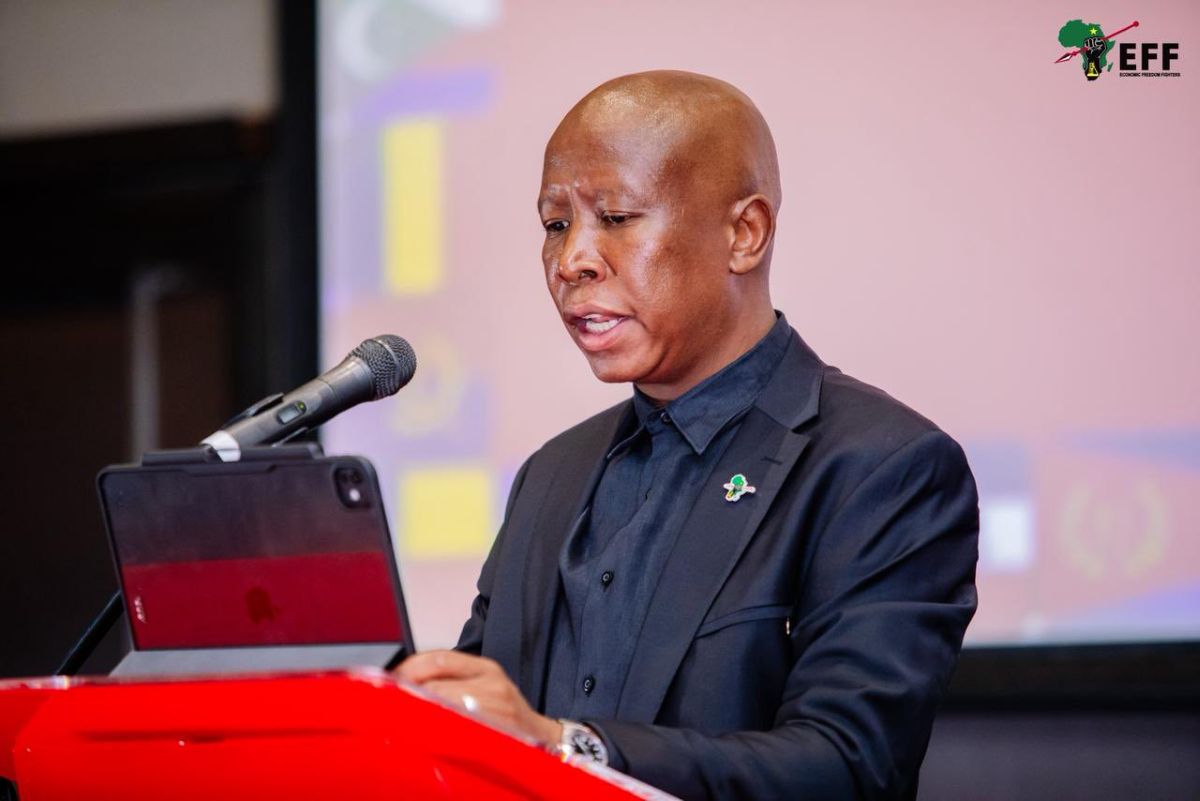
JOHANNESBURG — In a powerful and sweeping Africa Day address, Julius Malema, the Commander-in-Chief of the Economic Freedom Fighters (EFF), delivered a poignant retrospective on the continent’s liberation struggle while confronting the harsh contemporary geopolitical realities that continue to destabilize it.
Speaking on May 28, 2026, Malema invoked the foundational tenets of Pan-Africanism, using the historical framework of the late 20th century to challenge the modern international community and African leadership alike.
Echoes of the Founders: Unity or Perish
Malema grounded his address in the historic 1963 founding of the Organisation of African Unity (OAU) in Addis Ababa. He specifically resurrected the urgent warnings of Ghana’s first president, Kwame Nkrumah—who famously declared that Africa must “unite or perish”—and Ethiopian Emperor Haile Selassie.
By drawing a straight line from the 1884–1885 Berlin Conference, which artificially partitioned the continent, to the Cold War rivalries that turned Africa into a proxy battleground, Malema argued that modern African instability is not an inherent flaw, but the structural legacy of external design.
The EFF leader highlighted historical flashpoints to illustrate the cost of sovereign defiance:
- The Martyrdom of Patrice Lumumba: Cited as the ultimate warning of Western foreign interference and neo-colonial resource extraction after the Congo’s independence in 1960.
- The Algerian War of Independence: Evaluated as one of the bloodiest anti-colonial conflicts against French occupation, demonstrating the extreme sacrifices made for national sovereignty.
- Frontline Strongholds: The armed resistance movements of the ANC, PAC, MPLA, FRELIMO, SWAPO, and ZANU against brutal settler regimes in Southern Africa.
Rewriting History: The Vanguard of African Women
In a vital departure from traditional patriarchal political rhetoric, Malema dedicated a substantial portion of his address to dismantling the male-centric narrative of African liberation.
“Too often, history remembers men with guns and podiums while forgetting the women who carried revolutions on their backs,” Malema stated.
The address systematically honored the institutional roles women played in transforming isolated military campaigns into mass popular struggles, explicitly naming key historical figures across centuries:
| Leader | Country / Region | Historical Significance |
| Queen Nzinga | Angola | Resisted 17th-century Portuguese colonial expansion with military and diplomatic skill. |
| Yaa Asantewaa | Ghana | Led the Ashanti resistance against British colonialism in the 1900 War of the Golden Stool. |
| Funmilayo Ransome-Kuti | Nigeria | Organised women against colonial taxation; pioneered women’s political participation. |
| Josina Machel | Mozambique | Symbol of women’s active combat participation within FRELIMO. |
| Winnie Madikizela-Mandela, Albertina Sisulu, Lilian Ngoyi, Charlotte Maxeke | South Africa | Endured banning orders, exile, and torture while sustaining the anti-apartheid struggle. |
A Continent of Contradictions: Victories vs. Crises
Evaluating the contemporary “State of the Continent,” Malema posited that the dream of 1963 has been answered with both a “yes” and a “no.” While formal colonialism and apartheid have been decisively defeated, the structural transformation into true economic sovereignty remains incomplete.
Continental Milestones
Malema commended several modern success stories as symbols of African self-determination and capability:
- Ethiopia’s engineering prowess via the Grand Ethiopian Renaissance Dam (GERD).
- Rwanda’s administrative and technological advancements in healthcare.
- Botswana’s relative stability and state-led control over its mineral wealth.
- Kenya’s global leadership in financial technology (FinTech) and geothermal innovation.
- Nigeria’s cultural hegemony through Nollywood and the global dominance of Afrobeats.
- The growing assertion of resource sovereignty by youth-led movements in Burkina Faso, Mali, and Niger.
Ongoing Humanitarian Catastrophes
However, the speech shifted rapidly to the ongoing failures of global governance and continental institutions to protect African lives.
In the Democratic Republic of Congo (DRC), Malema condemned the ongoing cycle of violence, forced displacement, and illegal mineral extraction in the east, calling it one of the deadliest yet most ignored conflicts since the Second World War.
Turning to Sudan, he characterized the current war between foreign-sponsored rival military factions as a devastating humanitarian catastrophe that has shattered healthcare systems and induced widespread hunger.
On Somalia, Malema pushed back against Western paternalism, demanding that the international community move past viewing the country solely through the lens of permanent “humanitarian management” and instead support organic, state-led reconstruction.
The Litmus Test for Liberation: Western Sahara
The speech concluded with a sharp diplomatic challenge regarding Western Sahara, which Malema labeled one of the last unresolved decolonisation struggles on the continent.
By directly criticizing Morocco’s ongoing occupation and displacement of the Sahrawi people, the EFF leader issued a definitive ultimatum to the African Union and the broader international community: Africa cannot claim to stand fully for liberation while the right of the Sahrawi people to self-determination remains compromised.
Ultimately, Malema’s address was less a celebration of Africa Day and more an urgent, multi-lateral critique. It serves as a stark reminder that while the flags of independence have been raised, the battle against fragmented borders, economic dependency, and foreign intervention remains the definitive, unfinished mission of the modern era.