 By
By 
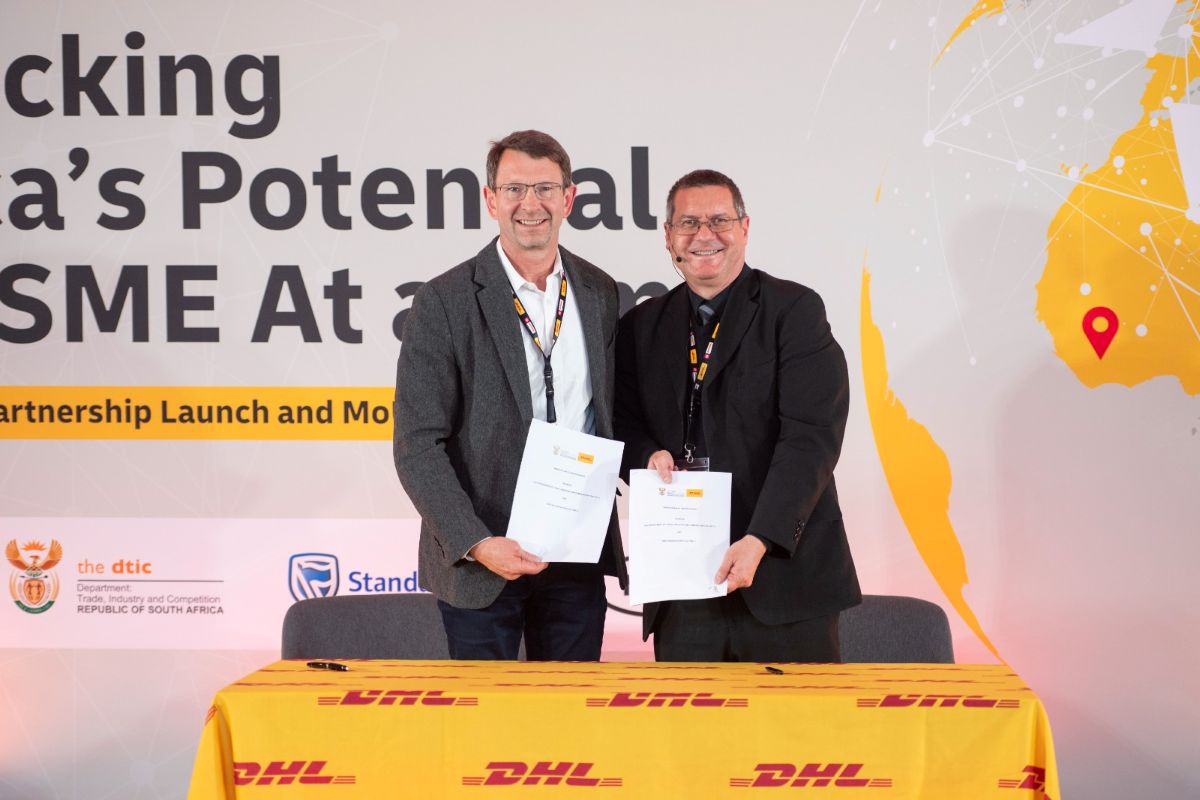
Johannesburg, South Africa – In a major move to accelerate the growth of small and medium-sized enterprises (SMEs) across the continent, South Africa’s Department of Trade, Industry and Competition (the dtic) has partnered with private sector giants DHL, Standard Bank, and MTN.
Announced on August 12, 2026, this multi-stakeholder collaboration is designed to equip African businesses with the essential financing, digital capabilities, logistics support, and trade knowledge required to scale operations and compete on a global stage.
Operating under the umbrella of DHL’s GoTrade initiative, the partnership targets the fundamental barriers that routinely stifle emerging entrepreneurs, such as limited access to finance, gaps in digital adoption, and constrained market access. Small and medium businesses represent more than 90% of all enterprises in Sub-Saharan Africa (SSA) and are responsible for roughly 70% of regional employment. Despite acting as the primary engines of economic opportunity on the continent, these businesses frequently struggle to transition into export-ready operations.
“We are excited to work with our partners to create a collaborative ecosystem aimed at addressing these challenges through practical interventions that support businesses at every stage of their export journey,” stated Hennie Heymans, CEO of DHL Express SSA. Backing this commitment, DHL plans to invest €300 million across the African continent by 2030, a capital injection that will actively support programs extending trade participation and sustainable commercial growth. Since its inception in 2021, the GoTrade program has supported over 24,000 SMEs globally across more than 50 countries, including over 8,000 businesses and 8,000 women-owned enterprises within Sub-Saharan Africa alone.
Public-Private Synergy: The dtic’s Strategic Vision The partnership aligns tightly with the dtic’s broader mandate to foster industrialization, drive export growth, and develop emerging exporters. The department’s focus within this alliance will centre on capacity-building programs, trade education, business clinics, and targeted trade missions. Crucially, the dtic aims to leverage this ecosystem to increase awareness of structural trade frameworks, particularly the African Continental Free Trade Area (AfCFTA), helping local enterprises capitalize on new cross-border opportunities.
Willem van der Spuy, Acting Deputy Director-General of exports at the dtic, emphasized the necessity of public-private cooperation in advancing economic development. “Government’s role is to convene the right partners around a common framework, and this initiative reflects exactly that: the dtic setting the direction, with DHL and its partners Standard Bank and MTN strengthening delivery on the ground,” he noted.
Unlocking Capital and Trade Networks with Standard Bank Addressing the critical financing gap, Standard Bank is deploying its extensive pan-African footprint and trade-finance expertise to help translate entrepreneurial ambition into bankable, executable opportunities. Standard Bank’s intervention includes financing, advisory support, and direct integration into its established Export Readiness Programme. Initially launched in KwaZulu-Natal in 2025, the program has since successfully expanded into Gauteng and the Western Cape, providing entrepreneurs with the practical tools necessary for international competition.
Furthermore, Standard Bank’s strategic relationship with the Industrial and Commercial Bank of China (ICBC) will facilitate vital matchmaking and market-access linkages between African SMEs and Chinese importers. In 2025 alone, this connection allowed African clients across four markets to export goods such as rooibos tea, coffee, cocoa, nuts, and wine. To navigate the complexities of international expansion, Standard Bank will also support SMEs with seamless cross-border payment infrastructure.
“Access to finance alone is not enough,” explained Bill Blackie, Chief Executive of Business & Commercial Banking at Standard Bank Group. “SMEs also need access to buyers, markets, trade knowledge and trusted networks… Standard Bank is helping African businesses build the practical capabilities and connections they need to trade beyond their domestic markets.”
Digitizing the Future with MTN To ensure African SMEs remain competitive in a rapidly modernizing global economy, MTN has joined the alliance to drive critical digital transformation. MTN will provide comprehensive digital skills training alongside vital infrastructure, including connectivity, digital payment capabilities, and cloud solutions. These technological tools are intended to facilitate secure data storage, enable remote work, support online marketing, and allow businesses to scale operations efficiently. The telecommunications leader will also supply mentorship programs providing guidance on expanding into new export markets.

David Behr, MTN Group Chief Enterprise Business Officer, highlighted the urgency of this technological leap. “By combining MTN’s reach and digital capabilities with DHL’s international trade expertise, we can help SMEs embrace technology, improve business performance and access new opportunities across Africa and beyond,” Behr stated.
A Consolidated Path to Sustainable Growth Ultimately, this multi-sector alliance recognizes that global competitiveness requires a synthesized approach. By converging policy direction, financial backing, digital infrastructure, and logistics expertise, the dtic, Standard Bank, MTN, and DHL intend to forge a robust pipeline of export-ready African enterprises.
As Heymans concluded, African SMEs possess the innovation required to compete globally, but success in the international market requires a complete ecosystem of knowledge, finance, technology, and policy support. This partnership promises not only to amplify trade volumes but to stimulate sustainable job creation and drive broader economic inclusion across the African continent.