
 By
By 
GERMISTON — Gauteng’s top local government official has issued a stern ultimatum to the region’s municipal leaders, warning that endless legal disputes and poor infrastructure planning can no longer be used as excuses to deny communities essential public services.
Jacob Mamabolo, the Gauteng Member of the Executive Council (MEC) for Cooperative Governance and Traditional Affairs (COGTA), pulled no punches on Thursday. He called on local municipalities to immediately overhaul their project management practices and deliver critical infrastructure projects strictly on time, within budget, and to the required quality standards.
The MEC’s scathing critique comes amid growing frustration over stalled public developments and failing municipal systems across the province, exemplified by two high-profile breakdowns in the City of Ekurhuleni.
The Klopper Park Fire Station Disaster: Millions Spent, Zero Services
At the center of the provincial government’s frustration is the abandoned Klopper Park Fire Station in Germiston. Construction on the critical public safety facility began over seven years ago, on March 20, 2019. However, work came to a complete halt just twelve months later when the original contractor’s contract was terminated due to widespread poor workmanship, inadequate site supervision, and a failure to hit construction milestones.
More than six years after that termination, the facility remains an empty shell.
The financial loss to taxpayers continues to mount:
- R72 Million total contract value split across three appointed service providers.
- R13.07 Million already paid to two contractors and an engineering consultant.
- R3.68 Million spent solely on security to guard the incomplete, deteriorating building.
The City of Ekurhuleni has blamed the stalemate on ongoing legal battles with the former contractor, which it claims have blocked the appointment of a replacement firm. As it stands, the project has no approved completion date, no revised budget, and no confirmed funding allocation.
“It is unacceptable for essential public infrastructure to remain incomplete for years while communities are denied services and the public purse continues to carry security and deterioration costs,” said MEC Mamabolo. “Contractual and legal disputes must not be allowed to indefinitely prevent delivery.”
Mamabolo urged the City to fast-track its legal proceedings and produce a credible recovery plan that outlines a strict procurement timetable, budget allocation, and clear deadline.
Rynfield’s Sewage Nightmare: When Bad Planning Meets Rain
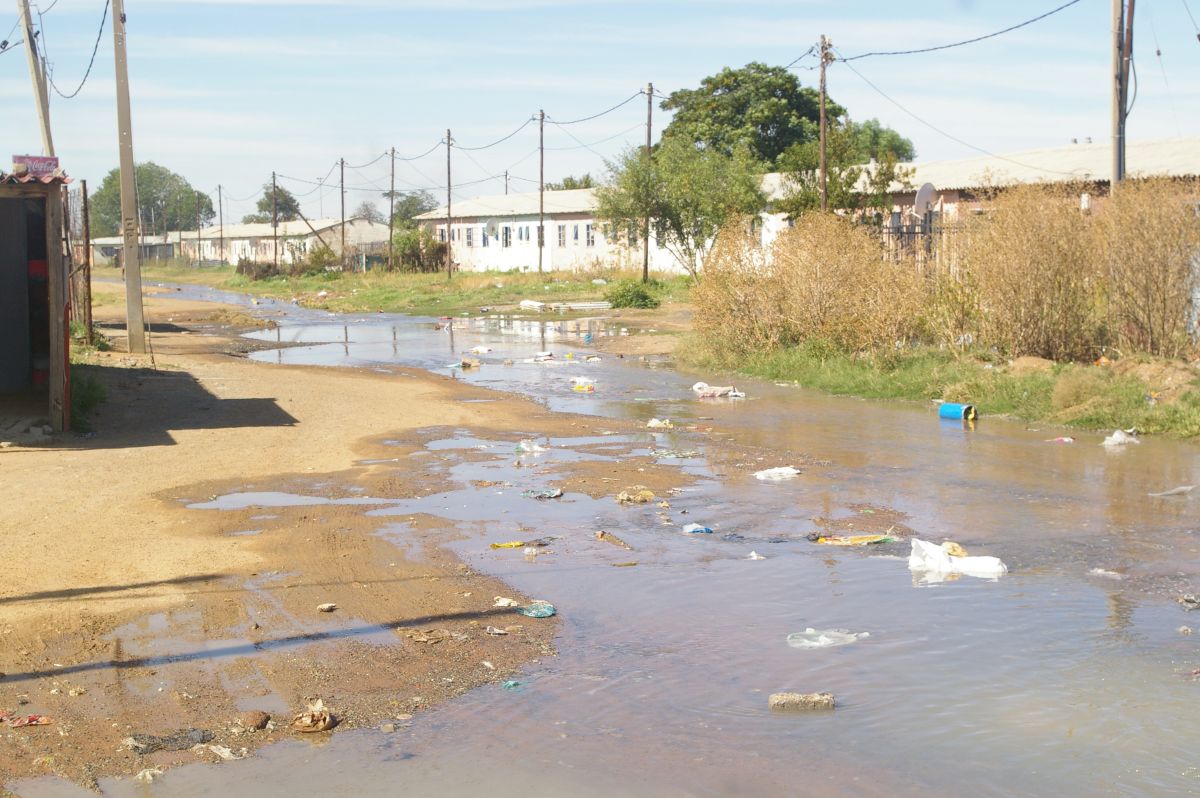
The delays in Germiston are not the only operational crisis drawing the provincial government’s ire. In the Boat Lake area of Rynfield, residents are facing an ongoing environmental and health hazard caused by recurring sewage overflows.
Rising water levels in the nearby pan have completely submerged portions of the area’s sewer infrastructure. Whenever heavy rains fall, stormwater floods the submerged system, overwhelming the network and forcing raw sewage back up into public areas.
While the City has raised and sealed a portion of the affected manholes—with plans to address the remaining ones during the 2026/27 financial year—MEC Mamabolo emphasized that temporary fixes are insufficient. A permanent resolution requires a comprehensive redesign, dedicated capital funding, and the installation of a water-level control system for the pan.
“The Boat Lake situation highlights the need for integrated planning across water, sanitation, roads, and stormwater departments,” Mamabolo stated, demanding that municipal managers break down internal silos to fix the root cause of the problem.

The Turnaround Strategy: Intervening Before Infrastructure Fails
The provincial government’s push for tighter operational discipline is anchored in the Gauteng Local Government Turnaround Strategy. Through this initiative, provincial COGTA plans to step up oversight and assist struggling municipalities with contract management, financial planning, and municipal accountability.
However, provincial intervention can only go so far. The primary responsibility, Mamabolo noted, lies with local administrations to hire capable service providers and manage contracts proactively before projects collapse into litigation.
“Municipalities must plan properly, appoint capable contractors, and intervene early when projects fall behind schedule,” Mamabolo concluded. “Infrastructure must be delivered within the approved time, cost, and quality standards.”