 By
By 
Tensions have escalated in the Middle East following a fallout in negotiations between the United States of America (USA), its ally Israel and Iran; which was then followed by military aggression on Iran killing their Supreme Leader Ayatollah Ali Khamenei.
It is reported that, the countries were nearing a breakthrough in negotiations and that Iran was willing to give up its uranium enrichment project, however, in a twist of events, the US and Israel decided to bomb Iran despite their concession, and Iran was swift to retaliate.
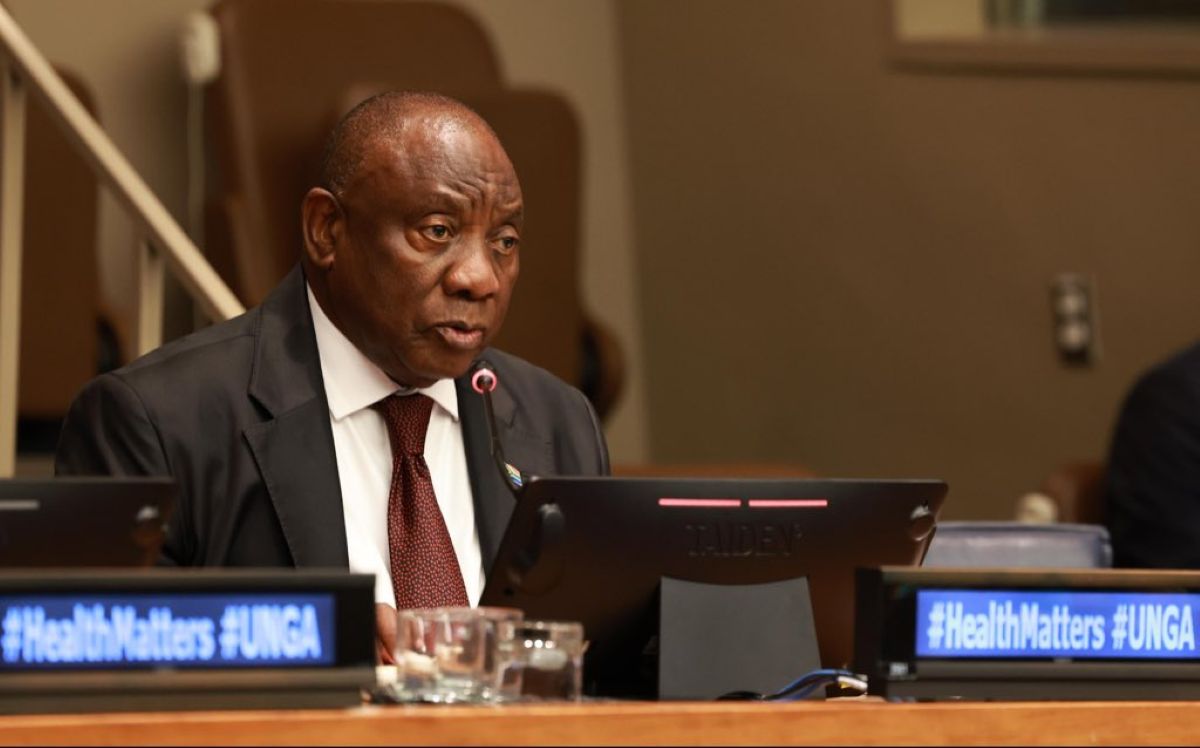
Noting the developments in the Middle East, the President of South Africa, Cyril Ramaphosa has expressed deep concern regarding the escalating tensions and has called for dialogue. Ramaphosa said the developments pose a serious threat to regional and international peace and security, with far-reaching humanitarian, diplomatic and economic consequences.
He is calling on all parties to exercise maximum restraint and to act in a manner consistent with international law, international humanitarian law and the principles of the United Nations Charter. President Ramaphosa said Article 51 of the UN Charter provides for self-defence only when a state has been subjected to an armed invasion. Anticipatory self-defence is not permitted under international law and self-defence cannot be based on assumption or anticipation.
“Experience has repeatedly demonstrated that there can be no military solution to fundamentally political problems that can and should be resolved diplomatically. Military confrontation has never delivered sustainable peace, nor has it addressed the legitimate grievances that underlie conflict. Long-term peace and stability can only be achieved through inclusive dialogue and a genuine commitment to justice and coexistence.
We urge the international community, including multilateral institutions and regional partners, to redouble efforts aimed at promoting mediation and peaceful resolution. As a nation that has emerged from conflict through dialogue and reconciliation, South Africa remains steadfast in its belief that peace is not only possible, but imperative for the shared future of the Middle East and the world,” said President Cyril Ramaphosa.