
 By
By 
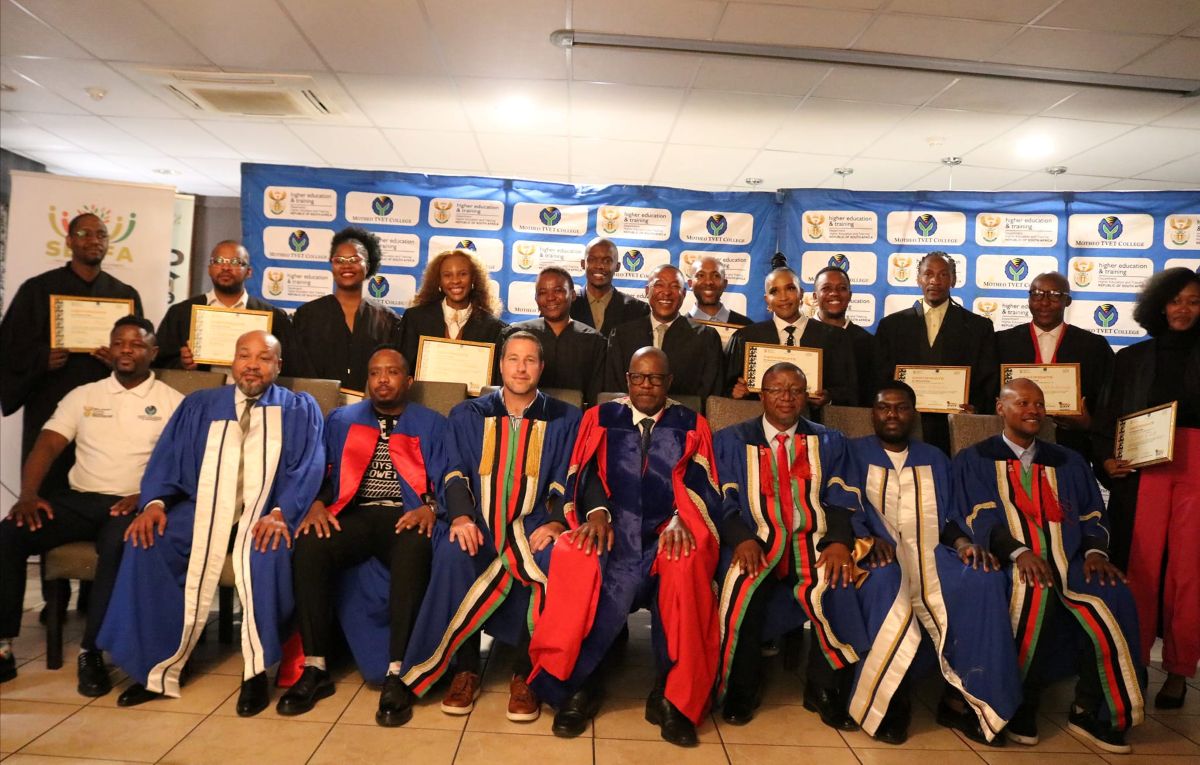
BLOEMFONTEIN – In a decisive move toward structural economic transformation, the Free State Department of Finance, Economic Development and Tourism (DEDT) has celebrated the graduation of its latest cohort of Micro, Small, and Medium Enterprises (MSMEs) from the Motheo TVET College Incubation Programme.
The graduation ceremony, held in the provincial capital of Bloemfontein, represents a critical milestone in the province’s ongoing strategy to formalize grassroots businesses and catalyze localized economic growth.
Elevating Grassroots Enterprises
The Motheo TVET Incubation Programme operates as a high-impact, strategic partnership designed to transition informal or early-stage business concepts into operationally excellent corporate entities. Throughout the rigorous initiative, participating entrepreneurs underwent intensive development, including:
- Technical mentorship and sector-specific operational coaching.
- Compliance upgrading to meet formal market standards.
- Digital tools adoption to enhance modernization and efficiency.
- Comprehensive financial literacy training to improve capital management.
Delivering the keynote address, the MEC for Finance, Economic Development and Tourism, Honourable Ketso Makume, lauded the graduates for their resilience. He framed the initiative not as a welfare exercise, but as a deliberate capacity-building venture.
“Running a small business requires immense courage, particularly under our current economic climate,” MEC Makume stated. “By choosing to enter this incubation programme, our local entrepreneurs have proven that they do not seek hand-outs, but rather hand-ups. They seek the skills, networks, and operational capacity required to build sustainable, competitive enterprises that can dominate local and international markets.”
Redefining Higher Education’s Role in Development
A notable highlight of the initiative is the evolving role of academic institutions in economic development. Motheo TVET College received strong commendation from provincial leadership for breaking traditional institutional boundaries.
By shifting from purely academic instruction to creating a functional ecosystem for practical mentorship and business infrastructure support, the college has established a scalable blueprint for how higher education can directly fuel local economic engines.
Government Commits to Deregulation and Market Access
Crucially for the private sector, the provincial government is positioning this graduation as part of a broader, systemic push to improve the ease of doing business in the Free State.
MEC Makume re-emphasized that MSMEs are the primary drivers of sustainable job creation, particularly within township and rural economies. To support their market entry, the MEC announced that the DEDT is actively working on three core operational pillars:
- Dismantling regulatory red tape to streamline business operations.
- Opening up state procurement opportunities specifically for local suppliers.
- Facilitating direct linkages to development finance institutions.
The Road Ahead: Post-Incubation Monitoring
As these newly equipped enterprises exit the structured incubation phase, they face the realities of full-scale market competition. However, the provincial government has signaled that its support will not terminate at the graduation stage.
The DEDT confirmed it will continue to actively monitor the growth trajectories of these businesses while systematically providing strategic market access. Furthermore, the department has urged the graduates to form collaborative supply chains among themselves—a move corporate analysts view as vital for building the economic density required to drive true job creation and economic freedom across the Free State.