 By
By 
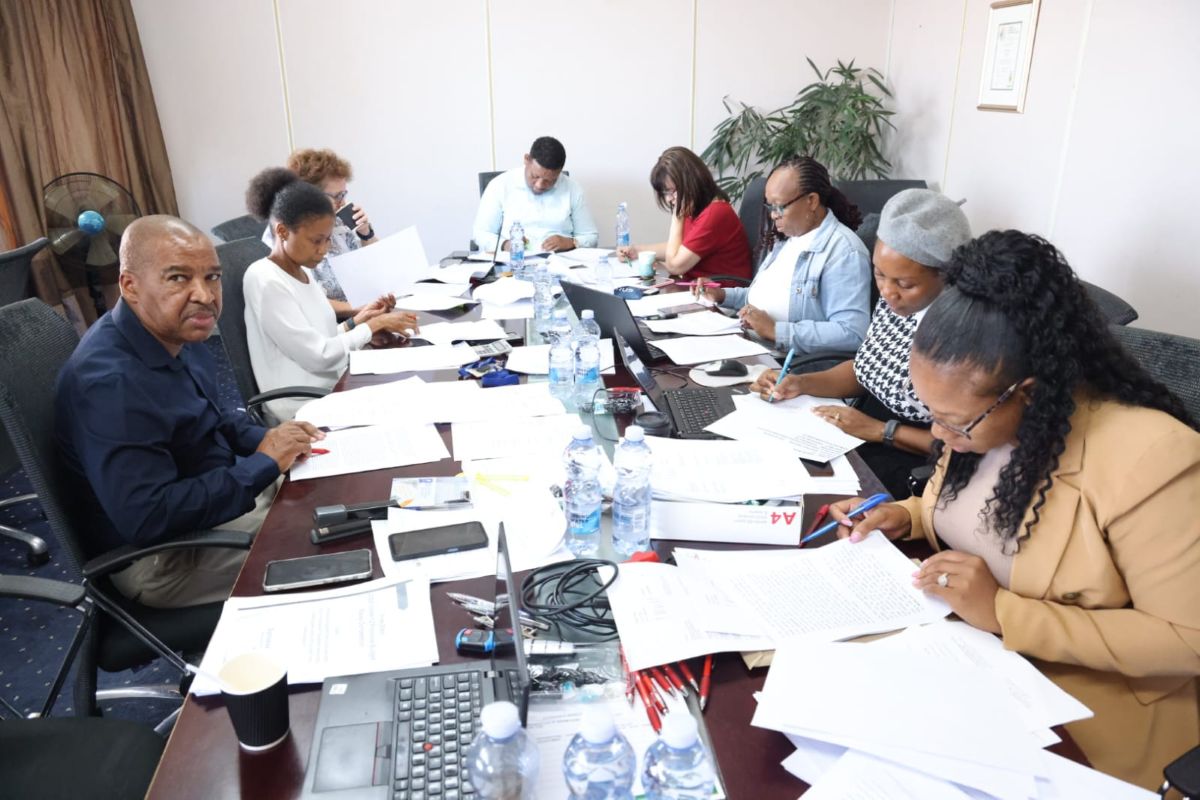
After receiving 140 applications from Grade 12 learners across five districts of the Free State Province that participated in the Provincial Budget Competition Essay 2026, today the Free State Provincial Treasury officials are marking the scripts of the 140 learners that took time to participate in the competition.
The competition was open for all learners in Grade 12 in the Free State Province with learners expected to submit their Budget Competition Essay from the 20th of January 2026 with the closing date of 20th February 2026, in order to give learners much needed time to research, prepare and write their Essays.
The topic for the budget competition was: “How should the government spend R45 billion to support green economy, green jobs and protect the environment?”
“I find that the Budget Speech Essay Competition has great value for aspiring Grade 12 learners across the province. Not only are the topics economically relevant, but the Budget Speech School Competition essay are very critical to the future learners of these country at large, and I really like to thank officials of both Treasury and Department of education for working so hard to make sure that this competition is a success,” said MEC for Finance, Economic, development and Tourism Ketso Makume.
The Free State Provincial Treasury, in partnership with the Department of Education invited all Grade 12 learners in the province to participate in the Free State Provincial Budget Essay Competition.
The competition was first launched in 2012 as a social responsibility initiative and has since been embraced as a flagship programme of the Free State Provincial Treasury. Its primary objective is to stimulate interest in economics among learners by exposing them to the provincial budgeting and the role of government in allocating public resources.
Drawing its inspiration from Provincial Treasury’s mission of promoting sound fiscal management and socio-eonomic inclusivity for shared economic growth, the competition encouraged learners to assume the role of the MEC for Finance, Economic Development and Tourism when allocating provincial resources.
Through an essay format, learners were challenged to develop and present their own provincial budget proposals, reflecting their views on priorities, resource allocation and sustainable development.
Beyond building financial literacy, the competition provided learners with a platform to have their voices heard in debates around policy formulation, servide delivery and legislative practices that directly affect their communitities. It further strengthens public participation and promotes a deeper understanding of the role of Treasury in driving fiscal management, inclusive economic growth and improved service delivery.
ADVANTAGES OF THE COMPETITION
The Provincial Budget Essay Competition offered learners the opportunity to:
Deepen their understanding of the provincial fiscal environment and the challenges involveld in allocating limited provincial resources.
Gain insight into the budget preparation process, aligned to current socio-economic realities and ethical principles
Develop an appreciation for transparency, accountability, fairness and equity in public finance management.
Assume the role of the MEC of Finance, Economic Development and Tourism in prioritising spending decisions that balance community needs with sustainable development.
Understand the ethical standards and responsibilities associated with public sector budgeting.
Actively participate in democratic decision-making processes that promote youth involvement in governance.
THE HISTORY OF THE COMPETITION
The competition was launched in 2012 in Botshabelo as part of government’s efforts to strengthen engagement with communities and young people. Since then it has expanded progressively across the province.
THE TOPIC

How should the government spend R45 billion to support green economy, green jobs and protect the environment?
General Considerations
Learners were encouraged to consider, among others:
Infrastructure development related to the green economy
Skills development for new green technologies
Green economy-related businesses and entrepreneurship
Job creation while protecting the environment
Planning for the Green Economy with a focus on renewable energy, green buildings, sustainable transport, efficient resource management, sustainable waste management, water management, agriculture and ensuring inclusivity and social equity.