 By
By 
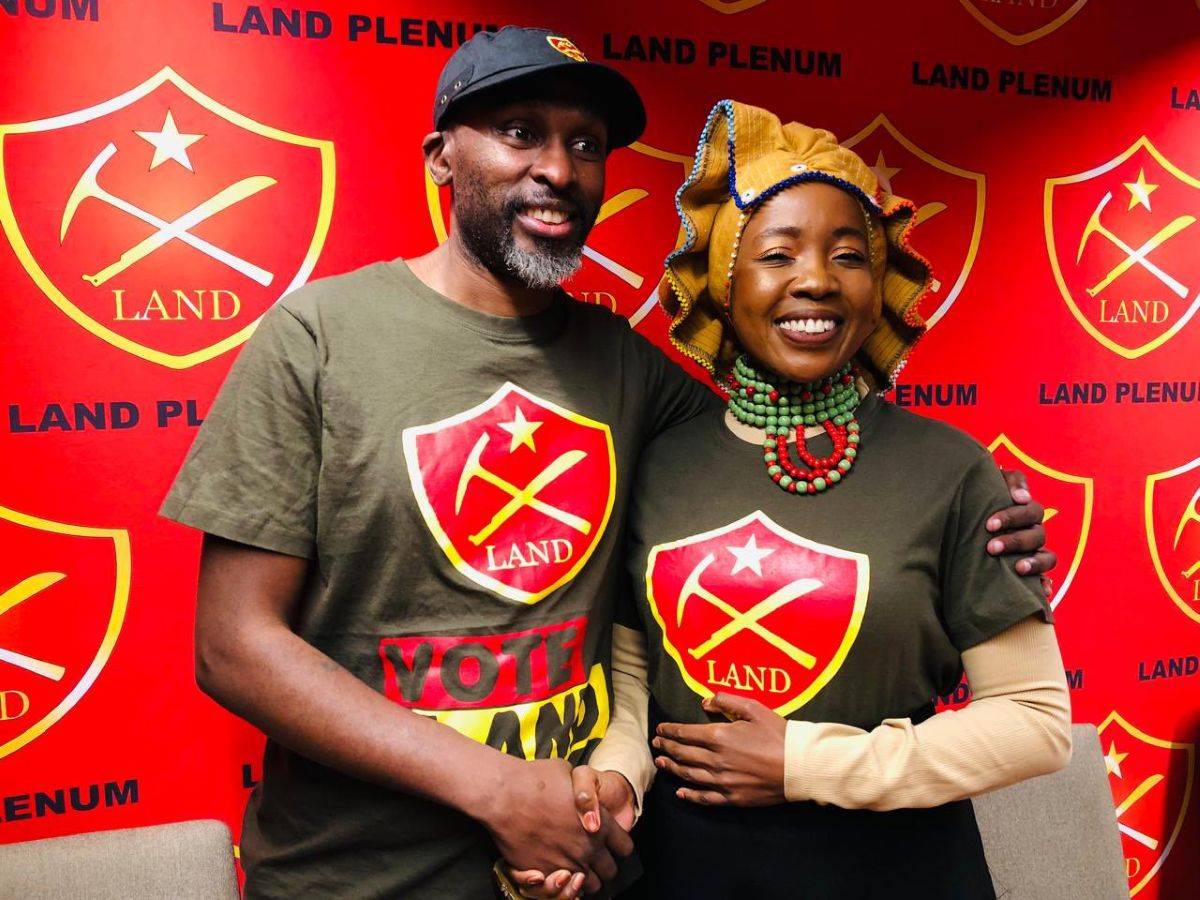
JOHANNESBURG — In a definitive shift from public commentary to active politics, cultural figure and activist Ntsiki Mazwai has officially thrown her hat into the ring for the Johannesburg mayoral race.
Speaking at her campaign launch alongside Land Party Chief Leader Gcobani Ndzongana, Mazwai declared an end to her days as an “armchair critic,” pitching herself as the leader capable of rescuing South Africa’s economic hub from systemic neglect and lawlessness.
Mazwai, who was born in Soweto and raised in Johannesburg, delivered an address that was equal parts emotional appeal and aggressive policy manifesto. She painted a grim picture of the metro’s current state, lamenting that those entrusted with its care have allowed it to fall into decay, resembling “too many broken cities across our continent”.
Citing a rise in violent crime—specifically highlighting the tragic killing of active citizens like DJ Warras—and the strains of undocumented immigration, Mazwai positioned the Land Party as the only pragmatic political home for the working class and destitute.
“I raise my hand, not only to be counted, but to offer my hand to every resident who loves Johannesburg,” Mazwai told attendees, framing her candidacy as a collaborative, volunteer-driven mission to rebuild the metro.
A Radical 14-Point Vision
At the core of Mazwai’s mayoral bid is an ambitious 14-point plan targeting economic protectionism, infrastructure rehabilitation, and aggressive fiscal relief for burdened residents.
Chief among her populist proposals is a strict local labour quota. Mazwai is advocating for a Johannesburg labour market comprised of 90% South African labour and capped at 10% foreign labour, offering real incentives to businesses that hire and train local talent. While pushing a “South Africans first” narrative, she maintained that the city would remain open to “responsible outside investment”.
To stimulate an economy hobbled by municipal inefficiencies, Mazwai proposed a bold two-year rate break for ratepayers until service delivery tangibly improves. Furthermore, she pledged free electricity and water for the first two years to new businesses to foster job creation, alongside rolling out solar energy solutions to provide relief for families who can no longer afford municipal electricity.

Urban Renewal and Global Ambitions
On infrastructure, the Land Party candidate promised a “24/7 city” free of potholes, backed by a transparent, public-facing Service Delivery Tracker to ensure municipal accountability. She also took aim at spatial inequality, pledging a block-by-block redevelopment of the historic Alexandra township to restore pride and proper services to the community. Other notable promises included reliable, free public transport during morning and evening peak hours for far-flung communities, and holiday job programs for school pupils to give youth a tangible stake in their future.
Despite the heavily localized focus, Mazwai concluded her address with a sweeping global vision. She stated her desire to transition Johannesburg into a technologically advanced, safe destination driven by top-class logistics, capable of proudly competing with international heavyweights from Shanghai to Moscow.
As the mayoral race heats up, Mazwai’s transition from polarizing social commentator to political candidate introduces an unpredictable wild card into Johannesburg’s highly contested political landscape. Whether her grassroots appeal and protective economic policies can translate into municipal power remains the defining question of her campaign.