 By
By 
The Free State Province continues to be troubled by the persistent high unemployment rate. According to the Quarterly Labour Force Survey (QLFS) for quarter four, the province is the second province that experienced the highest increase in unemployment rate and is now sitting at 36.2%.
The country’s economy is currently on a recovery trajectory, having shown growth in four consecutive quarters, inflation has cooled down and credit ratings are much better, even nationally, the unemployment rate has decreased by 0.5%, though minimal, it shows that the current Government of National Unity (GNU) is somehow turning the corner.
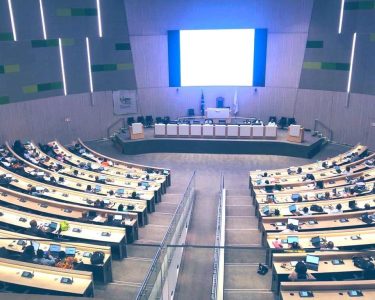
The Free State has been battling to keep the unemployment rate down by creating jobs, attracting investment and revitalising industrial parks. In her previous State of the Province Address (SOPA), Premier MaQueen Letsoha-Mathae said the provincial government will pay special attention to growing the provincial economy; at the time, she projected economic growth of 1.6%.
She also said they will be tackling unemployment through the Expanded Public Works Programme (EPWP), and they will be able to create 30 115 employment opportunities, at the time, the unemployment rate was at 37.9%. However, the QLFS shows that the Free State managed to create jobs for 21 000 individuals in the fourth quarter of 2024; it is an entirely different picture in 2025 in the same period.
According to the survey by Stats SA, increases in the unemployment rate were recorded in the Eastern Cape (1,3 percentage points), Free State (1,0 percentage point) and KwaZulu-Natal (0,6 of a percentage point) in the fourth quarter of 2025.
In Quarter four of 2024, the provincial unemployment rate was 37.9% in the period from October to December. In the period of July to September 2025, the unemployment rate decreased to 36.2%, and in the period of October to December 2025, the unemployment rate shot up 1% reaching 37.2%.
The Free State lost ground gained on unemployment. The province has a high rate of outward migration of skilled persons in search for greener pastures in other provinces due to lack of opportunities in the Free State.
According to the survey, the combined rate of unemployment and potential labour force increases were recorded in Free State (1,4 percentage points), Eastern Cape (1,2 percentage points), Limpopo (1,0 percentage point) and KwaZulu-Natal (0,5 of a percentage point).
The provincial government will also have to come up with sustainable measures of creating lasting, if not permanent jobs, especially amongst the youth. The question then is; what happened to the jobs that were created in 2024? Is the provincial labour market failing or is the economy not large enough to create the much needed jobs?