 By
By South Africa stands at a crucial economic crossroad, where the imperatives of job creation, structural transformation, and industrial revitalization converge. According to Trade, Industry and Competition Minister Parks Tau, the nation cannot achieve sustainable economic expansion or build a resilient economy without a formidable manufacturing and engineering base.

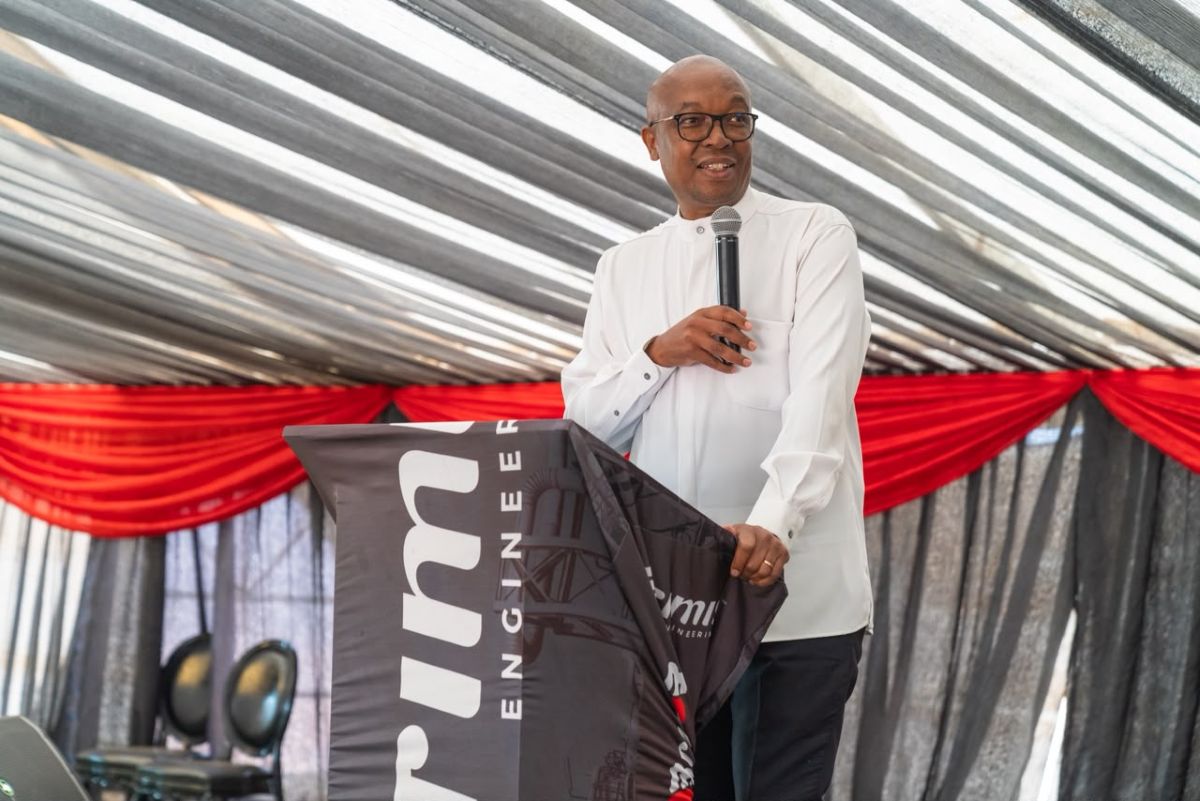
Minister Tau underscored this strategic vision during the official opening of Brimis Engineering’s expanded premises in Middelburg, Mpumalanga. A black-owned mechanical engineering firm specializing in industrial valve and pump lifecycle management, Brimis provides critical technical support and maintenance for heavy industries such as mining, power generation, petrochemicals, and water treatment.
Bridging the Gap: The Role of State Support
Building industrial capability is both capital-intensive and time-consuming. Because the private market alone does not always adequately fund these long-term ventures—particularly for black-owned enterprises—targeted state intervention remains vital.
The Department of Trade, Industry and Competition (the dtic) played a pivotal role in Brimis Engineering’s 13-year growth trajectory by providing approximately R46 million in incentive support to fund its facility investment and expansion.
This collaboration exemplifies how public funding can de-risk early-stage investments, empowering entrepreneurs who possess profound engineering insight but lack the necessary initial balance sheet.
State-backed initiatives ensure that economic growth is decentralized, taking root in industrial hubs and towns like Middelburg rather than remaining concentrated in traditional metropolitan centres.
Localisation as an Economic Catalyst
Government’s commitment to industrialization is further reinforced by its ambitious localisation programme. In the previous financial year, the state directed approximately R86.6 billion of public procurement toward South African-made goods and services, with an upgraded target of R100 billion set for the current year.
However, policy directives on paper are only as effective as the industrial capacity on the ground. Minister Tau emphasized that public procurement targets are meaningful only when local companies possess the technical proficiency to machine components, refurbish pumps, fabricate valves, and execute complex plant shutdowns safely and on schedule.
Transformation in Action
The trajectory of Brimis Engineering illustrates what true economic transformation looks like when policy alignment meets entrepreneurial drive. Growing from a turnover of roughly R8 million in 2019 to approximately R150 million by 2024, the firm now employs 122 people, the vast majority of whom are young South Africans.
By generating its own revenue, intellectual property, and employment opportunities, Brimis represents the modern blueprint for South Africa’s industrial future. For an economy navigating global headwinds, nurturing localized manufacturing powerhouses is not merely a policy choice—it is an absolute economic necessity.