
 By
By 
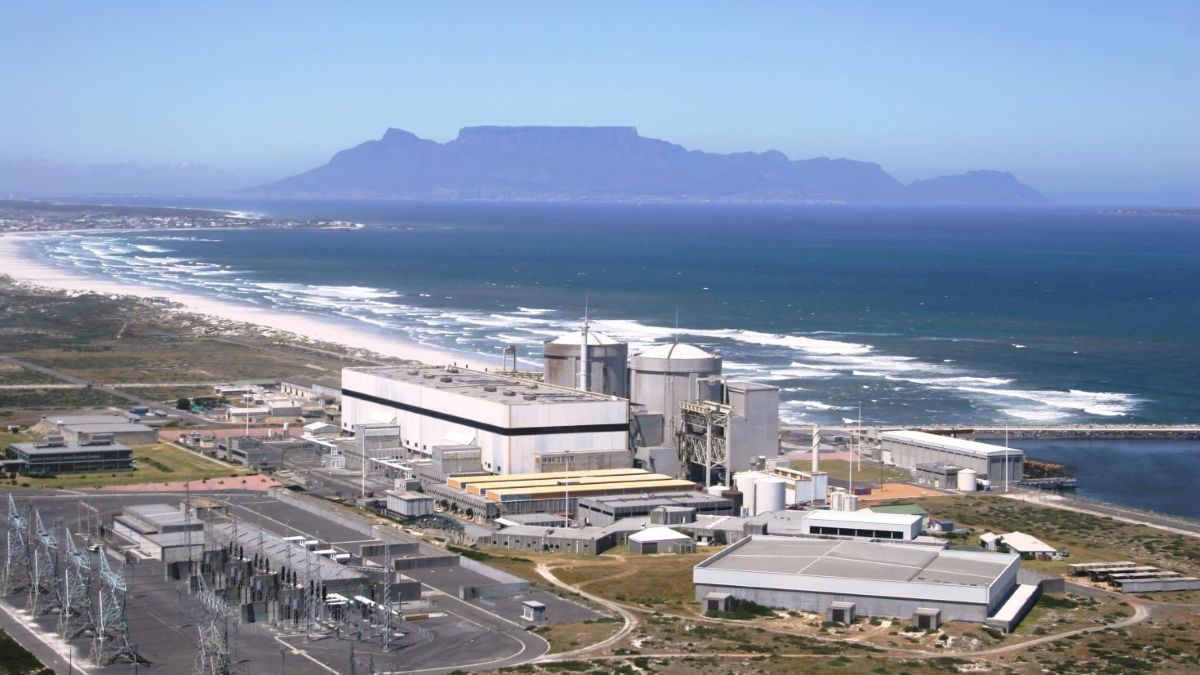
CAPE TOWN — Eskom has confirmed that safety and containment systems at the Koeberg Nuclear Power Station performed strictly as designed following two brief, localized airborne radioactivity detections inside Unit 2’s containment building earlier this month.
The state utility verified that no radiation leak occurred beyond designated containment barriers, no iodine tablets were required for staff, and there was zero impact on plant employees, surrounding communities, or the broader environment. The event has officially been rated Level 0 (No Safety Significance) on the International Nuclear and Radiological Event Scale (INES)—the lowest possible classification, denoting an occurrence with no impact on nuclear or operational safety.
Localized Detection During Inspection Routine
Unit 2 has been off the grid since April 2026 for a planned, scheduled maintenance outage. The minor incidents occurred on July 2 and July 7 during Eddy Current Testing (ECT)—a non-destructive, globally standard inspection technique used to assess the structural integrity and wall thickness of steam generator tubes.
During the movement of robotic inspection probes inside the steam generator, a small quantity of microscopic oxide particles, known in nuclear operations as “crud,” became briefly airborne. The particles remained strictly confined within an enclosed, controlled work zone inside the primary containment building.
Environmental and nuclear safety experts recognize such minor airborne particulate transients as a well-documented phenomenon during steam generator maintenance in pressurized water reactors globally.
Defence-in-Depth Systems Trigger Swift Response

According to Eskom, the station’s multi-layered defence-in-depth protocols responded automatically when sensitive Constant Air Monitors (CAMs) detected the slight rise in airborne activity.
The temporary increase triggered standard radiation protection procedures within the work zone:
- Immediate Halt: Maintenance crews temporarily suspended inspection activities and secured the immediate work environment.
- Active Filtration: High-Efficiency Particulate Air (HEPA) filtration systems operating under negative pressure successfully scrubbed and cleared the airborne particles from the controlled environment.
- Verification: Radiological assessments were conducted to confirm normal baseline conditions before work resumed.
- Staff Briefing: Personnel in the area received a full safety debriefing following the clear-up.
The National Nuclear Regulator (NNR) was formally notified in full alignment with statutory reporting mandates.
Outage Timelines Remain Intact
Eskom reaffirmed that the localized event has caused no delay to the overall maintenance schedule for Unit 2, which remains on track for completion in November 2026. Meanwhile, Koeberg Unit 1 continues to operate safely at full capacity, maintaining continuous supply to the national grid.
The incident highlights the necessity of continuous, highly sensitive monitoring infrastructure within nuclear facilities. While nuclear power operations face ongoing public and environmental scrutiny, Eskom reiterated its commitment to transparency, regulatory compliance, and stringent environmental safeguards as Unit 2 proceeds through its regular safety overhauls.