
 By
By 
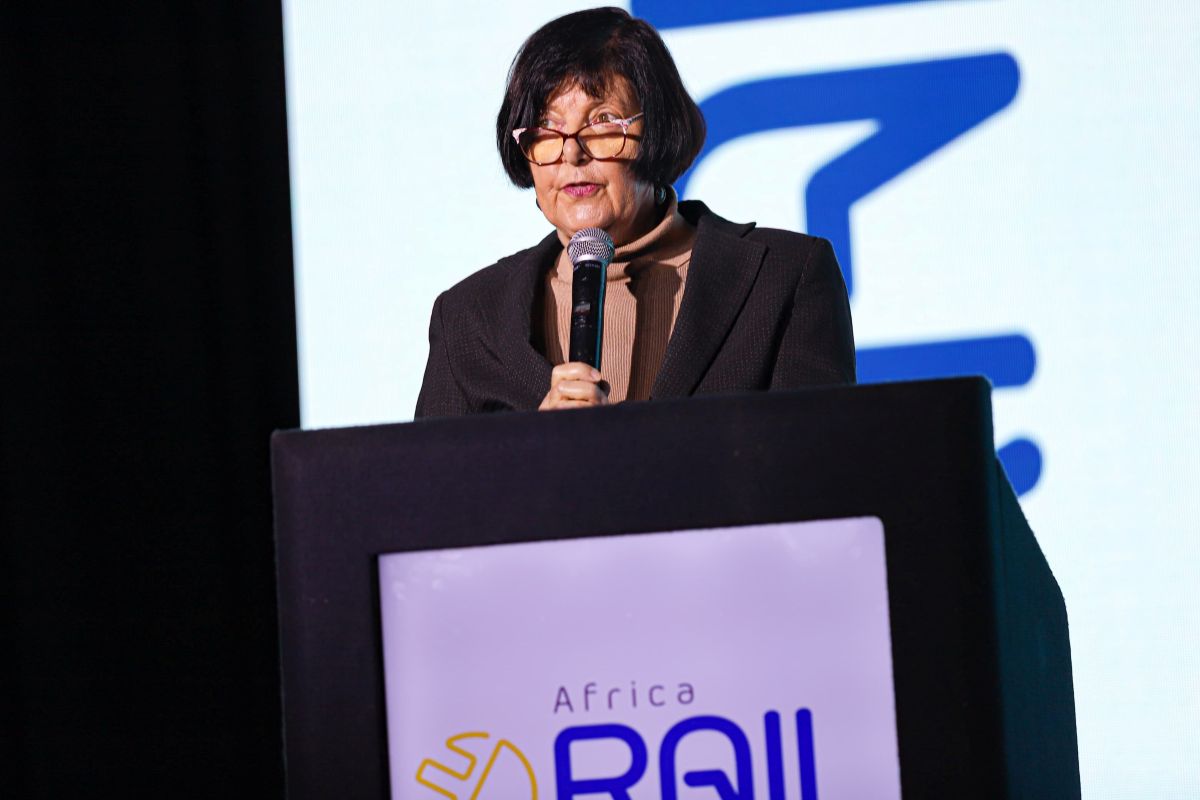
The debate surrounding the future of South African logistics is no longer about whether to reform, but how quickly those reforms can be executed. Speaking at the 26th Africa Rail Conference and Exhibition, South Africa’s Minister of Transport, Barbara Creecy, delivered a clear message to investors, operators, and regional partners: the era of state monopoly over the country’s rail tracks is officially giving way to a competitive, multi-operator market.
For years, South Africa’s logistics network has faced severe structural bottlenecks, causing a costly migration of freight from rail to road. However, Creecy’s address signalled that policy planning has finally transitioned into tangible, market-ready implementation.
“For South Africa, this is the moment of transformation as our rail reform programme moves from policy formulation to execution,” Creecy declared, marking a decisive shift in the state’s approach.
The Dawn of Open Access and Private Participation
The most immediate catalyst for this transformation is the introduction of third-party operators to the national rail network. On March 13, 2026, the government approved the first 11 private Train Operating Companies (TOCs) to access the national freight infrastructure, with operations scheduled to commence on April 1, 2027.
These private operators plan to move up to 24 million tons of freight per annum. This structural shift is poised to revitalize key economic sectors by introducing competition based on service quality and efficiency.
Key Benefits of Open Access:
- Fiscal & Employment Gains: The entry of TOCs will generate vital revenue for the fiscus while securing and creating jobs.
- Commercial Diversity: For the first time, South African mineral exporters, automotive manufacturers, and agricultural producers will have alternative rail operators to choose from.
- Infrastructure Revitalization: Increased track usage generates access fees that can be reinvested directly into network maintenance.
To facilitate this, the Transnet Rail Infrastructure Manager (TRIM), established in late 2024, recently published its second Network Statement alongside Rail Access Tariffs for public comment. This operates in tandem with the newly established Transport Economic Regulator, which will ensure a fair, transparent, and competitive playing field for all operators.
The Macroeconomic Multiplier: The National Rail Master Plan
Underpinning these immediate reforms is the Draft National Rail Master Plan, recently approved by Cabinet for public comment. The plan serves as a blueprint to re-energize the transport system until 2050 and beyond, focusing heavily on closing the massive chasm between current capacity and actual market demand.
Currently, South Africa’s rail network moves approximately 165 million tons of freight annually. However, total market demand stands at 280 million tons. The Master Plan sets an interim sector-specific target of moving 250 million tonnes annually by 2030.
The macroeconomic argument for this expansion is compelling. Economic modelling commissioned for the National Rail Master Plan reveals a powerful multiplier effect:
Every R1 million invested in rail infrastructure generates approximately R4.3 million in GDP growth
To finance this ambitious vision, South Africa is lowering the barrier to entry for international capital. The country is currently domesticating the Luxembourg Rail Protocol through the Mobile Equipment Act of 2007. By reducing investment risk and easing access to affordable private funding for rolling stock, the protocol is expected to provide a substantial boost to competing TOCs.
A Pipeline of High-Value Projects
The state’s Private Sector Participation (PSP) Framework, hosted alongside the Development Bank of Southern Africa, has already generated a highly anticipated pipeline of investment-ready projects.
Several major logistics corridors are advancing to market this year, including:
- The Ngqura Manganese Export Corridor
- The Richards Bay Dry Bulk Terminal
- The Container Corridor between Gauteng and eThekwini
Additionally, the Durban Container Terminal Pier 2 Concession has officially reached financial close, a move that will expand port handling capacity from 2.0 million to 2.8 million Twenty-Foot Equivalent Units (TEUs) annually. Backed by R16.8 billion in public investment currently in execution through the Budget Facility for Infrastructure, and another R23.6 billion in development, the state is actively crowding-in private capital to share the developmental load.
Passenger Rail: The Commuter Comeback
While freight dominates industrial discourse, passenger rail is undergoing an equally dramatic turnaround. Commuter networks, severely damaged by historical neglect and vandalism, are steadily being restored.
By the end of March 2026, annual passenger journeys on the national commuter rail network surpassed 100 million, with 35 of 40 priority lines successfully brought back into service. A prime example of this recovery is Cape Town’s Central Line, where the restoration of operations has reconnected vulnerable communities to affordable transport while creating over 2,500 direct jobs and engaging more than 50 local SMMEs.
The ultimate target is highly ambitious: returning the commuter network to its pre-pandemic high of 600 million passengers per annum by 2030.

The Regional and Environmental Imperative
On a continental scale, South Africa’s rail modernization is deeply intertwined with the broader goals of the Southern African Development Community (SADC) and the African Continental Free Trade Area (AfCFTA). Moving cargo off roads and onto the SADC region’s 40,000-kilometer railway network is critical to reducing road maintenance costs, improving safety, and lowering carbon emissions.
Furthermore, South Africa intends to leverage its African Union mandate to serve as a hub for rail manufacturing on the continent, supported by high-tech manufacturing facilities like the Dunnotar plant in Gauteng.
Ultimately, the structural reforms taking place in South Africa’s rail corridors represent a shift from defensive logistics to offensive economic growth. By welcoming private operators, solidifying regulatory oversight, and committing to massive infrastructure investment, South Africa is laying down the tracks for a highly competitive, integrated African economy.