
 By
By 
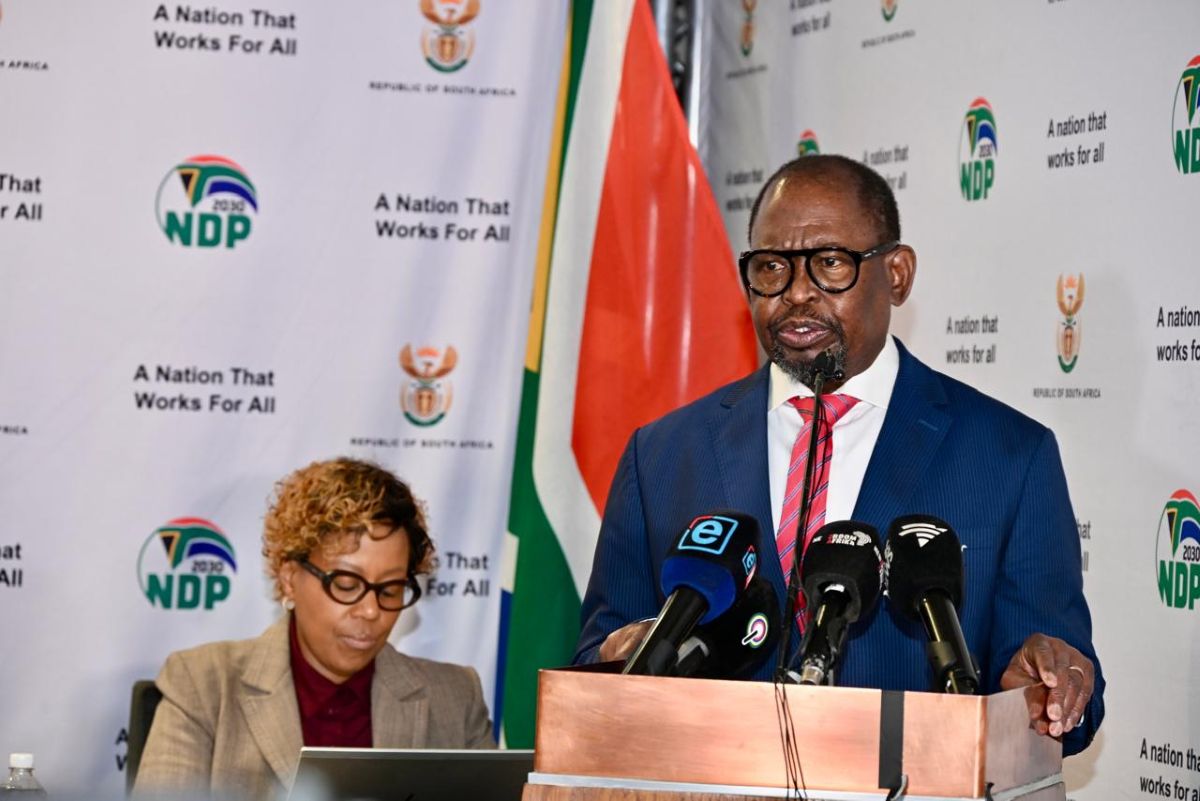
In a decisive move to curb the systemic rot plaguing South Africa’s local governance, Minister of Finance Enoch Godongwana has wielded the ultimate constitutional lever. National Treasury has announced the temporary withholding of the July 2026 equitable share transfers to sixty-nine municipalities across the country.
The intervention—enacted under Section 216(2) of the Constitution and the Municipal Finance Management Act (MFMA)—marks a significant shift from passive technical support to strict financial discipline.
For years, the macroeconomic discourse surrounding South African local government has centred on a structural mismatch between municipal revenue generation and expanding socio-economic expenditure mandates. However, as the Minister rightly identified, the fragility of local public finance is no longer just an exogenous by-product of weak regional economies or rising bulk service costs. Instead, it is an endogenous crisis driven by institutional decay, a collapse of internal oversight, and an pervasive culture of non-payment.
The Sobering Anatomy of Municipal Default
The empirical data provided by the National Treasury paints a bleak picture of fiscal irresponsibility. Since the 2021-22 fiscal year, South African municipalities have racked up a staggering R24.12 billion in fruitless and wasteful expenditure. The accumulation of irregular expenditure stands at an astronomical R145.21 billion, with R40.14 billion incurred in the 2024-25 cycle alone.
Perhaps most damning is the erosion of basic budget credibility. In the 2024-25 financial year, nearly half of the country’s municipalities—116 in total—adopted budgets that were entirely unfunded. Operating on unfunded budgets is the financial equivalent of flying blind; it guarantees a reliance on unauthorized overdrafts, deferred payments to creditors, and the inevitable collapse of infrastructure maintenance.
| Financial Malpractice Indicators (Recent Cycles) | Value (ZAR) |
| Fruitless & Wasteful Expenditure (Since 2021-22) | R24.12 Billion |
| Accumulated Irregular Expenditure | R145.21 Billion |
| Irregular Expenditure (2024-25 Single Year) | R40.14 Billion |
| Disclosed Unauthorized Expenditure | R118.13 Billion |
This financial delinquency creates a dangerous domino effect throughout the broader economy. By the end of the fiscal year, non-compliant municipalities owed R3.40 billion in interest to Eskom and R1.21 billion to various water boards. In addition, 48 municipalities failed to remit statutory third-party deductions, directly jeopardizing employee pensions and tax compliance.
By withholding these vital bulk payments, municipalities are actively undermining the financial viability of state-owned entities like Eskom and vital water infrastructure providers, while forcing standard service providers to absorb the costs of delayed payments. The real victims of this operational friction are everyday citizens and businesses, who face punitive service interruptions, infrastructure decay, and deteriorating local economies.
Accountability Over Autonomy: The Dual-Track Strategy
Minister Godongwana has emphasized that this sweeping intervention is not punitive, but corrective. For too long, conditional grants and equitable shares have flowed unconditionally into broken administrative systems, acting as a financial safety net for bad behaviour.
Despite extensive interventions by National Treasury—including targeted MFMA circulars, direct training, and one-on-one municipal engagements—internal accountability mechanisms have remained stubbornly dysfunctional.
[National Treasury Direct Funding] ──> [Eskom, Water Boards, & Statutory Bodies]
│
(Safeguards Basic Services)
│
▼
[Municipalities Must Meet Compliance Targets]
│
┌─────────────────────────────┴─────────────────────────────┐
▼ ▼
[15% Reduction in Irregular [Adopt Fully Funded Budgets &
Balances by Sept 2026] Active Consequence Management]
The breakdown occurs primarily at the council committee level. Under Section 32 of the MFMA, Municipal Public Accounts Committees (MPACs) are legally mandated to investigate unauthorized, irregular, fruitless, and wasteful expenditure (UIFWE), determine liability, and recover losses. Treasury’s findings reveal that many councils have simply bypassed MPACs entirely, creating an environment completely devoid of consequence management.
To mitigate the fallout on basic service delivery, National Treasury is executing a dual-track strategy:
- Direct Redirection of Capital: Funds are being rerouted in tranches directly to Eskom, water boards, and statutory bodies like SARS and the Auditor-General. This ensures that public money satisfies the bulk debts necessary to keep water flowing and lights on.
- Strict Performance Conditionalities: Withheld funds will only be reinstated once affected councils show tangible progress. This includes a mandatory 15% reduction in irregular expenditure balances by August, a further 15% reduction by September, proof of funded budgets, and the activation of functional disciplinary boards to process financial misconduct.
A Broad Geographical Crisis
The list of sixty-nine affected municipalities spans nearly every province, demonstrating that local financial mismanagement is a structural crisis rather than an isolated issue. Major metropolitan hubs like the City of Johannesburg, Buffalo City, and Nelson Mandela Bay find themselves grounded alongside smaller local councils like Emfuleni, Matjhabeng, and Madibeng.
Every single one of these municipalities was given prior written notice and an opportunity to appeal the decision. Their failure to provide sufficient justification highlights a broader abdication of fiduciary duties by local political and administrative leadership.

Safeguards, Not Sanctions
From a macroeconomic perspective, Minister Godongwana’s strategy is a necessary step toward stabilizing South Africa’s broader fiscal framework. Local government financial stability is deeply intertwined with national fiscal health. Sovereign credit ratings and investor confidence rely not just on national budget balancing, but on the efficiency and stability of the entire state apparatus.
“Restoring the credibility of public finance, at the local and national level, is a key part of our growth strategy and we cannot turn away from the measures that get us there.”
By holding local leaders accountable to the rule of law, National Treasury is sending a clear message: fiscal discipline and service delivery are complementary goals, not opposing forces. While the temporary withholding of the equitable share will undoubtedly place immense short-term pressure on these sixty-nine administrations, it sets a crucial precedent. If South Africa is to achieve sustainable economic growth, the era of treating public funds as an open-ended subsidy for poor governance must come to an end.