
 By
By 
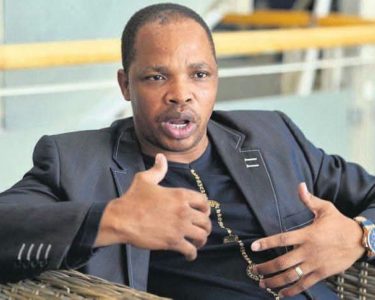
JOHANNESBURG – In a rare display of institutional contrition, Gauteng MEC for Finance, Bonginkosi Dunga, has publicly confronted the provincial government’s chronic failure to pay its service providers, characterizing the crisis as a source of profound institutional embarrassment.
Speaking directly to frustrated business owners at an Imbizo convened to address mounting fiscal blockages, Dunga bypassed routine bureaucratic platitudes. He admitted that forcing entrepreneurs to gather in a hall to demand baseline compliance on routine invoicing should trouble anyone holding public office.
“We are not proud of where we find ourselves,” Dunga stated frankly. “But we would rather stand before you and be honest than hide behind reports and statistics while your businesses suffer in silence.”
The Scale of the Crisis
The fiscal data laid bare by the Provincial Treasury outlines a deep systemic bottleneck. As of May 31, 2026, total accruals and unrecognised payables across the Gauteng Provincial Government reached an astronomical R7.5 billion.
A breakdown of this debt exposes severe structural delays:
- R4.2 billion consists of transactions still within the statutory 30-day window.
- R3.3 billion—amounting to 44% of the total debt pool—has already breached the legal 30-day payment threshold.
Gauteng Provincial Accruals (May 2026)
├── Total Debt Portfolio: R7.5 Billion
│ ├── Within 30-Day Window: R4.2 Billion (56%)
│ └── Breached 30-Day Limit: R3.3 Billion (44%)
While a historical vantage point offers some context—the R7.5 billion mark reflects a roughly 40% reduction from the R12.6 billion choked in the system in March 2025—recent trajectory trends indicate that short-term fiscal pressures are again intensifying. The overall debt figure ticks upward from levels recorded in April 2026, proving that existing interventions have yet to meaningfully ease the chokehold on supply chains.
Health and Education: The Crux of the Bottleneck
The macro figures mask a highly centralized crisis. According to Treasury metrics, two provincial portfolios are overwhelmingly responsible for the province’s payment failures:
1. The Department of Health
The single largest institutional offender, Health is sitting on R3.6 billion in accruals—nearly half of the entire province’s financial exposure. When past-due accruals are calculated into the department’s compliance metrics, its real-world compliance rate drops to an abysmal under 1%.
Furthermore, Health accounts for 97% of the total volume and 87% of the total cash value of all provincial invoices older than 30 days. Most critically, the department sits on an unresolved backlog of 8,158 invoices valued at over R2 billion that have been left completely unpaid for 120 days or longer.
2. The Department of Education
Representing the second-largest pool of delayed capital, Education accounts for R1.4 billion in outstanding accruals. Together with Health, these two portfolios form an administrative dead zone where external partners wait the longest and suffer the most severe operational damage.
Red Tape and Administrative Breakdown
Crucially, Treasury’s internal analysis reveals that the crisis is driven by operational malpractice just as much as it is by genuine cash constraints.
Dunga revealed that 14 provincial departments and three public entities were caught routinely generating purchase orders after an invoice had already been received—sometimes months after the fact. This widespread reliance on manual procurement pathways outside regular system-based safeguards introduces severe delays.
“This is a process failure that is entirely within our control to fix, and it has nothing to do with a lack of budget,” Dunga noted. “It reflects poor discipline in how orders are placed, tracked, and reconciled.”
Because the internal paperwork is frequently broken from the start, businesses find their capital frozen not because the state lacks the funds, but because administrative chaos prevents the payment systems from clearing the transactions. To combat this, Treasury has begun initiating strict internal corrective measures, including budget-blocking mechanisms and system-level automation for reconciliation.
The Economic Ripples
For the broader Gauteng economy, the ramifications of this administrative inertia are severe. When the state delays payment, the economic shockwaves cascade rapidly down the private sector value chain. Mid-tier contractors left unpaid are forced to stall infrastructure projects, defer maintenance, and freeze payments to their own sub-contractors and material suppliers.
In critical sectors like health and public works, this translates directly into service delivery failures, leaving communities with under-resourced clinics and abandoned build sites.
[Provincial Payment Delay]
│
▼
[Primary Contractor Cash Freeze]
│
▼
[Sub-Contractor/Supplier Defaults]
│
▼
[Stalled Projects & Retrenchments]
From a corporate health perspective, these delays force private firms to take on expensive, high-interest short-term credit lines simply to cover payroll and overhead operational costs.
The demographic bearing the brunt of this disruption consists of small and medium enterprises (SMEs), black-owned businesses, and township-based suppliers. Lacking the robust balance sheets or cheap institutional credit access available to large corporations, these vital economic drivers face rapid insolvency.
By delaying payments to these vulnerable segments, the state actively works against its own stated legislative and economic goals of inclusive growth and township economic revitalization. Over time, this systemic risk forces competent enterprises to inflate their tender pricing to hedge against payment delays, or back away from state contracts entirely—stifling market competition and driving up long-term procurement costs for the state.
Structural Collaboration Moving Forward
In an attempt to pivot toward immediate crisis resolution, the Treasury brought essential regulatory and financial stakeholders directly into the room. The presence of key external institutions underscored the operational realities facing service providers:

- The South African Revenue Service (SARS): Stood up to address the complex tax and tax-compliance liabilities that hit businesses when their invoices are logged but remain unpaid.
- The Companies and Intellectual Property Commission (CIPC): Brought in to manage business registration and compliance issues that frequently trigger state payment freezes.
- Standard Bank: Present in its capacity as the province’s official banker to explore commercial cash-flow bridge facilities and emergency liquidity frameworks to keep vulnerable businesses afloat.
Conspicuously absent from the proceedings, however, were leadership delegations from the very sectors driving the crisis: Health, Education, Human Settlements, and Infrastructure Development. While expressing regret over their absence, Dunga emphasized that future iterations of the Imbizo must include these departments taking direct operational ownership of their specific supplier backlogs.
Moving forward, the Gauteng Treasury’s willingness to openly lay bare its operational failures signals an important shift from defense to diagnostics. However, for the thousands of service providers exposed to the province’s R7.5 billion administrative logjam, transparency is merely a starting point. Real success will be measured exclusively by the speed at which billions in frozen capital is injected back into the provincial economy.