
 By
By 
Fifty years ago, thousands of young South Africans marched out of their classrooms in Soweto armed with nothing but schoolbooks and a radical refusal to accept the limits of Bantu Education.
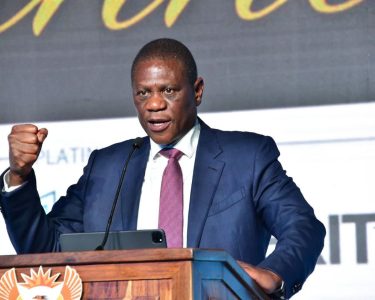
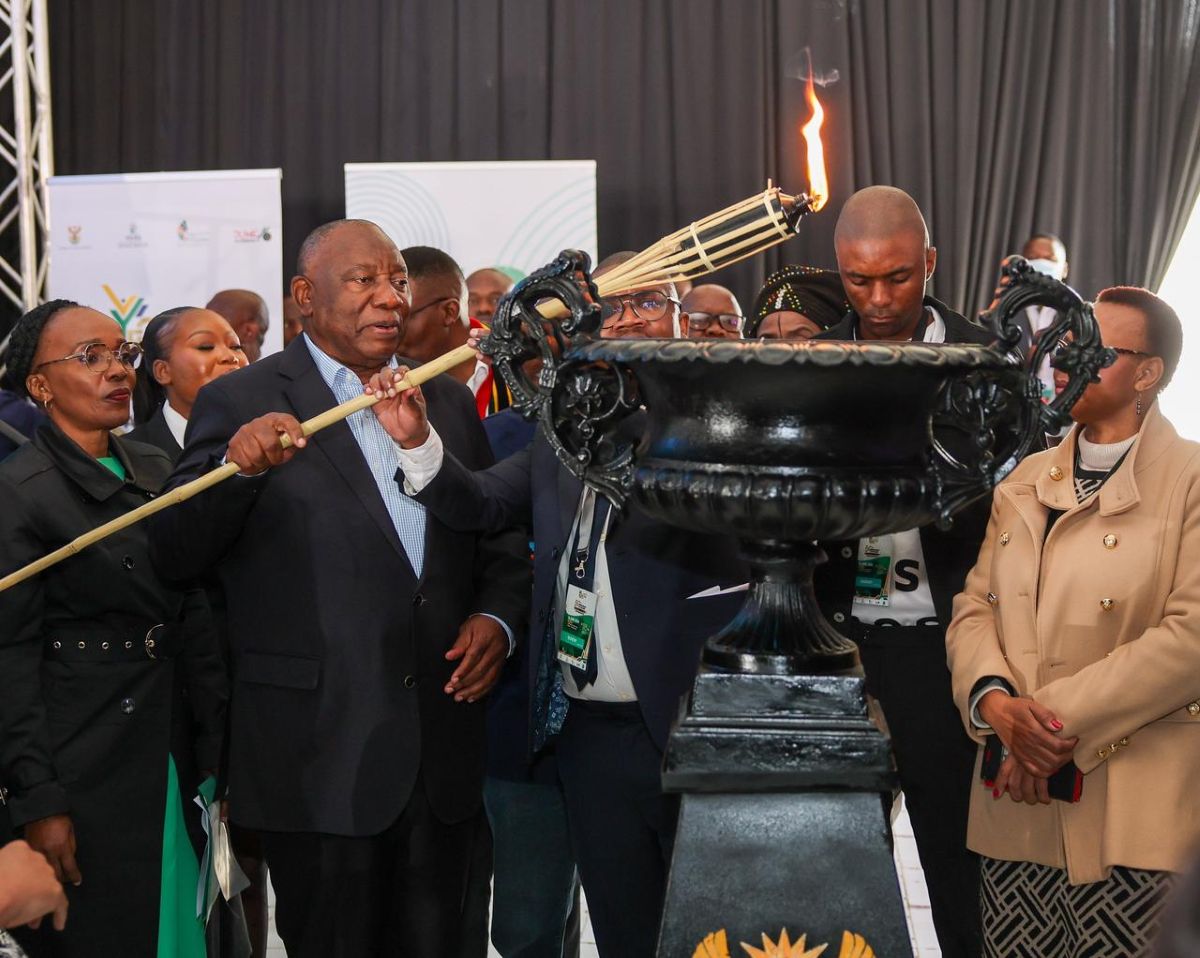
On Tuesday, standing before an audience at the FNB Stadium, President Cyril Ramaphosa marked that half-century milestone not just with historical reverence, but with a stark, uncomfortable acknowledgment of the present: the modern battleground for South Africa’s youth is no longer entering the classroom, but surviving the economic landscape beyond it.
The anniversary arrives at a deeply symbolic intersection of national memory. As Ramaphosa noted, 2026 represents a triple milestone of democratic heritage: 50 years since the 1976 uprising, 70 years since the historic 1956 Women’s March against pass laws, and 30 years since the adoption of the democratic Constitution in 1996. Yet, the celebratory tone was heavily tempered by an acute structural crisis. The defining question of the day, as posed by the President, was a direct indictment of contemporary progress: “The question before us is whether South Africa is doing enough to create opportunities worthy of their sacrifice.”
A Fundamental Shift in the Battle Lines
Ramaphosa’s address drew a sharp analytical contrast between the generation of 1976 and the over 37 million South Africans currently under the age of 35. Where the class of 1976 fought legal exclusion and an authoritarian regime designed to prepare black children for lives of servitude, today’s youth confront a more decentralized, insidious enemy: structural unemployment, poverty, and inequality.
“The youth of 1976 fought exclusion,” Ramaphosa stated. “Ours must fight unemployment, poverty and inequality. Theirs was the struggle to enter the classroom. Ours is the struggle to ensure that what begins in the classroom does not end in the unemployment queue.”
The administration did not shy away from the devastating reality of the metrics. With the youth unemployment rate currently hovering at a staggering 46 percent, representing over 4.7 million young people without work, the narrative of democratic triumph risks being hollowed out by economic desperation. Ramaphosa contextualized these figures not merely as statistical abstractions, but as real-world tragedies: the graduate sending out dozens of unanswered applications, the artisan unable to showcase their talents, and the young entrepreneur starved of capital.
Rejecting Scapegoating, Demanding Solutions
In one of the most politically charged segments of his address, Ramaphosa confronted the rising tide of xenophobia and populist rhetoric that has increasingly characterized local political discourse. With local government elections on the horizon, some factions have sought to blame foreign nationals for the tripartite crises of unemployment, crime, and deteriorating public services.
The President delivered a firm rebuke to this narrative, insisting that South Africa’s problems are inherently internal. While acknowledging the administrative challenge of illegal immigration, he emphasized that addressing economic stagnation requires structural, practical interventions rather than the scapegoating of vulnerable populations. The roots of the crisis, he argued, lie squarely in slow economic growth, systemic inequality, and operational weaknesses within service delivery.
“Even as we recognise the challenge of illegal immigration – which we are taking decisive action to address – our problems are our own. And which we have a responsibility to fix ourselves.”
The State’s Multi-Front Response
To counter these systemic deficiencies, the executive outlined a three-front strategy aimed at building a bridge from institutional education to economic participation. The first involves the aggressive scaling of public employment and workplace experience platforms. According to the executive, the SA Youth.mobi digital platform has registered over 5.7 million young people, linking more than 2 million to earning opportunities. Concurrently, the Presidential Employment Stimulus has reportedly supported 2.5 million opportunities, with a notable demographic focus: 82 percent of beneficiaries are youth, and 66 percent are women.
The second pillar involves a fundamental overhaul of the skills development framework, moving away from what the President termed “training for training’s sake.” The strategy aims to position Technical and Vocational Education and Training (TVET) colleges as localized economic engines, directly linking curriculum design to the procurement and labor needs of regional economies.
The final and most ambitious front relies on state-led capital expenditure. Ramaphosa announced a massive R1 trillion infrastructure investment pipeline over the next three years. The state intends to leverage this spending—spanning roads, rail, dams, energy infrastructure, and digital networks—to mandate apprenticeships, artisan development, and localized enterprise procurement. Furthermore, the newly enacted Public Procurement Act will be weaponized to route state purchasing power preferentially toward enterprises owned by youth, women, and persons with disabilities, alongside a targeted goal to support one million micro, small, and medium enterprises (MSMEs).
An Appeal to Corporate South Africa
Crucially, the address recognized that public sector interventions alone cannot absorb a labor surplus of this magnitude. Ramaphosa issued a direct, personal appeal to corporate leaders, business owners, and hiring managers across the country to re-evaluate their risk matrices and hiring practices.
“The young person in front of you does not lack ability. They lack only the chance to prove it,” Ramaphosa argued, calling on the private sector to “hire for potential, not only for experience.” To mitigate corporate hesitancy, he highlighted the underutilized Employment Tax Incentive, reiterating that the state is prepared to co-share the financial risk of introducing young workers to their first formal employment roles.
Democratic Architecture vs. Economic Reality
From a journalistic perspective, the speech illustrated the persistent friction at the heart of South Africa’s democracy: the remarkable success in expanding social and educational access contrasted against the failure of market absorption. On one hand, the post-apartheid state has successfully dismantled the legal barriers to education; no-fee schools support millions, the School Nutrition Programme feeds nine million learners daily, and the National Student Financial Aid Scheme (NSFAS) funds over a million students annually, resulting in four times the number of African graduates compared to 1994.
Yet, as the President rightly observed, “opening doors is not enough.” If those open doors merely lead from a university hall to an unemployment queue, the social contract remains profoundly broken. As the country moves toward municipal polls, the administration is pushing for a generational shift, arguing that young professionals must move to the center of rebuilding local government—not just as political figures, but as the engineers, urban planners, and data specialists required to construct functional cities.
Fifty years after Hector Pieterson’s sacrifice exposed the ultimate brutality of the apartheid state, the modern republic faces a quieter, structural crisis of dignity. Ramaphosa’s Youth Day address made it clear that active citizenship and state intervention must urgently converge. The ultimate measure of South Africa’s progress will not be found in the nostalgic preservation of historical memory, but in whether the state can successfully transform its greatest demographic asset—its youth—into an active, empowered economic engine.