
 By
By 
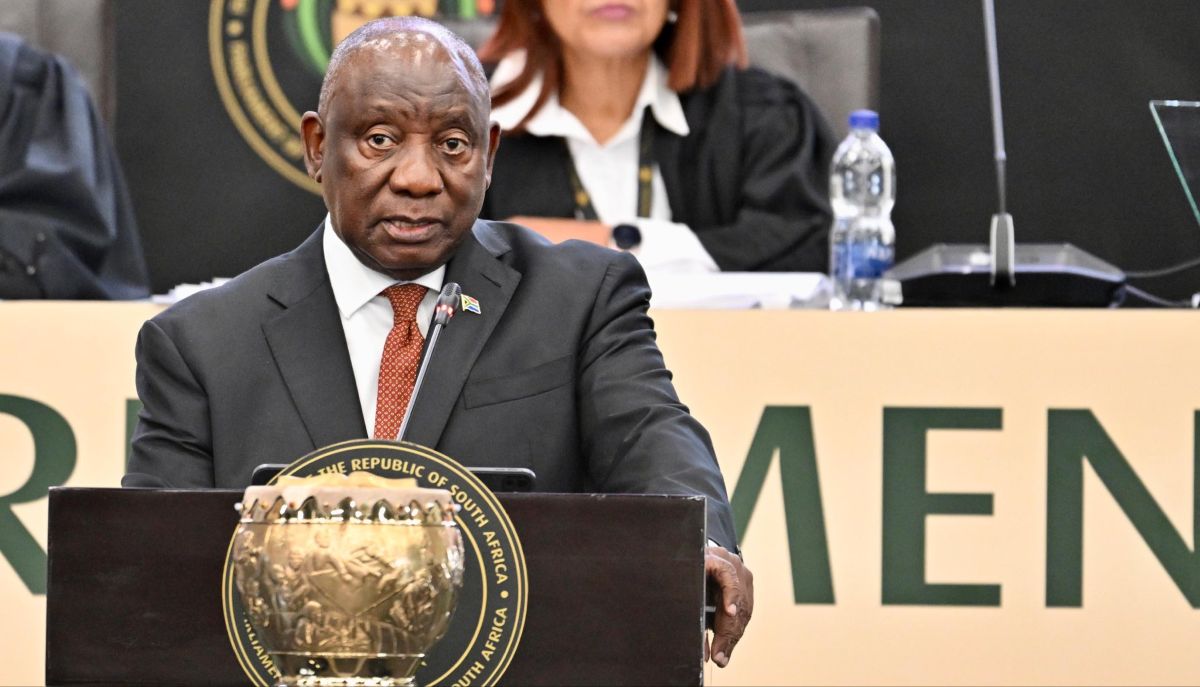
South Africa’s long-strained macroeconomic framework is exhibiting structural signs of stabilization, supported by an improving rating landscape, strong fiscal returns, and concrete turnarounds in network industries. Addressing the National Assembly during The Presidency Budget Vote 2026, President Cyril Ramaphosa detailed a shifting economic landscape that marks a definitive pivot from structural stagnation toward active structural recovery.
Driven by a core mandate to catalyse economic growth and expand job creation, the state’s multi-layered interventions are beginning to demonstrate measurable policy yields.
The most immediate verification of this shifting paradigm can be observed across international credit assessments. Six months after S&P Global Ratings lifted South Africa’s sovereign credit rating for the first time in two decades; Moody’s Investors Service upgraded the country’s rating outlook from stable to positive.
This dual adjustment reflects growing institutional confidence in South Africa’s fiscal discipline, robust tax revenue performance, and a stabilized national debt trajectory. For institutional investors, this represents a significant mitigation of sovereign risk premiums, clearing a functional path for sustainable capital inflows.
The Structural Pivot: Network Industries & Energy Stability
For nearly twenty years, the primary constraint on domestic gross domestic product (GDP) expansion was the persistent operational breakdown of the national energy grid. The operational collapse at Eskom imposed intense friction across the secondary and tertiary sectors of the economy.
However, coordinated mitigation strategies under the National Energy Crisis Committee have successfully established a significant operational milestone: South Africa has now achieved more than an uninterrupted year without load shedding.
This operational restoration has been accompanied by Eskom’s return to financial and operational viability, driven by targeted governance interventions and structured balance sheet support. The continuous introduction of new capacity to the national grid—particularly utility-scale and embedded renewable energy projects—indicates a decoupling from carbon-heavy, brittle generation models.
The state is now transitioning its focus toward addressing localized municipal distribution bottlenecks, specifically the phenomenon of “load reduction” affecting lower-income urban centers.
Simultaneously, the supply-chain blockages that long constrained export-led sectors are beginning to ease. Supported by the National Logistics Crisis Committee, Transnet is implementing critical turnarounds across national rail corridors and port hubs. These interventions are directly targeting the structural inefficiencies that previously restricted performance in mining, agriculture, and manufacturing, laying down a firmer logistical foundation for external trade.
Capital Mobilization & Trade Diversification
The Presidency’s centralized role in driving domestic asset formation was highlighted by the outcomes of the 6th South Africa Investment Conference, which secured R890 billion in new investment commitments across diverse economic sectors. A core characteristic of this capitalization round is the heavy representation of domestic investors.
This strong performance by local capital serves as a critical signaling mechanism; robust local reinvestment patterns traditionally reduce perceived risk for foreign direct investment (FDI), establishing a stronger long-term investment cycle.
To absorb this capital effectively, the state has initiated a large-scale infrastructure program. Over the medium-term expenditure framework (MTEF), the state is committed to investing R1 trillion to upgrade and build critical assets. This capital deployment targets roads, dams, educational facilities, healthcare institutions, and core energy and transport networks.
On the trade front, structural adjustments aim to enhance export complexity and scale. The state is actively working to optimize agreements with primary trade partners, including regional African economies, the European Union, the United States, and China. This external orientation is yielding clear results in high-value primary sectors.
In the agricultural sector, export earnings for the first quarter of this year grew by 11 percent year-on-year, positioning South Africa as the world’s largest exporter of citrus by volume.
Microeconomic Interventions: Agrarian Reform and Tourism
Economic expansion remains incomplete without systemic broad-based participation. A major impediment to rural economic integration has been the legal structure of state-owned agricultural land. Under the Proactive Land Acquisition Strategy, the state accumulated roughly 2.5 million hectares of productive land. However, this land was primarily distributed via short-term leases.
These temporary tenures restricted beneficiaries from securing institutional credit, building permanent infrastructure, or engaging in long-term capital allocation.
To address this structural dead-weight, the government has launched a program to convert agricultural leases into full title deeds. By shifting from temporary leaseholds to clear land titles, the state aims to bring black commercial farmers into the agricultural mainstream, unlock rural credit markets, and stimulate rural GDP.
The operational frameworks for these ownership transfers will be driven directly by the Ministry of Land Reform and Rural Development.
Concurrently, the services sector is experiencing a rapid post-pandemic recovery. Total international tourist arrivals reached a record 10.5 million last year. This upward momentum has carried directly into the current fiscal year, with first-quarter tourist arrivals rising by more than 12 percent compared to the corresponding period last year. Given the high employment multiplier inherent to hospitality and tourism, this sector remains a vital engine for low- and medium-skilled job absorption.
Risk Factors and Global Headwinds
Despite these positive internal developments, South Africa’s open economy remains exposed to external shocks. Geopolitical conflicts, shifting international monetary policies, and volatile global commodity markets continue to present significant downside risks to the domestic recovery. Additionally, structural preservation remains necessary at home: the state continues to run active protection and support programs through relevant departments to safeguard employment within distressed foundational sectors, including automotive manufacturing, cement, and steel production.