
 By
By 
DEPUTY PRESIDENT MASHATILE’S KEYNOTE ADDRESS IN NEW DELHI SIGNALS A TRANSITION FROM HISTORICAL SOLIDARITY TO HIGH TECH CO-CREATION AND INDUSTRIAL INTEGRATION.
NEW DELHI — Against the backdrop of a rapidly changing geopolitical landscape, South Africa and India are pivoting their long-standing relationship from a framework of historical solidarity to an aggressive, delivery-oriented economic alliance.
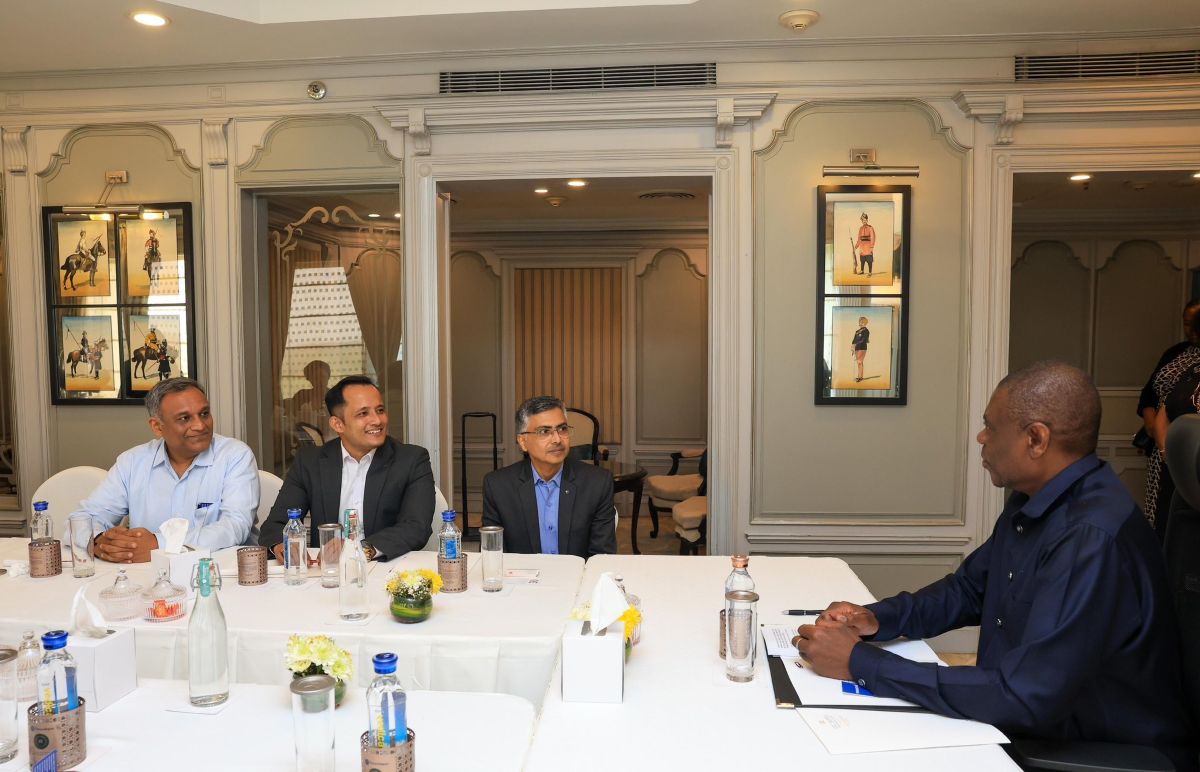
Speaking at the South Africa-India Technology, Trade, and Investment Roundtable on May 30, 2026, South African Deputy President Mr. Shipokosa Paulus Mashatile outlined an ambitious roadmap explicitly designed to transform bilateral dialogue into concrete industrial capacity.
The diplomatic ties between Pretoria and New Delhi have traditionally rested on deep-seated moral and anti-colonial narratives. However, Deputy President Mashatile’s address signalled that while the ideological foundation remains resolute, the modern imperative demands a swift transition toward technological co creation, supply chain defense, and industrial beneficiation. Accompanied by a high-level delegation of ministers, deputy ministers, and senior state officials, Mashatile’s presence underscored Pretoria’s commitment to viewing India not just as a traditional ally, but as an indispensable architect of the Global South’s economic future.
THE THREE PILLARS OF A CIVILIZATIONAL ALLIANCE
In his opening analysis, Mashatile conceptualized the bilateral relationship through three distinct historical and functional pillars. The first is the civilizational Gandhi-Mandela legacy. This bond, rooted in Mohandas Gandhi’s formative transformation into the Mahatma on South African soil, evolved into decades of staunch diplomatic resistance against apartheid.
From cutting trade ties in 1946 to the signing of the historic Red Fort Declaration of 1997, the moral alignment between the African National Congress (ANC) and New Delhi has been absolute. The second pillar transitions from morality to modernity: science and technology. Established under a 1995 bilateral framework, this collaboration spans critical frontiers including astronomy, agriculture, health sciences, and indigenous knowledge.
The crown jewel of this pillar remains the Square Kilometre Array (SKA), the world’s largest radio telescope. Led by South Africa with India serving as an essential partner, the SKA stands as an enduring symbol of scientific discovery emerging from nations that once had to fight exclusively for basic sovereignty.
The third pillar—expanding economic partnership—presents the most dramatic raw data. Bilateral trade between South Africa and India has experienced an exponential trajectory, surging from $4 billion in 2005 to nearly $20 billion in 2024, successfully surpassing pre-pandemic benchmarks.
Today, India consistently ranks as one of South Africa’s premier global trading partners and its absolute largest export market on the Asian continent. Yet, Mashatile explicitly noted that trade volumes alone are no longer the ultimate measure of success; the true benchmark must be the structural transformation of both economies.
NAVIGATING A FRAGMENTING GLOBAL ORDER
The urgency undergirding Mashatile’s address stems directly from structural pressures within the contemporary international system. The Deputy President warned of a fragmenting global order, highlighting the ecological boundaries of planet Earth—manifested through climate change and resource depletion—and the destabilizing rise of unipolar forces. In a clear nod to the anxieties of developing nations, he cautioned against a rising geopolitical paradigm where powerful states prioritize narrow self-interest over established international law, often to the profound detriment of smaller or emerging economies.
“Our collective task is therefore to transform these shared challenges into opportunities, to turn climate action into renewal, technology into empowerment, and global governance into a voice for all,” Mashatile declared.
To counteract these unipolar pressures, Mashatile positioned the South Africa-India alliance as a vital counterweight within multilateral frameworks such as BRICS, IBSA, the Non-Aligned Movement (NAM), and the Indian Ocean Rim Association (IORA). Following recent high-level consultations between South African President Cyril Ramaphosa and Indian Prime Minister Narendra Modi—particularly in the context of South Africa’s upcoming G20 Presidency—the two powers have committed to championing a more inclusive global economic architecture.
FOUR STRATEGIC PRIORITIES FOR CO-CREATION
The core of the new bilateral strategy lies in a focused collaboration agenda split across four strategic priorities, deliberately moving away from simple “technology transfer” toward reciprocal “technology co creation.”
1. Industrial and SMME Co-Creation: Acknowledging that small, medium, and micro enterprises (SMMEs) are the lifeblood of inclusive growth, South Africa aims to link its industrial base directly with India’s globally competitive MSME ecosystem. Working via the Global Trade and Technology Council of India (GTTCI), South Africa’s Department of Trade, Industry and Competition (the dtic), and the Small Enterprise Development Agency (SEDA), a new linkage program will drive co-production and joint market access. Target sectors include agro-processing, pharmaceutical manufacturing, mining beneficiation, and renewable energy components.
2. Technology Joint Ventures and Digital Infrastructure: Positioning South Africa as the definitive digital gateway to the African continent, Mashatile invited substantial Indian investment into data centers, cloud infrastructure, and fibre connectivity.
This digital foundation is engineered to unlock the vast scale of the African Continental Free Trade Area (AfCFTA). Furthermore, as artificial intelligence alters the competitiveness of mining, logistics, and public administration, both nations plan to cooperate heavily on AI ethics, governance, and public trust.
3. Investment for Beneficiation: Turning to mineral wealth, Mashatile emphasized that trade must generate local productive capacity and high-value jobs. South Africa is actively seeking Indian investment in beneficiation-led manufacturing, particularly in critical minerals such as platinum group metals, manganese, and vanadium.
The country’s Special Economic Zones (SEZs)—stretching from Coega and East London to Richards Bay and Dube TradePort—were pitched as world-class, globally competitive platforms for export oriented production, supported directly by the InvestSA ‘One Stop Shop’ model.
4. Skills and Innovation Ecosystems: Recognizing that industrialization cannot succeed without deep human capital, the agenda envisions an Africa-Asia Innovation Bridge. This initiative will connect premier technological hubs—from Cape Town and Johannesburg to Bengaluru and Hyderabad—supporting tech start-ups and co-investment. Concurrently, South Africa plans to leverage India’s expertise in higher education to expand domestic capabilities in software engineering, advanced manufacturing, and green technologies through a dedicated Skills and Innovation Exchange.
FLAGSHIP OUTCOMES: MOVING FROM DIALOGUE TO DELIVERY To ensure accountability and prevent the roundtable from dissolving into mere diplomatic rhetoric, Deputy President Mashatile proposed three concrete, time-bound flagship deliverables:
• The SA-India SMME Industrial Linkage Programme: A formalized framework to be officially launched within the next twelve months to integrate small-business supply chains.
• Continental Pharmaceutical and Tech Hubs: The immediate establishment of at least two major joint technology or pharmaceutical manufacturing projects explicitly designed to serve the broader African markets.
• SA-India Youth Technology Skills Programme: A targeted rollout focusing on equipping the youth of both nations with specialized skills in artificial intelligence, digital services, and advanced manufacturing.
A CONTINENTAL FUTURE BOUND BY FAMILY
Ultimately, the strategic repositioning articulated by Deputy President Mashatile reflects a highly sophisticated pragmatic turn in South-South cooperation. By embedding advanced technologies, digital public infrastructure, and critical mineral beneficiation into the traditional diplomatic matrix, South Africa and India are attempting to build an economic shield capable of weathering external geopolitical shocks.
Closing his address with a poignant linguistic bridge, Mashatile invoked an African proverb: “kule ndi husina wau”—proclaiming that no place is truly too far as long as you have family at the destination. For South Africa, India is firmly established as family. The challenge ahead no longer rests on convincing both sides of their shared destiny, but on the speed and precision with which they execute this newly minted blueprint for bilateral prosperity.