
 By
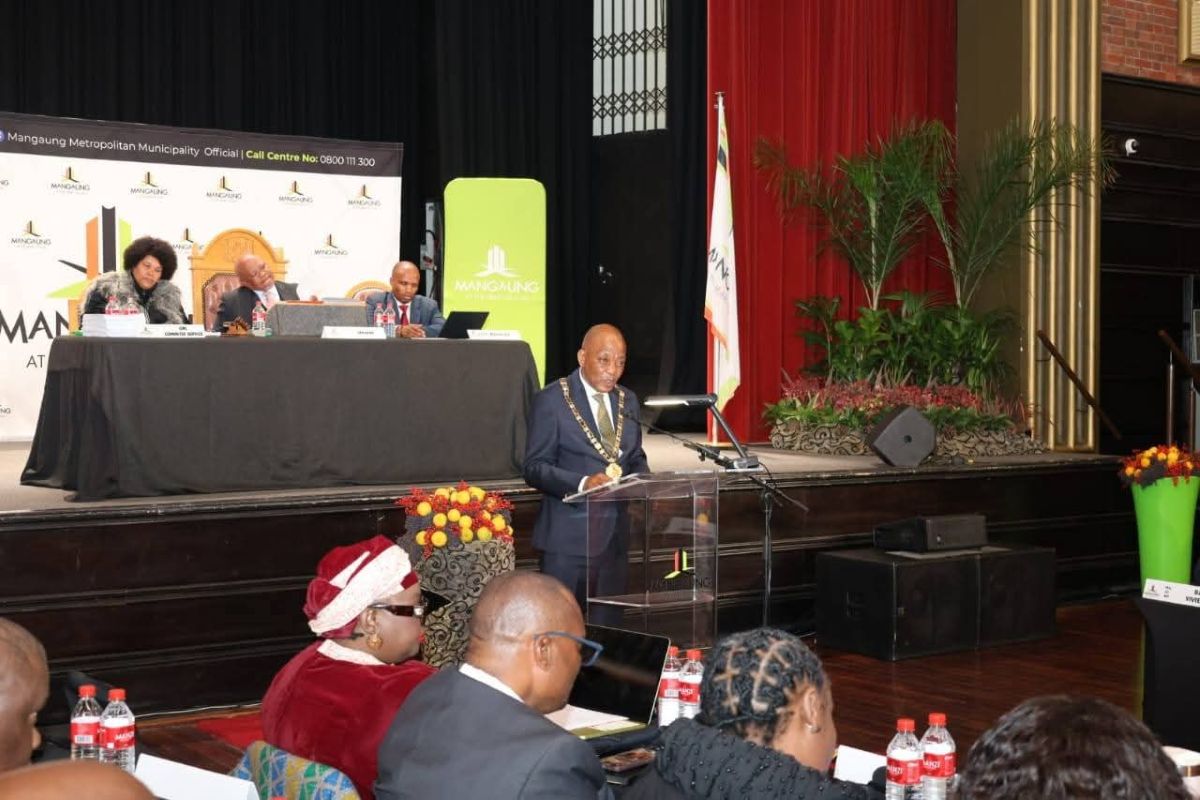
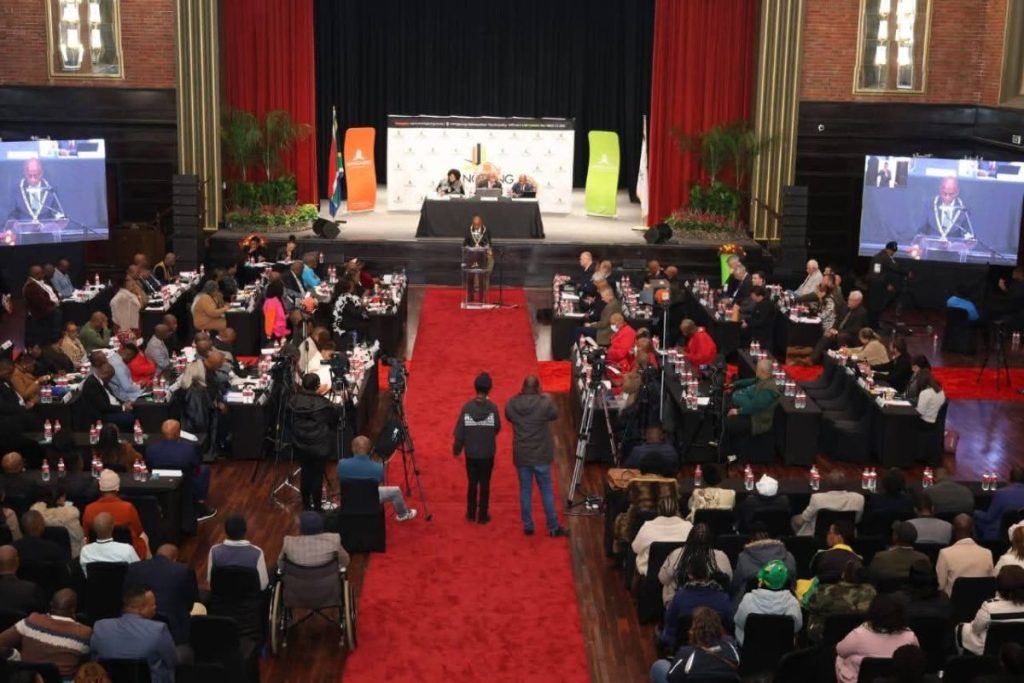
By BLOEMFONTEIN — In the vocabulary of South African local government, “history” is frequently deployed as a shield against contemporary failures. Yet, standing before a chamber heavy with both political expectation and historical irony, Mangaung Metropolitan Municipality Executive Mayor, Cllr. Gregory Nthatisi, attempted a more complex rhetorical maneuver during his 2026 State of the Metro Address.
He invoked the sacred ghosts of Waaihoek—the 1912 cradle of the African National Congress (ANC)—not to deflect from the city’s grinding service delivery crisis, but to build a bridge toward its painful financial redemption.
“History alone cannot fill potholes,” Nthatisi conceded with striking candor. “History alone cannot fix leaking pipes. History alone cannot restore dignity where services fail.”
This acknowledgment lies at the absolute center of Mangaung’s current political reality. The metro, which encompasses Bloemfontein, Botshabelo, and Thaba Nchu, remains trapped in the administrative purgatory of a Section 139 intervention.
It is a municipality being nursed back from the brink of total institutional collapse, balancing the cold austerity of a Financial Recovery Plan against the fiery, escalating expectations of its residents.
The Auditing of Hope: Balance Sheets vs. Broken Pipes
For years, Mangaung has served as a cautionary tale of municipal decline: an economic hub undone by infrastructure backlogs, weakened revenue collection, and operational paralysis. When Nthatisi’s administration took the reins, the predictions were apocalyptic, with many anticipating the total dissolution of the municipal council.
The turnaround strategy, anchored by aggressive revenue-generating mechanisms like Operation Patala and strict indigent verification, is finally reflecting in the metro’s compliance data. According to Nthatisi, the city is now meeting its monthly reporting obligations to National Treasury and stabilizing its financial reporting.
Yet, as any seasoned political observer knows, citizens do not experience governance through audit outcomes; they experience it through their taps, tires, and trash cans. The true test of Nthatisi’s legacy is found entirely within the brutal arena of service delivery.
The Core Deliverables: A Status Report
| Sector | Current Reality & Backlogs | Key Interventions & Targets |
| Water & Sanitation | Water scarcity; aging pipelines; pressure failures. Only ~10% have waterborne sanitation. | Maselspoort Treatment Works upgrade; 9,445 bucket toilets eradicated; 90% of leaks fixed in 48 hours. |
| Roads & Stormwater | Severe maintenance backlogs; potholes undermining logistics and investor confidence. | Shifting from reactive pothole patching to structured rehabilitation and gravel road upgrades. |
| Human Settlements | Intense urbanisation pressures and severe housing backlogs. | Unlocking 12,000 future housing opportunities (e.g., Lourier Park, Botshabelo Section K). |
| Waste Management | Landfill sites plagued by non-compliance, fires, and weak security. | Structured recovery plan with SALGA; weighbridge restoration; formalizing waste reclaimers. |
The sanitation numbers highlight the mountain still left to climb. While the bucket eradication program successfully reduced bucket toilet dependency from 10% to 8.6%, Nthatisi dropped a sobering fiscal reality on the council: completely eradicating this indignity from the metro will require a staggering R4 billion.
Macro-Structural Reforms and the R30 Billion Blueprint
The structural highlight of the address was the tabling of the Medium-Term Revenue and Expenditure Framework (MTREF) budget, coupled with a fundamental institutional overhaul designed to isolate and protect critical trading services.
In a decisive administrative shift, Water and Sanitation has been unbundled from Technical Services to form its own standalone political and administrative vote. Technical Services has subsequently been renamed Roads and Transport, while Planning and Human Settlements has been separated from Economic Development.
This restructuring gives a clear indication of where the metro’s political priorities—and vulnerabilities—lie. Over the MTREF cycle, the financial allocations are heavily weighted toward utility stability and infrastructure:
- CENTLEC (Electricity Distribution): R15 billion
- Water and Sanitation: R8.227 billion
- Roads and Transport: R2.664 billion
- Financial Services: R2.282 billion
- Community Services & Social Development: R1.977 billion
- Public Safety and Security: R1.229 billion
The massive R15 billion allocation to CENTLEC underscores the vital importance of energy security. Despite grappling with rampant cable theft, infrastructure vandalism, and illegal connections, the entity has managed to preserve distribution stability. The implementation of an Electricity Amnesty Programme has further helped formalize thousands of irregular connections, turning a security threat into a revenue stream.
The Strategic Assets: Youth, Bureaucracy, and Business
A refreshing aspect of Nthatisi’s address was his explicit recognition of Mangaung’s unique demographic profile. Housing more than 50,000 tertiary students, the metro is one of South Africa’s most vital academic hubs. The Mayor rightly framed this young population not merely as a housing statistic, but as a “strategic social and economic asset.” He pledged a renewed municipal focus on providing safe student accommodation, reliable basic utilities, and enhanced security around learning centres.
Simultaneously, the administration has taken a sledgehammer to the red tape that traditionally stifles local economies. In a remarkable bureaucratic turnaround, Mangaung has slashed its development approval turnaround times from a sluggish 257 days to an average of just 36 days.
For a city seeking to position itself as a central logistics hub and a prime investment destination through catalytic initiatives like the Airport Development Node and the Waaihoek Urban Hub, this single ease-of-doing-business reform could prove transformative.
The Journalist’s Verdict: A Measured Transition
As this administration enters the final stretch of its current term, Nthatisi’s address read less like an election-year victory lap and more like a defensive, yet credible, status report from an institutional triage unit.
“The next administration will not inherit an institution in collapse,” Nthatisi declared boldly. “It will inherit a municipality undergoing recovery and requiring consolidation.”
“The task before us is to restore dignity, rebuild trust and renew the social contract between local government and the people.”
Ultimately, political journalism requires looking past the elegance of mayoral prose and focusing strictly on the lived realities of the electorate. Nthatisi has successfully stabilized a sinking ship, restored basic financial compliance, and begun the grueling work of structural reform. But in the dusty streets of secondary towns like Soutpan and Dewetsdorp, and in the sprawling townships of Thaba Nchu, the social contract remains fragile.
Mangaung is moving from recovery to renewal, but for its resilient citizens, true renewal will only be realized when the water flows without interruption, the streetlights banish the dark, and the roads finally become safe to travel.