
 By
By 
PRETORIA — In an era increasingly defined by hyper-unilateralism, volatile resource nationalism, and shifting geopolitical blocs, South Africa is positioning itself as both a regional shield and a global architect.
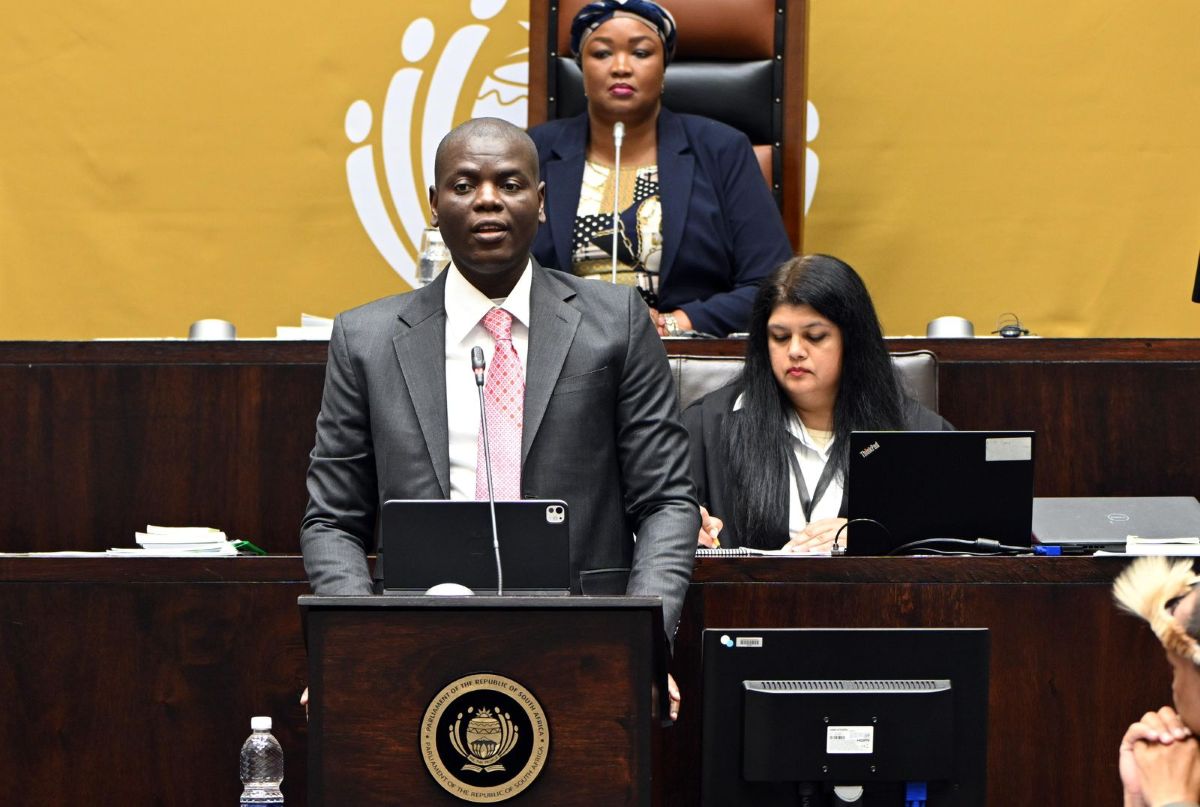
Tabling the R7.227 billion budget vote for the Department of International Relations and Cooperation (DIRCO) in Parliament, Minister Ronald Lamola outlined an ambitious, history-conscious foreign policy framework that places the Southern African Development Community (SADC) and economic diplomacy at the centre of Pretoria’s global strategy.
Delivered 78 years to the day after the National Party’s 1948 electoral victory paved the way for apartheid, Lamola’s address deliberately juxtaposed South Africa’s “history of pain” with its modern democratic obligations. Rejecting the notion that the country should shrink from its international responsibilities, Lamola firmly asserted that South Africa’s foreign policy will remain anchored in Ubuntu, international law, and multilateralism.
To achieve this, DIRCO has laid out three core strategic tasks: amplifying Africa’s voice, reforming unfair global governance architectures, and leveraging economic diplomacy to address pressing domestic challenges.
SADC: From Economic Aspiration to Implementation
A pivotal focus of the Minister’s address was South Africa’s impending leadership of SADC. When Pretoria assumes the full Chairship of the regional body in August 2026, it will inherit a region at an economic and geopolitical crossroads.
Despite the grand architecture of the African Continental Free Trade Area (AfCFTA), which holds a market potential of $3.4 trillion, intra-African trade remains stubbornly low at just 16% continent-wide, and only 21% within SADC. This stands in stark, unflattering contrast to Europe’s 68% and Asia’s 59%. Lamola warned that more than half of Africa’s total imports and exports are tied to just five external economies, leaving the continent acutely vulnerable to external economic shocks.
Following a recent SADC Ministers of Foreign Affairs Retreat in Skukuza, Kruger National Park, Lamola revealed a unified regional consensus: SADC must urgently build resilience against external shocks, whether driven by climate disasters, food and fuel volatility, or the choices of distant superpowers.
“Regional integration must move from aspiration to implementation,” Lamola declared, signalling that South Africa’s upcoming Chairship will move past mere rhetoric.
Pretoria’s strategic roadmap for SADC focuses on tangible, industrial milestones:
- Consolidating the SADC Free Trade Area and aggressively dismantling non-tariff barriers.
- Building regional value chains in agro-processing, pharmaceuticals, and strategic manufacturing.
- Deepening political cohesion to ensure regional stability acts as a foundation for economic growth.
Harnessing the Critical Minerals Boom
Central to South Africa’s vision for regional structural transformation is the strategic management of its natural resources. The SADC region sits on a literal goldmine of the green transition, housing 30% of the world’s proven critical mineral reserves, including approximately 50% of global cobalt, 20% of graphite, and 10% of copper.
Historically, these resources have been subject to “deals of extraction” that enriched foreign entities while leaving regional economies underdeveloped. However, a tide of resource nationalism and sophisticated policy shifts is rising. Lamola highlighted that South Africa, alongside regional neighbors Zimbabwe, Botswana, Namibia, and Tanzania, is taking bold policy steps to ensure that these mineral endowments benefit local populations.
Under South Africa’s SADC leadership, critical minerals beneficiation—processing raw minerals locally rather than exporting them raw—will be prioritized to catalyze domestic industrialization.
Yet, economic integration cannot materialize in a vacuum of instability. Addressing the continental security landscape, Lamola reiterated South Africa’s active role on the AU Peace and Security Council . The country remains actively engaged in diplomatic mediation and regional solidarity efforts, specifically targeting a political solution to conflicts in the eastern Democratic Republic of Congo (DRC) and supporting institutional reforms in South Sudan.
Re-engineering the Global Order
Beyond the immediate region, South Africa continues to present itself as a champion for the Global South, aiming to rewrite the rules of global governance that still reflect archaic, mid-20th-century power dynamics .
Reflecting on South Africa’s recent G20 Presidency under the banner of Solidarity, Equality, Sustainability, Lamola pointed to concrete policy outcomes aimed at tackling systemic imbalances. Notably, these include the G20 Africa Expert Panel Report on Growth, Debt and Development, and the establishment of an Extraordinary Committee of Independent Experts on Global Inequality.
Working in tandem with the UN, AU, Brazil, Norway, and Spain, South Africa is pushing for the formal establishment of an International Panel on Inequality later this year.
Furthermore, South Africa intends to maximize its influence through the expanded BRICS bloc, viewing its growth to eleven members as a historic milestone for the geopolitical weight of developing nations.
In a notable assertion of legal diplomacy, Lamola highlighted South Africa’s role in convening the “Hague Group,” a coalition designed to protect the integrity of international law and combat impunity. The group advocates for strict compliance with international legal orders, pushing for measures ranging from halting illicit arms transfers to pursuing accountability through global courts.
Economic Diplomacy: Delivering at Home
Anticipating domestic critics who argue that foreign policy is an expensive distraction from South Africa’s local crises, Lamola insisted that DIRCO’s international engagements serve as a direct lever for domestic economic growth and job creation.
The data suggests this strategy is yielding measurable dividends, particularly within the agricultural sector. South Africa’s agricultural exports reached a record $15.1 billion in 2025. This momentum has carried directly into 2026, with first-quarter farm exports surging by 11% year-on-year to hit $3.7 billion—goods heavily traded across the African continent, East Asia, and the European Union. Currently, 45% of South Africa’s processed goods are traded within Africa, underscoring the vital nature of continental trade corridors.
On the sensitive domestic issue of migration, Lamola balanced human rights with national sovereignty. He advocated for an immigration system insulated from corruption, emphasizing that migration must be managed lawfully and based on empirical evidence. Crucially, he noted that law enforcement—not private citizens—must handle irregular migration, drawing a firm line against vigilantism.
A Foreign Policy Valuing Freedom
Closing his address by quoting former President Nelson Mandela’s reminder that South Africa must “value freedom like the apple of its eye,” Lamola framed the R7.2 billion budget not merely as administrative expenditure, but as a necessary investment in South Africa’s sovereign integrity and regional responsibility.
As South Africa prepares to take the wheel of SADC this August, the world will watch to see if Pretoria can successfully translate its sophisticated multilateral vision into a practical, integrated economic reality for Southern Africa.