
 By
By 
The South African economy is proving to be resilient given its economic challenges, with major international companies exiting the market and others like Pick n Pay restructuring and closing underperforming outlets.
Unemployment has been the country’s migraine that just refuses to go away, coupled with high levels of crime. However, in the latest report on the economy of the country by Stats SA, shows that spending by households has increased, some sectors are doing well and the Gross Domestic Product (GDP) has increased to 0.4% in the fourth quarter of 2025, from 0.3% in the third quarter of 2025.
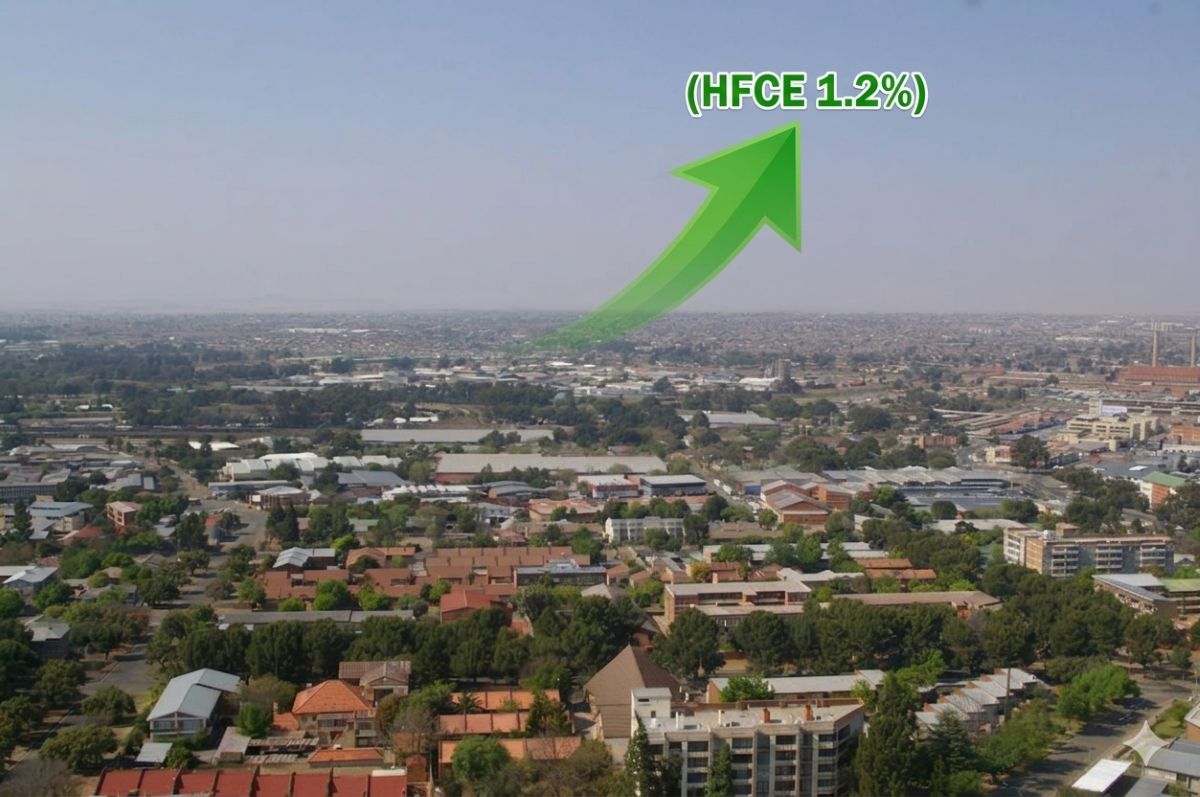
The marginal propensity to consume (MPC) for customers has increased in 2025, according to Stats SA, South Africans are spending more which is good for the economy, the bigger the MPC, the bigger the multiplier effect on the economy. According to Stats SA, household final consumption expenditure (HFCE) increased by 1,2%, contributing 0,8 of a percentage point to the total growth.
According to RMB Private Bank, households are increasingly spending a higher proportion of their income, often leading to lower national savings rates. The consumption is mainly driven by credit and a high MPC that exceeds their disposable income growth.
Stats SA shows that household spending is high especially amongst the lower income group with a disposable income of less than R89 000 per annum.
The latest report by Stats SA shows that households spend their income on a variety of goods, these include durable goods, non-durable goods, semi-durable goods and services.
Based on the finding of Stats SA the main positive contributors to the increase in HFCE were expenditures on ‘other’ (2,6% and contributing 0,3 of a percentage point), transport (1,3% and contributing 0,2 of a percentage point), clothing and footwear (2,4% and contributing 0,1 of a percentage point), restaurants and hotels (1,8% and contributing 0,1 of a percentage point), recreation and culture (1,4% and contributing 0,1 of a percentage point), furnishings, household equipment and maintenance (1,5% and contributing 0,1 of a percentage point), communication (1,3% and contributing 0,1 of a percentage point) and health (0,9% and contributing 0,1 of a percentage point).
The report shows that negative contributor was expenditure on alcoholic beverages, tobacco and narcotics. Final consumption expenditure by general government increased by 0,5%, contributing 0,1 of a percentage point to the total growth. This was mainly driven by increases in purchases of goods and services and compensation of employees.
Gross fixed capital formation increased by 1,3%, contributing 0,2 of a percentage point to the total growth. The positive contributors to the increase were other assets (14,7% and contributing 1,7 percentage points), machinery and other equipment (2,2% and contributing 0,9 of a percentage point) and construction works (2,1% and contributing 0,3 of a percentage point).
The report also revealed that there was a R6,2 billion drawdown of inventories (seasonally adjusted and annualised value). Large decreases in three industries, namely trade, catering and accommodation; manufacturing; and mining, contributed to the inventory drawdown.
Net exports contributed negatively (-0,3 of a percentage point) to expenditure on GDP. Exports of goods and services decreased by 0,6%, largely influenced by decreased trade in vehicles and transport equipment excluding large aircraft; vegetable products; and prepared foodstuffs, beverages and tobacco.
Imports of goods and services increased by 0,5%, largely influenced by increased trade in machinery and electrical equipment; vehicles and transport equipment excluding large aircraft; live animals and products; and vegetable products.