 By
JOHANNESBURG — A tectonic shift is reshaping the political landscape in South Africa’s economic heartbeat. Preliminary local government election results released by the Independent Electoral Commission (IEC) point to a catastrophic outcome for the ruling African National Congress (ANC), marking what analysts are describing as an electoral watershed.
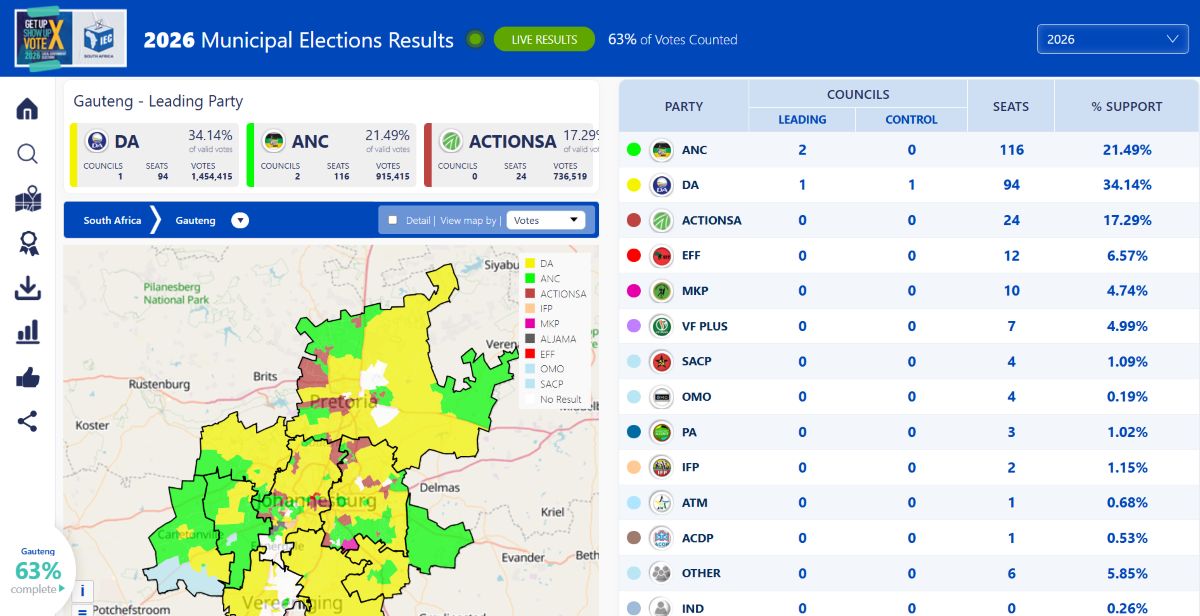
With counting progressing across Gauteng’s nine municipalities, early IEC figures show the ANC suffering deep losses across key urban and industrial strongholds. The electorate appears to have swung a punitive sword following years of systemic load shedding, decaying infrastructure, corruption scandals, and chronic service delivery failures.
Fatigue among voters has translated directly into gains for opposition forces.
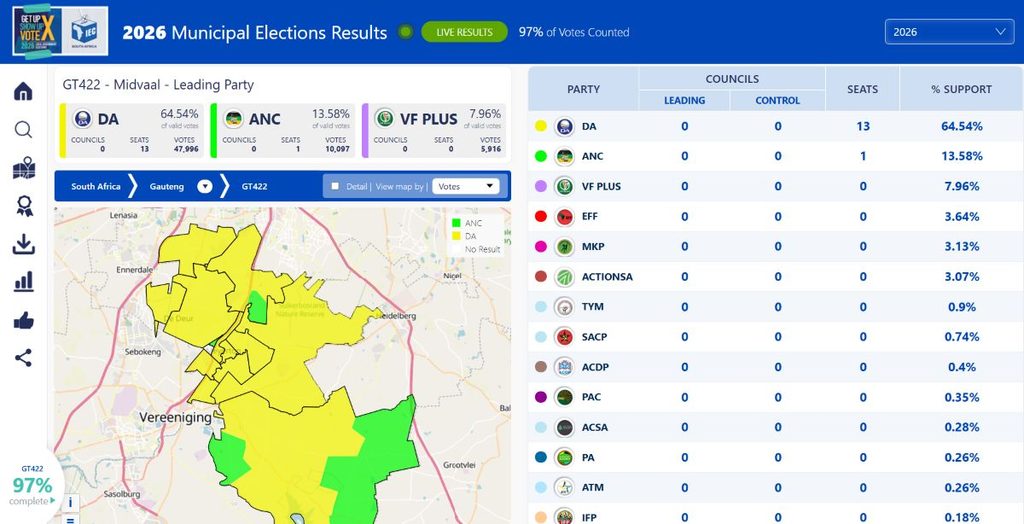
The Democratic Alliance (DA) has emerged as the chief beneficiary of voter frustration, consolidating strong leads across several key councils and securing a decisive outright majority in Midvaal. Meanwhile, ActionSA has mounted a formidable challenge, positioning itself as a major third force and trailing closely behind the ANC in key metropolitan districts.
Broken Promises Catch Up to the Ruling Party
For decades, Gauteng served as the operational heart and financial engine of the governing party. However, the latest vote tallies demonstrate that traditional loyalties are rapidly fraying. Voters across Johannesburg, Tshwane, and Ekurhuleni turned out to punish the governing party, leaving the ANC without a clear path to majority control in the province’s largest metros.
“The voters have sent an undeniable signal,” observed one senior political analyst. “The era of one-party dominance in Gauteng is officially over. The ANC is no longer in absolute command and is now at the mercy of coalition dynamics dictated largely by the DA and emerging opposition players.”
Municipal Breakdown: Preliminary IEC Results
Below is the official breakdown of seat distributions and leading party standings across Gauteng’s municipalities based on the latest IEC returns:
| Municipality | Total Seats | ANC Seats / Share | Main Opposition / Leading Party | Outcome / Status |
| City of Johannesburg | 270 | 91 seats | DA / ActionSA trailing | No Majority (Hung Council) |
| City of Tshwane | 214 | 75 seats | DA (32.03%) | No Majority (Hung Council) |
| Ekurhuleni Metro | 224 | 86 seats | DA / EFF | No Majority (Hung Council) |
| Midvaal Local | 30 | 21.18% share | DA (62.69%) | DA Outright Majority |
| Emfuleni Local | 90 | 38 seats (39.71%) | DA (26.91%) | No Majority (Hung Council) |
| Mogale City | 77 | 31 seats | DA / ActionSA | No Majority (Hung Council) |
| Rand West City | 69 | 32 seats | DA / EFF | No Majority (Hung Council) |
| Merafong City | 55 | 27 seats | DA / Independent Groups | No Majority (Hung Council) |
| Lesedi Local | 26 | 13 seats (50.43%) | DA (20.32%) | ANC Majority Margin |
Data source: Electoral Commission of South Africa (IEC)
The Coalition Era Begins
With the majority of Gauteng’s councils now officially designated as hung municipalities, the focus shifts immediately to coalition negotiations. The DA finds itself in a kingmaker position across multiple regions, holding the leverage required to assemble governing coalitions or relegate the ANC entirely to opposition benches.
ActionSA’s strong third-place showing reinforces the appetite for alternative governance in urban centres. As final tallying draws to a close, one conclusion remains clear: Gauteng has ushered in a competitive multi-party era, and the ANC’s long-standing hegemony over South Africa’s economic power hub has effectively broken.