
 By
By DURBAN — South Africa’s push to transform women-owned enterprises from survivalist ventures into scalable engines of economic growth is gaining notable traction, underpinned by surging demand for public sector funding and targeted business development support.
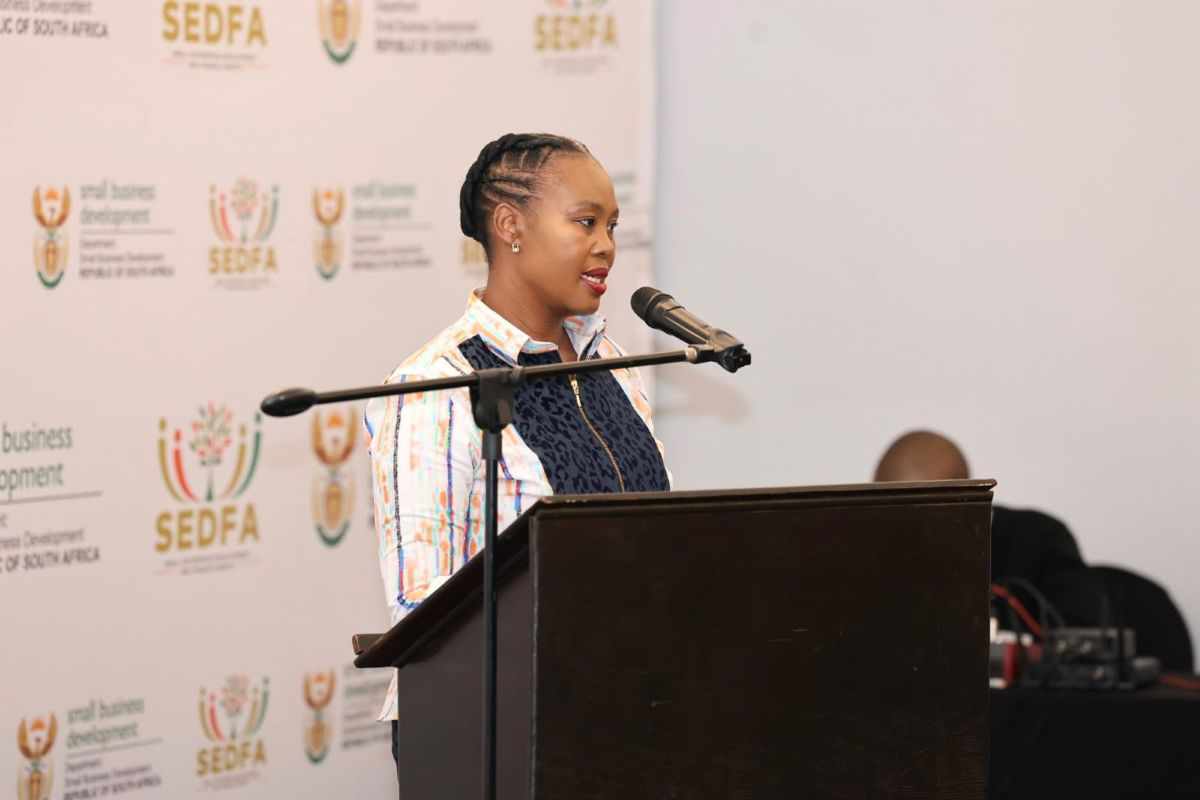
Addressing the Women’s Roundtable in eThekwini, KwaZulu-Natal, Small Business Development Minister Stella Tembisa Ndabeni underscored that empowering women entrepreneurs is a national economic imperative.

Highlighting the legacy of the historic 1956 Women’s March, the Minister stressed that honouring struggle stalwarts requires concrete, actionable interventions that advance women’s economic participation.
At the centre of this strategy is the Imbali for Her Fund, a flagship national initiative designed to provide an integrated package of financial and non-financial support.
High Demand and Regional Uptake
The response from women entrepreneurs across the country has been overwhelming. The most recent application window for the Imbali for Her Fund—which closed on 31 July 2026—attracted a staggering 6,639 applications nationally, reflecting profound demand for capital and support among women-owned businesses.
KwaZulu-Natal emerged as a major focal point for entrepreneurial activity, recording the second-highest number of applications in the country. The province accounted for 978 distinct businesses, or roughly 14.7% of the national total.
According to the Department of Small Business Development (DSBD) and the Small Enterprise Development Finance Agency (SEDFA), 584 applicants in KwaZulu-Natal (59.7%) have successfully cleared initial eligibility, identity, and fraud verification checks. These candidates have been instructed to submit outstanding documentation to advance through the pipeline.
However, the rigorous vetting process also exposed common structural hurdles. The remaining 394 KwaZulu-Natal applicants did not meet preliminary requirements, frequently because their enterprises were not reflected as actively “In Business” on the Companies and Intellectual Property Commission (CIPC) system—a mandatory compliance standard.
To maintain transparency and efficiency, Minister Ndabeni revealed that she has explicitly instructed the SEDFA Board to accelerate application turnaround times and enhance communication channels with applicants throughout the evaluation cycle. The next application window for the fund is slated to open in May 2027.
Inside the Imbali for Her Fund Model
Tailored to bridge historical financing gaps, the Imbali for Her Fund deploys a sophisticated blended finance model combining loan and grant funding. Key structural parameters of the fund include:
- Funding Thresholds: Up to R5 million per qualifying applicant, scaling according to business maturity and viability.
- Ownership and Compliance: Beneficiary enterprises must be at least 51% black woman-owned, fully registered, and tax compliant.
- Concessional Capital: Features a grant component of up to 40%, with accompanying loans issued on concessional terms.
- Target Sectors: Highly relevant for the digital economy, including digital agencies, online retail, fintech enterprises, creative industries, technology services, and digitally enabled township businesses.
- Targeted Grants: Conditional grant support of up to R200,000 tailored to specific operational needs.
Beyond capital injection, the fund delivers non-financial backing, including business development support, formal mentorship, networking platforms, and skills training.
A Multi-Pronged Ecosystem Support Strategy
While the Imbali for Her Fund anchors the women-focused portfolio, Minister Ndabeni emphasized that the DSBD and SEDFA deploy a broad suite of instruments targeting micro, small, and medium enterprises (MSMEs). Across major financing vehicles—such as the Township and Rural Entrepreneurship Fund, the Small Enterprise Manufacturing Support Programme, and sector-specific facilities for construction, cooperatives, and youth—at least 40% of resources are explicitly earmarked for women.
Recognizing that many enterprises are not immediately capital-ready, the department leverages a network of 117 incubators hosted in partnership with universities and TVET colleges to turn innovative concepts into commercial successes.
Furthermore, to combat heavily concentrated domestic markets that historically exclude new entrants, the DSBD is ramping up supply chain linkages. A primary focus for the current fiscal year involves preparing women-owned enterprises to capture new commercial opportunities generated by the Public Procurement Act.
Concurrently, municipal and provincial efforts are underway to streamline administrative burdens through e-registration systems, aiming to dismantle the disproportionate red-tape barriers faced by women entrepreneurs.
As the government refines its institutional support mechanisms, the message from eThekwini is clear: moving beyond survivalist entrepreneurship requires systemic access to blended finance, market readiness, and streamlined compliance. For South Africa’s thousands of women-led start-ups and growing enterprises, these targeted interventions mark a pivotal shift toward sustainable economic inclusion.