
 By
By As the country prepares for the October Medium-Term Budget Policy Statement, National Treasury outlines firm progress on debt stabilization, local government accountability, and the long-awaited unbundling of Eskom.
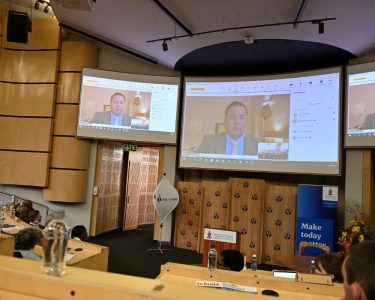
JOHANNESBURG — Speaking at the 20th anniversary of the RMB Morgan Stanley Big Five Investor Conference, National Treasury Director-General Dr. Duncan Pieterse delivered a resolute message regarding South Africa’s macroeconomic trajectory: fiscal credibility is non-negotiable, and structural reforms are accelerating.

With the traditional closed period commencing soon ahead of the Medium-Term Budget Policy Statement (MTBPS) presented by the Minister of Finance on October 21, the Treasury used the platform to outline its strategy across four critical pillars: fiscal consolidation, legal anchors for sustainability, local government intervention, and the restructuring of the electricity sector.
Building a Credible Fiscal Track Record
The Treasury underscored that South Africa remains firmly on track to hit its core fiscal targets, anchored by two primary objectives: stabilizing the debt-to-GDP ratio in the 2025/26 fiscal year, and consistently expanding primary surpluses.
Having achieved primary surpluses for three consecutive years—the first time since the global financial crisis—the government projects a primary surplus of approximately R131 billion for the current year.
According to Pieterse, this surplus serves as a stronger barometer of fiscal prudence than the debt-to-GDP ratio, as it remains entirely within the government’s direct control through disciplined revenue and spending choices.
This fiscal rigor has already translated into real-world resilience. Despite global volatility and shifting bond yields, South Africa’s sovereign bonds have fared relatively well, and the rand has maintained its strength against major currencies.
Furthermore, the Treasury has successfully secured its foreign funding budget for the year through concessional rates from international development finance institutions, including recent loans from Germany and France to support municipal trading reforms.
Legislating Fiscal Sustainability
To lock in these hard-fought gains, the Treasury is moving forward with institutional reforms. Following the introduction of a lower inflation target during last year’s MTBPS, the government has finalized technical work on a principle-based fiscal anchor.
Rather than implementing rigid numerical rules, the upcoming legislation will legally enfranchise principles of transparent and accountable fiscal sustainability. An update on this framework will be formally presented on October 21, ensuring that future administrations are bound to sound financial management.
Fixing Local Government and Municipal Finances
Addressing structural impediments to growth, the Treasury addressed the deteriorating financial health of local municipalities. Through Operation Vulindlela, the government has launched an integrated package of reforms spanning enforcement, basic service management, and legislative overhauls.
A notable intervention occurred in June, when the Minister of Finance temporarily suspended equitable share transfers to 69 non-compliant municipalities. While the funds were subsequently released after prompting corrective agreements and debt-settlement plans, the Treasury warned that future punitive measures remain on the table.
Additionally, national departments with outstanding municipal debts are being held accountable to settle their balances directly.
Longer-term remedies include upcoming amendments to the Municipal Finance Management Act (MFMA) and a new White Paper on local government led by the Department of Cooperative Governance and Traditional Affairs.
Unbundling Eskom to Lower Costs and Boost Growth
Perhaps the most eagerly anticipated update centred on the restructuring of South Africa’s electricity sector. Citing international benchmarks—such as India’s successful transition over the past three decades—the Treasury stressed that unbundling a vertically integrated monopoly like Eskom is vital to creating a competitive energy market.
With roughly 32 gigawatts of private-sector renewable energy projects currently moving through the grid connection process, the expansion and modernization of transmission infrastructure is paramount. The National Transmission Company of South Africa (NTCSA), established two years ago, represents a stepping stone toward a fully independent Transmission System Operator (TSO).
An Electricity Restructuring Task Team, co-chaired by Pieterse, has finalized its Phase 1 report, ensuring that the transition leaves Eskom financially unharmed while making the new TSO sustainable enough to raise capital. The comprehensive implementation plan will be submitted to the President later this year, with full unbundling slated over the next 18 months.
“Over the last decade, the South African government has spent R464 billion of taxpayers’ money to support Eskom,” Pieterse noted. “We therefore have no interest in doing anything to compromise the future viability of Eskom. Government will ensure that the unbundling process is carefully sequenced and managed to address all risks.”