
 By
By As the BRICS bloc formally enters its third decade, member states are confronting a complex global landscape defined by volatile climate risks, rapid technological disruption, and persistent structural inequality.

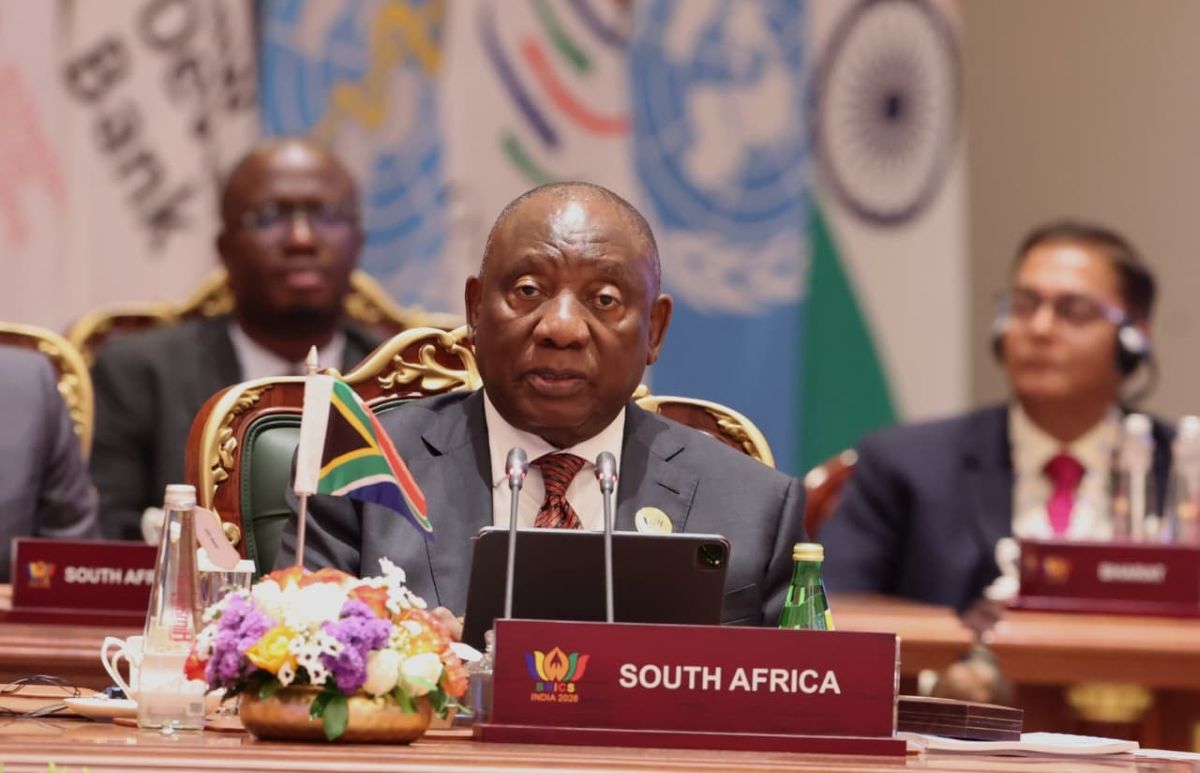
Addressing leaders at the 18th BRICS Leaders’ Summit in New Delhi, South African President Cyril Ramaphosa delivered a sweeping economic address that called for an overhauled multilateral architecture capable of safeguarding developing economies against compounding global shocks.
Marking the 20th anniversary of the grouping, President Ramaphosa emphasized that achieving sustainable, inclusive growth requires transitioning from rhetorical cooperation to deep, structural economic transformation. Central to his thesis is the urgent integration of disaster risk reduction into macroeconomic planning—a priority carrying direct continuity from South Africa’s G20 Presidency outcomes.
Macroeconomic Resilience and Climate Integration
With climate-related disasters accelerating in frequency and intensity, vulnerable economies face severe threats of having hard-won development gains reversed. Ramaphosa stressed that resilience is no longer an auxiliary environmental concern, but a core macroeconomic imperative requiring equitable access to green finance, technological transfer, and robust capacity-building frameworks.
Turning to the global energy transition, the South African leader underscored that decarbonization cannot succeed if it replicates historical patterns of dependency. Markets for critical minerals and transition technologies must be anchored in transparency, diversified supply chains, and responsible governance. Crucially, Ramaphosa reiterated Pretoria’s firm stance on industrial beneficiation: raw materials must undergo value addition at source to ensure sustainable industrialization across Africa and the broader Global South, preventing the persistence of neo-extractivist traps.
Guarding Against Systemic Risks in the Age of Artificial Intelligence
Among the most arresting segments of President Ramaphosa’s address was his rigorous focus on artificial intelligence. While acknowledging that advanced AI models hold unprecedented potential to revolutionize medicine, scientific discovery, agriculture, and productivity, Ramaphosa issued a stark warning regarding un-vetted technological acceleration.
“We must never reach a situation where technological capability has moved beyond our capacity to understand it, supervise it, and control it.” — President Cyril Ramaphosa
Echoing warnings from top artificial intelligence developers—including Anthropic CEO Dario Amodei—concerning advanced cyber capabilities, autonomous action, and biological risks, Ramaphosa argued that technological capability is outpacing human oversight. He maintained that AI companies should be subjected to formal external checks, audits, and rigorous government authority, drawing a parallel to highly regulated safety-critical industries such as aviation, pharmaceuticals, nuclear power, and institutional finance.
To operationalize this oversight without stifling innovation in developing markets, South Africa formally proposed that BRICS establish an international mechanism for the independent scientific evaluation of AI. This framework would be backed by mandatory incident reporting, progressive safeguards scaling with algorithmic capability, and simultaneous capital investment in sovereign AI capacity for developing nations.
Deepening Financial and Economic Integration
In parallel, the South African delegation emphasized the necessity of deepening financial and economic integration across the bloc. Expressing support for a balanced, gradual expansion of the New Development Bank (NDB), Ramaphosa welcomed ongoing discussions regarding the proposed New Investment Platform and the BRICS Multilateral Guarantees initiative.
Financial sovereignty and de-dollarization discussions also took centre stage, with the bloc urged to accelerate the practical utilization of local currencies, reinforced cross-border payment systems, and deeper financial market interconnectivity.
Furthermore, medical sovereignty was highlighted through continued scientific collaboration in initiatives such as the BRICS Vaccine Research and Development Centre and the Intelligent Telescope and Data Network.
As the bloc reflects on its first two decades, Ramaphosa concluded by recalling a rallying call from Indian poet and activist Sarojini Naidu: “We want deeper sincerity of motive, a greater courage in speech and earnestness in action.” For the world’s leading emerging economies, translating these words into binding fiscal, technological, and environmental frameworks will define the trajectory of global growth for the next twenty years.