By
By CAPE TOWN — Fresh economic indicators confirming a contraction in South Africa’s Gross Domestic Product (GDP) have ignited a fierce political challenge from the Democratic Alliance (DA), with party leadership warning that the government’s approach of “reform incrementalism” has pushed the national economy to a perilous precipice.

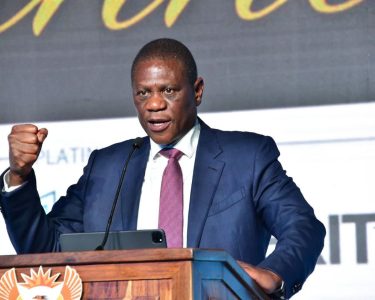
In a direct intervention directed at the Presidency, DA Leader Geordin Hill-Lewis declared that the latest GDP figures serve as an unavoidable, urgent wake-up call. Addressing the nation’s economic trajectory, Hill-Lewis argued that the current pace of structural adjustments—marked by bureaucratic delays and political hesitation—is fundamentally failing the millions of citizens confronting severe financial hardship.
With official unemployment standing at a staggering 33.6%—leaving approximately 8.5 million South Africans actively seeking work—the DA leader emphasized that administrative inertia carries severe human costs. Every stalled initiative, he cautioned, translates directly into lost private investment, constrained enterprise, and uncreated jobs.
“South Africa cannot afford another year of half-measures, endless consultations, and reforms moving at a bureaucratic crawl,” Hill-Lewis stated. “The President says he wants growth above 3%. Then he must act like it.”
The critique highlights growing friction within the broader political landscape regarding the Government of National Unity (GNU). Hill-Lewis urged President Cyril Ramaphosa to leverage the GNU mandate decisively, confront internal executive opposition blocking structural shifts, and dramatically accelerate both the speed and scope of market reforms.
Outlining the DA’s core economic policy platform, Hill-Lewis noted that the necessary measures to revive growth are well established, pointing to sub-national governance models where the DA holds executive authority:
- Logistics Overhaul: Fixing critical freight rail and port networks.
- Energy Security: Securing reliable, affordable power.
- Infrastructure Mobilization: Unlocking private capital for critical investments.
- Regulatory Streamlining: Aggressively cutting red tape.
- Business Climate: Making it easier for firms to invest and expand hiring.
Asserting that the primary obstacle remains a deficiency of political will and urgency within the Presidency, Hill-Lewis confirmed he has formally requested an urgent meeting with President Ramaphosa to outline actionable reform timelines.
“South Africa has run out of time for incrementalism,” Hill-Lewis warned, signalling that the DA will maintain relentless political pressure. “Reform now or continue to condemn millions more South Africans to unemployment and poverty.”