
 By
By JOHANNESBURG — In the face of severe fiscal constraints, climate pressures, and the largest outbreak of Foot-and-Mouth Disease (FMD) ever recorded in the province; Gauteng’s agricultural sector demonstrated remarkable economic resilience during the 2025/26 financial year.

MEC for Agriculture and Rural Development, Vuyiswa Ramokgopa, tabled the Gauteng Department of Agriculture and Rural Development (GDARD) 2025/26 Annual Report before the Gauteng Provincial Legislature, revealing a narrative of strategic crisis management, smallholder commercialization, and surging agricultural exports.
Despite operating under extraordinarily difficult operational conditions, GDARD achieved 61 out of its 82 Annual Performance Plan targets—an overall success rate of 74%. The core Programme 2: Agriculture and Rural Development recorded an even stronger performance, meeting 81% of its planned targets.
FMD Outbreak: A Severe Shock to Livestock Operations
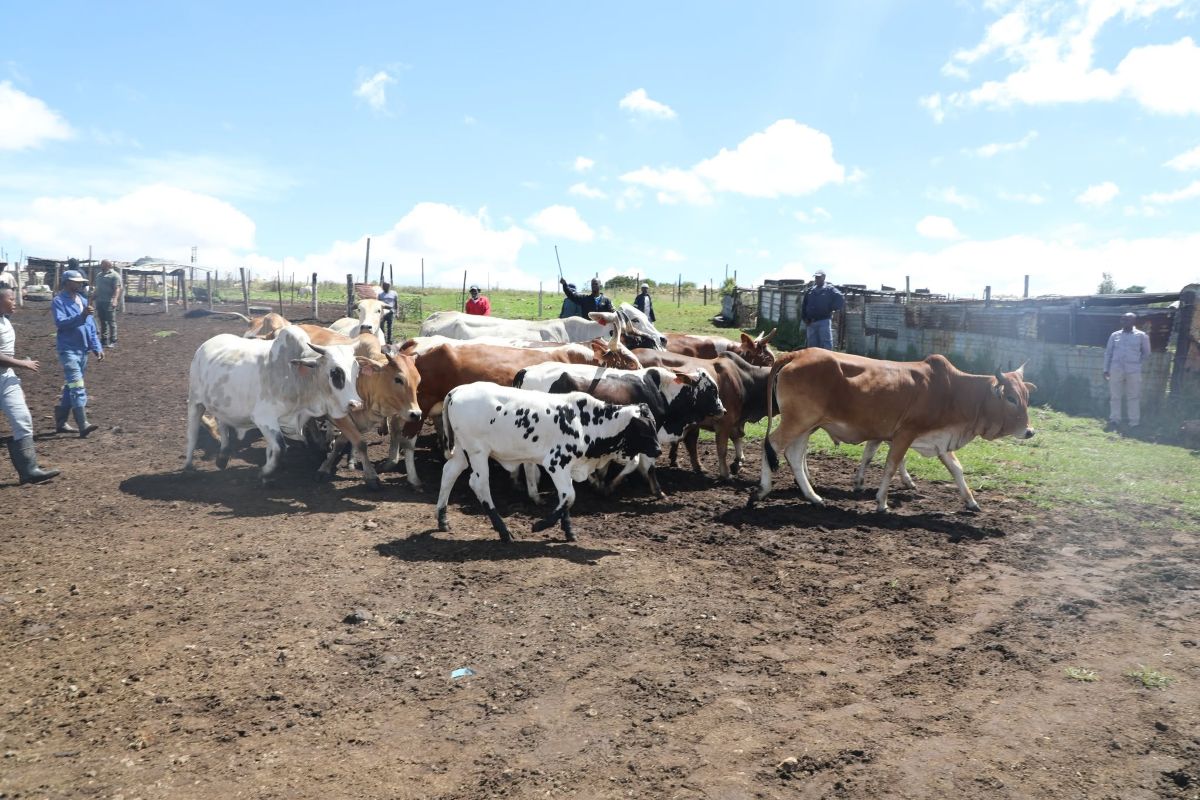
The most significant operational and economic disruption to Gauteng’s agricultural ecosystem was the unprecedented FMD outbreak. Between April 2025 and March 2026, the province confirmed 260 FMD outbreaks spanning all Gauteng municipalities.
The disease imposed strict restrictions on livestock movements, abattoir logistics, and access to international trade markets. In response, the Gauteng Provincial Government mobilized a comprehensive biosecurity containment strategy, allocating an additional R63 million to bolster frontline veterinary interventions.
By the close of the financial year, veterinary containment teams had vaccinated 406,908 cattle across affected herds and neighbouring farms. To enforce movement controls and prevent further transmission, GDARD partnered with the Gauteng Security Cluster, deploying the South African Police Service (SAPS), Traffic Police, and municipal law enforcement.
“The outbreak is not over, and complacency is not an option. We will maintain a proactive vaccination, surveillance, and enforcement strategy to protect the agricultural sector and safeguard livelihoods,” MEC Ramokgopa emphasized.
Although containment operations temporarily disrupted routine veterinary testing and epidemiologic visits due to resource redirection, abattoir compliance remained high at 94%—exceeding the department’s annual target of 88%.
Exports Beat Targets by R1.4 Billion
Despite animal movement bans and trade restrictions associated with FMD, Gauteng’s agricultural export engine delivered surprising gains.
| Metric | Annual Target | Actual Achieved | Variance / Performance |
| Animal & Product Exports | R3.25 Billion | R4.68 Billion | +R1.43 Billion (+44%) |
| Veterinary Export Certificates | — | 16,153 Issued | Exceeded operational expectations |
| Abattoir Compliance Rate | 88% | 94% | +6% above baseline target |
This R4.68 billion export total highlights Gauteng’s vital positioning as an agro-processing and trade hub, bridging primary regional production with high-value international markets.
Food Security and Smallholder Commercialization
Addressing food poverty and transforming primary production remained foundational to GDARD’s delivery agenda:
- Support for Subsistence Producers: The department provided direct inputs and extension services to 6,700 subsistence producers (surpassing the target of 6,000). Crucially, 4,498 women producers were supported, substantially exceeding the 3,000 target.
- Primary Production Expansion: Cultivation was expanded across 4,415 hectares, supported by the establishment of 70 school food gardens (against a target of 50).
- Smallholder Commercialization: Five smallholder producers successfully transitioned to commercial-scale enterprises. To strengthen pipeline capacity, GDARD conducted 3,381 capacity-building activities and provided formal training to 1,192 participants across high-value commodities including cannabis, hemp, beef, beekeeping, and soil health management.
- Sustainable Farming: Advancing climate adaptability, GDARD placed 973 hectares under conservation agriculture (exceeding the 800-hectare target) and developed 122 comprehensive farm management plans.
Fiscal Management and Structural Reforms
On the financial front, GDARD expended R609 million, representing 89.3% of its adjusted R682 million budget.
Total Adjusted Budget: [R682 Million] (100%)
Actual Expenditure: [R609 Million] (89.3%)
Underspent / Variance: [R73 Million] (10.7%)
MEC Ramokgopa delivered a candid assessment of the factors leading to the R73 million underspend. Key headwinds included administrative frictions stemming from the institutional separation of Agriculture from the Department of Environment, delayed Conditional Grant approvals, procurement bottlenecks, and delays in filling critical technical vacancies.
To correct these execution gaps, GDARD is introducing structural governance reforms, including:
- Appointing a dedicated full-time Grants Project Manager.
- Fast-tracking the finalization of the department’s macro-organizational structure.
- Overhauling procurement planning and project execution oversight.
Strategic Vision for the 7th Administration
Looking forward, MEC Ramokgopa reaffirmed that GDARD’s economic agenda will align directly with the strategic priorities of the 7th Administration through three core pillars:
- End Hunger: Scaling household and community food gardens, expanding school nutrition interventions, and accelerating the Zero Hunger Campaign alongside the Department of Social Development.
- Commercialize: Driving aggregation models, blended finance solutions, and supply-chain integration to move smallholders into mainstream value chains.
- Export and Industrialize: Expanding foreign market penetration, accelerating cannabis industrialization, and leveraging the Gauteng Agriculture Potential Atlas to safeguard high-yield arable land from rapid urban sprawl[cite: 1].
“A food-secure Gauteng is not a distant ideal. It is a deliverable. Through stronger governance, better planning, faster implementation, and closer partnerships with communities, farmers, and the private sector, we will continue to deliver,” Ramokgopa concluded