
 By
By 
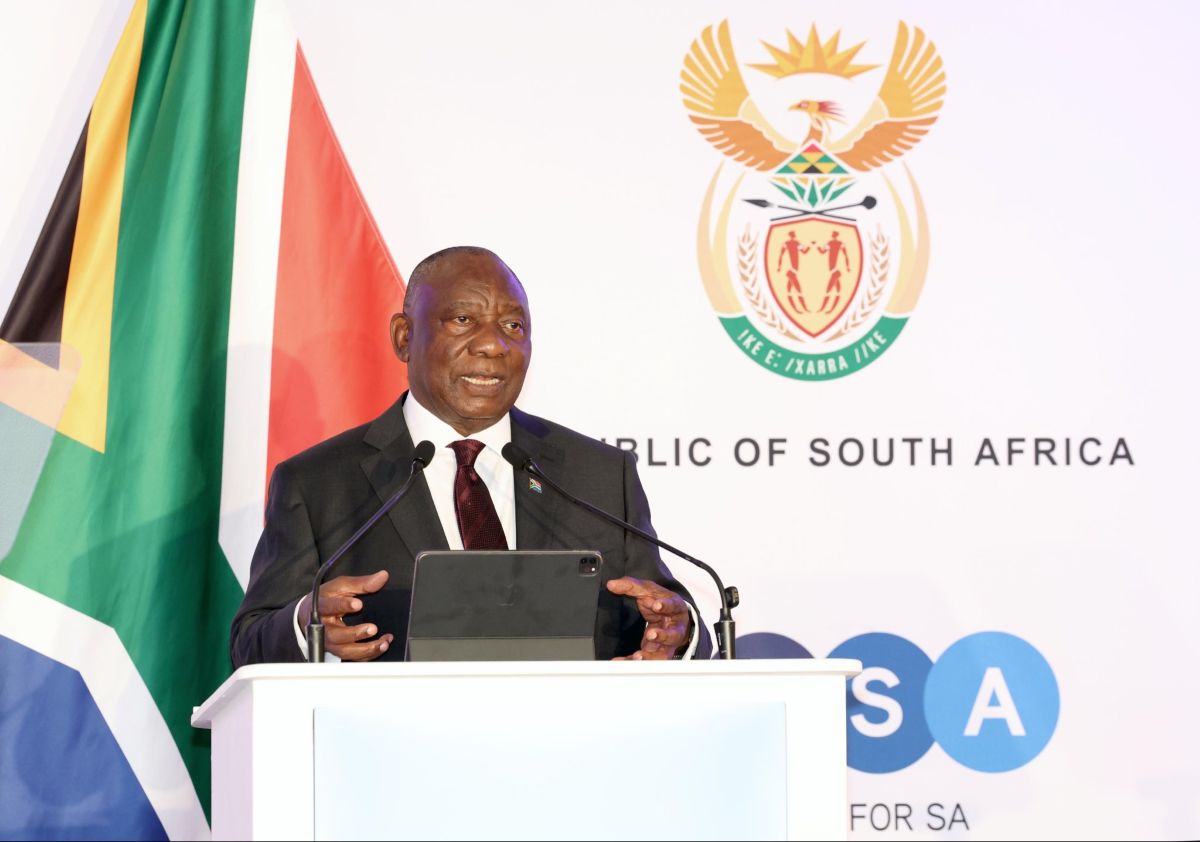
HYDE PARK, JOHANNESBURG — South African President Cyril Ramaphosa officially launched Phase 3 of the Joint Government-Business Partnership on Thursday at Summer Place in Hyde Park, signalling a decisive strategic transition from emergency economic stabilization to aggressive, broad-based growth.
Addressing Cabinet ministers, chief executives, state-owned enterprise heads, and civil society leaders, the President outlined an ambitious agenda aimed at pushing South Africa’s economic growth rate beyond 3 per cent while targeting R3 trillion in new capital investment.
The initiative, originally established in 2023 amidst acute structural distress, has evolved through distinct operational phases. Where Phase One prioritized stabilizing critical national infrastructure and Phase Two targeted institutional reform, Phase Three is explicitly calibrated to drive productive activity, private investment, and large-scale employment creation.
Key Takeaways & Strategic Objectives
- Core Growth Target: Elevate national economic growth above the 3% threshold through structured private-public capital deployment.
- Capital Mobilization: Target R3 trillion in investment supported by Operation Vulindlela and the Industrial Development Strategy of 2026.
- Sectoral Expansion: Extending the joint work-stream model into Tourism, Agriculture & Agro-processing, and Mining.
- Structural Milestones: Over 12 consecutive months without load shedding, successful exit from the FATF grey list (October 2025), and 11 private rail operator access agreements concluded.
Reflecting on Structural Reforms: Energy, Logistics, and Governance
In his opening remarks, President Ramaphosa contextualized the partnership’s necessity by recalling the economic environment of mid-2023. At the time, severe load shedding crippled domestic productivity, deteriorating rail and port infrastructure constrained commodity exports, and South Africa’s grey-listing by the Financial Action Task Force (FATF) weakened international investor confidence.
“This partnership was founded on a simple but powerful principle,” Ramaphosa stated. “There are challenges that government must lead in resolving. There are investments and capabilities that only business can mobilise… This partnership does not transfer the responsibilities of government to business. Rather, it brings together the respective capabilities of government and business in pursuit of clearly defined national objectives.”
Reviewing key outcomes, Ramaphosa highlighted the stabilization of the national grid under the Energy Action Plan and National Energy Crisis Committee (NECOM). With technical assistance and private capacity additions, South Africa has sustained over a year without rolling power cuts. Regulatory milestones have also been achieved, including the issuance of a Market Operator Licence to the National Transmission Company South Africa (NTCSA) and the approval of new Grid Capacity Allocation Rules, laying the groundwork for a competitive electricity market.
Progress was similarly reported in freight logistics under the National Logistics Crisis Committee (NLCC). Strategic interventions have arrested operational declines at major ports and rail corridors, culminating in the execution of rail access agreements with 11 private train-operating companies.
On governance, the President cited South Africa’s exit from the FATF grey list in October 2025 as a turning point for financial integrity, alongside the operationalization of Digital Forensics South Africa to prosecute complex commercial crime. In youth employment, joint initiatives expanded access to SA Youth and the Youth Employment Service, with the Global Business Services incentive facilitating over 26,000 jobs in 2025 alone.
Phase 3: Expanding into High-Yield Sectors
Despite positive macroeconomic indicators—including recent sovereign credit-rating upgrades, tighter bond yields, a stronger rand, and robust Johannesburg Stock Exchange performance—Ramaphosa emphasized that macroeconomic confidence must immediately translate into tangible economic participation.
“Confidence is not an end in itself. Confidence must lead to investment. Investment must lead to production. Production must lead to jobs. And jobs must lead to better lives.”

— President Cyril Ramaphosa
To achieve growth above the 3 per cent threshold, Phase Three expands the joint work-streams into three labour-intensive, high-yield export sectors:
- Tourism: Identified as a rapid job creator, interventions will focus on expanding air access, modernizing visa processing, enhancing destination security, and upgrading tourist infrastructure to benefit rural and township economies.
- Agriculture & Agro-Processing: Priorities include resolving water and transport bottlenecks, strengthening biosecurity, expanding agricultural finance, accelerating land reform for emerging commercial farmers, and expanding value-added exports over raw commodities.
- Mining: Capitalizing on global demand for critical energy transition minerals requires modernizing the mining-rights cadastral system, expediting exploration, tackling illegal mining syndicates, and advancing local beneficiation and junior miner participation.
Regional Integration & Execution Discipline
Connecting domestic recovery to regional dynamics following the 46th SADC Summit, Ramaphosa underscored that South Africa’s growth strategy must support broader Southern African industrialization and supply chain integration.
Concluding his address, the President called for strict delivery discipline, establishing clear targets, transparent reporting, and rapid policy interventions across all work-streams, while reiterating that transformation and economic growth remain mutually reinforcing imperatives for the nation’s future.