
 By
By 
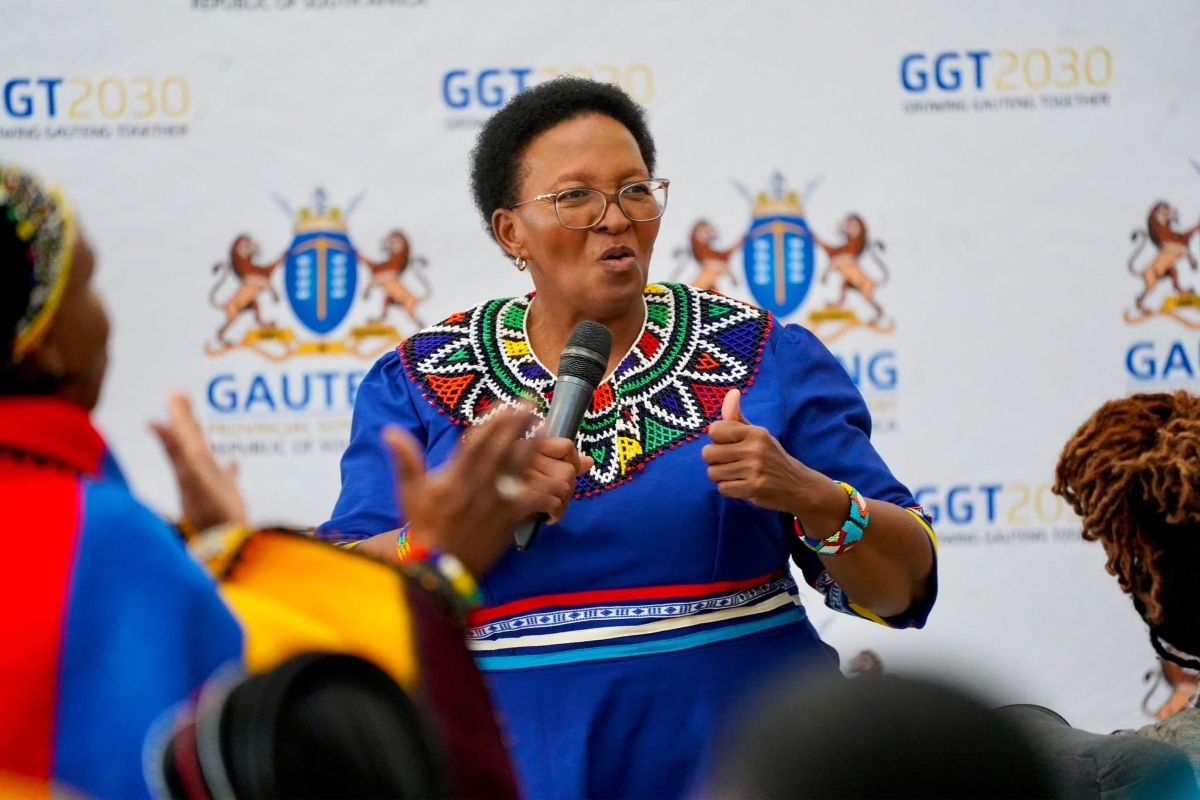
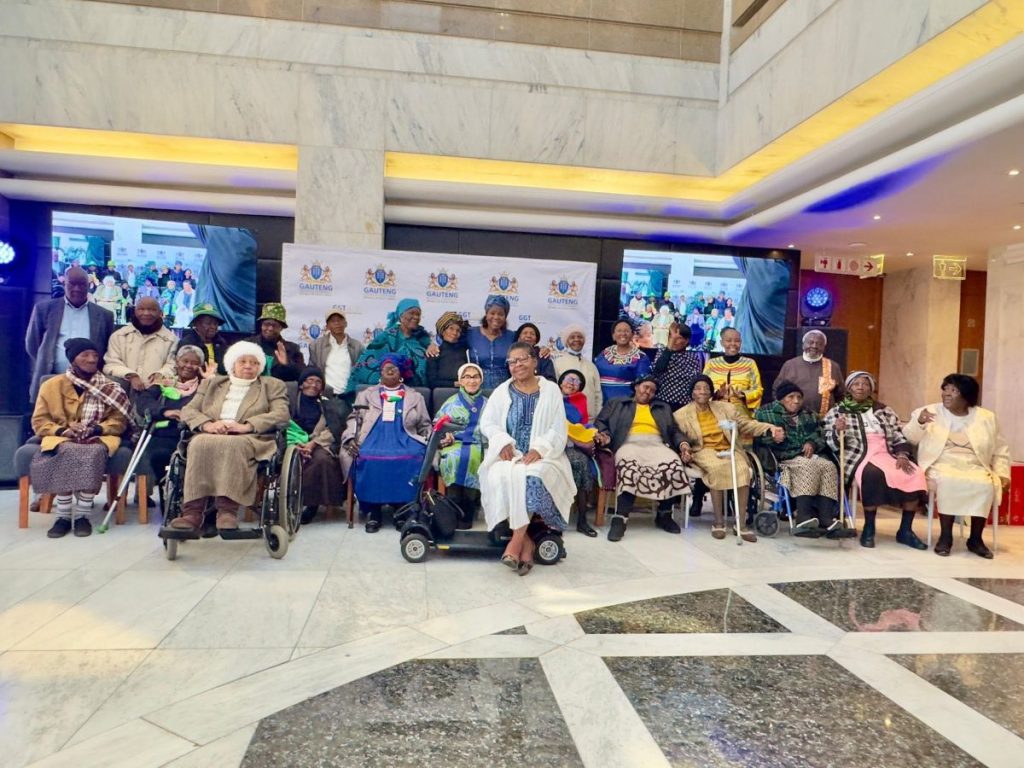
JOHANNESBURG — In a fierce call to action that bridged South Africa’s liberation history with its pressing contemporary crises, Gauteng Acting Premier Ms Nomantu Nkomo-Ralehoko delivered a landmark keynote address at the Women Stalwarts Recognition Event on August 16, 2026.
Speaking before political veterans, social leaders, and government officials at the Office of the Premier, Nkomo-Ralehoko urged the nation to move beyond ornamental tributes and confront the structural, ethical, and economic decay undermining the democratic state.
The address coincided with the 70th anniversary commemoration of the historic 1956 Women’s March, when 20,000 women marched to the Union Buildings to challenge the apartheid pass laws.
However, Nkomo-Ralehoko warned against reducing such pivotal history to mere “photographs, slogans, or public holidays”. Instead, she presented the legacy of struggle stalwarts—such as Lilian Ngoyi, Helen Joseph, Rahima Moosa, and Sophia Williams-De Bruyn—as an active political framework to address present-day governance failures, rampant crime, and persistent gender-based violence.
Beyond ‘Ornamental History’: A Call to Moral Reconstruction
Opening her speech under the banner theme “Empowered Women, Empower Nations,” Nkomo-Ralehoko framed the gathering not merely as a ceremony of appreciation, but as a moment of “political reflection and moral recommitment”. She paid homage to the veterans who “planted trees under whose shade [they] might never sit,” contrasting their selfless sacrifice with the moral drift seen across modern institutions.
“When we remember 9 August 1956, we must resist the temptation to reduce that moment to a photograph, a slogan, or a public holiday,” Nkomo-Ralehoko declared. “The greatest tribute we can give to the women of 1956 is not applause. It is transformation.”
Addressing the room of veterans directly, the Acting Premier argued that the liberation generation cannot retire while South Africa faces a multi-faceted crisis. She pointed to pervasive gender-based violence, systemic corruption, youth unemployment, and the normalization of criminality as evidence that the nation’s moral language is faltering.
Asking what the women of 1956 would say if confronted with modern challenges, she asserted: “They would tell us that freedom is not the permission to become selfish… that democracy is not a licence for impunity… and that leadership without ethics is merely power without purpose.”
Re-examining the ‘National Question’ and Gender Equality
A core theoretical pillar of the speech focused on the National Democratic Revolution and the “National Question”. Nkomo-Ralehoko emphasized that while apartheid was a system of racial domination, patriarchy transcended racial divisions. Consequently, the struggle for gender equality cannot be reduced to a competition between identities or treated as a secondary policy goal.
“The National Question is not simply a question of who occupies political office,” she argued. “It is a question of whether we have fundamentally transformed the material, social, economic, and political conditions produced by colonialism, apartheid, and patriarchy.”
She posed a series of poignant tests for contemporary liberation:
- Does freedom reach the household, the workplace, and the informal settlement?
- Can the daughter of a domestic worker access the same opportunities as the child of privilege?
- Can a woman walk home without fear, or lead without her authority being dismissed as “unnatural”?
Emphasizing that female emancipation is neither an act of generosity by men nor a favour granted by government, Nkomo-Ralehoko termed it an absolute “constitutional, democratic, and revolutionary imperative.”
Material Empowerment vs. Rhetorical Commitments
Shifting from political theory to state capacity, Nkomo-Ralehoko called for a direct alignment between public administration and ethical governance. She warned that political rhetoric surrounding empowerment remains empty as long as women remain trapped in poverty and excluded from the formal economy.
“A policy that never reaches the poor is not a successful policy,” she noted. “A budget that does not change people’s lives is not merely a financial matter; it is a political failure.”
In setting out Gauteng’s state priorities, she outlined actionable measures required to make emancipation tangible:
- Economic Integration: Expanding access to state procurement and funding for women-owned enterprises.
- Social Protection & Education: Investing in skills development, early education, and safeguarding working-class households.
- Targeted Interventions against GBV: Strengthening law enforcement, judicial accountability, and community support systems to protect women and children.

A Social Compact for Renewal
Nkomo-Ralehoko concluded with a call for a broad national social compact built around the core principles of ubuntu, service, discipline, and accountability. She noted that neither government, political parties, traditional leaders, nor civil society can repair the nation’s social cohesion in isolation.
Reaffirming the core tenets of the Freedom Charter—that the people shall govern and share in the country’s wealth—she reminded the audience that the struggle for national liberation ultimately means human liberation. Addressing the youth through the lens of the stalwarts, she urged the younger generation to recognize that democracy was fought for, organized for, and sacrificed for—and must now be defended.
“You marched for us before we were born,” Nkomo-Ralehoko said in her closing salute to the stalwarts. “Our responsibility is to ensure that we do not squander the ground your courage helped create.”