
 By
By 
In global economics, accessibility is a primary currency of competitiveness. Investors, corporate executives, skilled talent, and international tourists continuously evaluate destinations not merely by their potential yields or natural attractions, but by the administrative ease with which capital and personnel can cross borders.
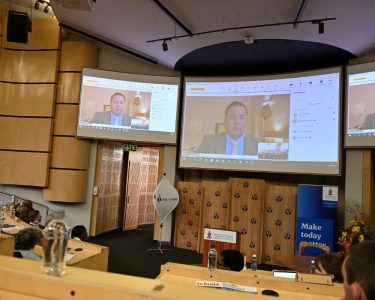
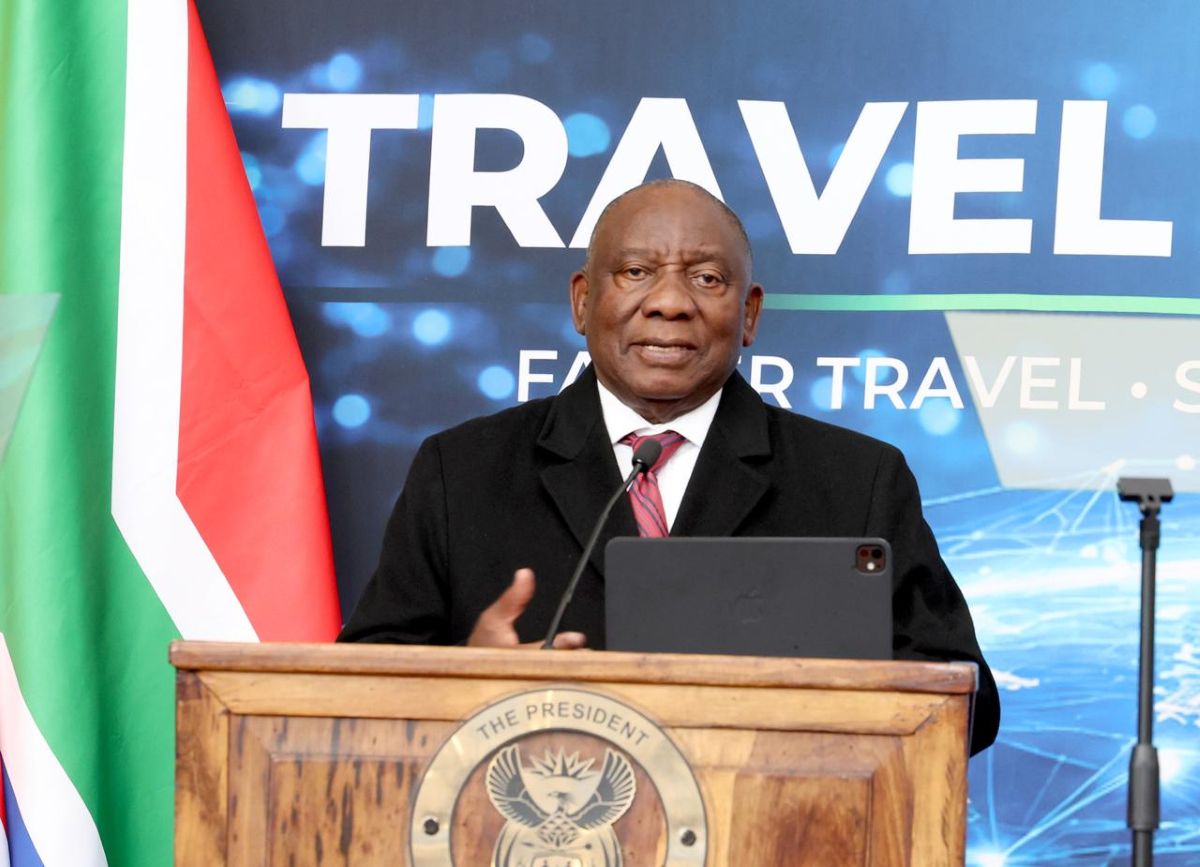
On Wednesday at OR Tambo International Airport, South African President Cyril Ramaphosa formally launched the country’s Electronic Travel Authorisation (eTA) system—a structural reform designed to transition South Africa from an administratively sluggish gateway into a streamlined, high-efficiency hub for global commerce and tourism.
Addressing government ministers, senior tax and border officials, and aviation industry leaders, President Ramaphosa framed the introduction of the eTA not as a routine administrative upgrade, but as a core macroeconomic lever. By eliminating paper-heavy visa procedures and physical embassy appointments for eligible travellers, the eTA directly targets one of the most persistent non-tariff barriers to domestic economic expansion: border friction.
Immigration Reform as Structural Growth Policy
The timing of the launch aligns with critical domestic labour market dynamics. Fresh off the release of Statistics South Africa’s latest Quarterly Labour Force Survey, which highlighted deeply entrenched unemployment—particularly among youth—the Presidency underscored that state policy must prioritize job creation. In this macroeconomic framework, visa modernization serves as a direct stimulus for employment.
A friction-free border translates immediately into expanded economic activity. Increased inbound travel drives higher occupancy across the hospitality sector, boosts revenue for domestic airlines and transport operators, accelerates retail demand, and stimulates the MICE (meetings, incentives, conferences, and exhibitions) industry. Each digital authorization issued translates to direct foreign exchange inflows and domestic value addition.
“Visa reform is therefore not simply an immigration reform. It is an economic reform. It is a jobs reform… In the global economy, accessibility matters. Investors compare countries. Tourists compare countries. Conference organisers compare countries. Every unnecessary delay encourages people to look elsewhere.”
— President Cyril Ramaphosa
The eTA initiative constitutes a vital pillar of Operation Vulindlela, the joint initiative between the Presidency and National Treasury established in 2020 to unblock structural impediments across energy, freight rail, ports, telecommunications, water, and human mobility. Having unlocked private sector generation in the electricity market and advanced port concessions, government is now treating immigration architecture with the same urgency as hard infrastructure.
Phased Deployment and Strategic Expansion
The operational rollout of the eTA reflects a targeted economic strategy. To support South Africa’s hosting of the G20 Presidency, the system was initially piloted across four major source markets: China, India, Indonesia, and Mexico. These high-growth economies represent pivotal trade partners and source markets for investment, tourism, and high-value technical capabilities.
| Reform Pillar | Core Objective | Economic Mechanism |
| Initial Rollout | Targeted launch in China, India, Indonesia, & Mexico | Accelerates G20 diplomacy, high-value tourism, & trade links |
| Phase 2 Expansion | Global expansion for visitors, business travellers, & workers | Lowers transaction costs for FDI, trade missions, & specialized talent |
| Digital Horizon | Full ‘Home Affairs @ Home’ transition (Work & Study Visas) | Resolves domestic skill shortages; enhances state institution efficiency |
According to the Department of Home Affairs, digital processing will progressively expand from short-term tourist and business authorisations to encompass critical work visas, study permits, and complex immigration categories. This transition aims to address acute skill shortages that have historically constrained capital expenditure in key technical and corporate sectors.
Smart Security: Balancing Openness with Risk Assessment
A critical theme of the presidential address was the operational synergy between economic openness and national security. Modernizing border administration does not equate to lowering regulatory scrutiny. Rather, the transition to an eTA replaces reactive, post-arrival enforcement with proactive, pre-departure intelligence.
By leveraging advanced digital platforms, biometric verification, and automated risk scoring, the system enables state security agencies, the Border Management Authority (BMA), and the South African Revenue Service (SARS) to evaluate traveller risk profiles prior to embarkation. This capability isolates illicit actors and visa abuse while accelerating clearance for legitimate corporate travellers and tourists.
The eTA operates as part of the broader Comprehensive Approach to Migration Management and the Revised White Paper on Citizenship, Immigration and Refugee Protection. This coordinated posture ensures that border governance actively serves South Africa’s broader economic trajectory while safeguarding national sovereignty.

Execution Imperatives and State Capacity
While the launch of the eTA represents a substantial policy achievement, its ultimate economic dividend hinges on execution. A digital visa portal relies heavily on backend operational uptime, seamless inter-agency data integration between Home Affairs, SARS, and security services, and user-centric platform design.
The successful deployment of this system offers evidence that South Africa can implement complex, multi-agency digital reforms. If maintained with technical rigor and expanded according to schedule, the eTA will stand as a benchmark for institutional modernisation—demonstrating that South Africa is actively building a modern, capable, and globally competitive state open for business.