
 By
By 
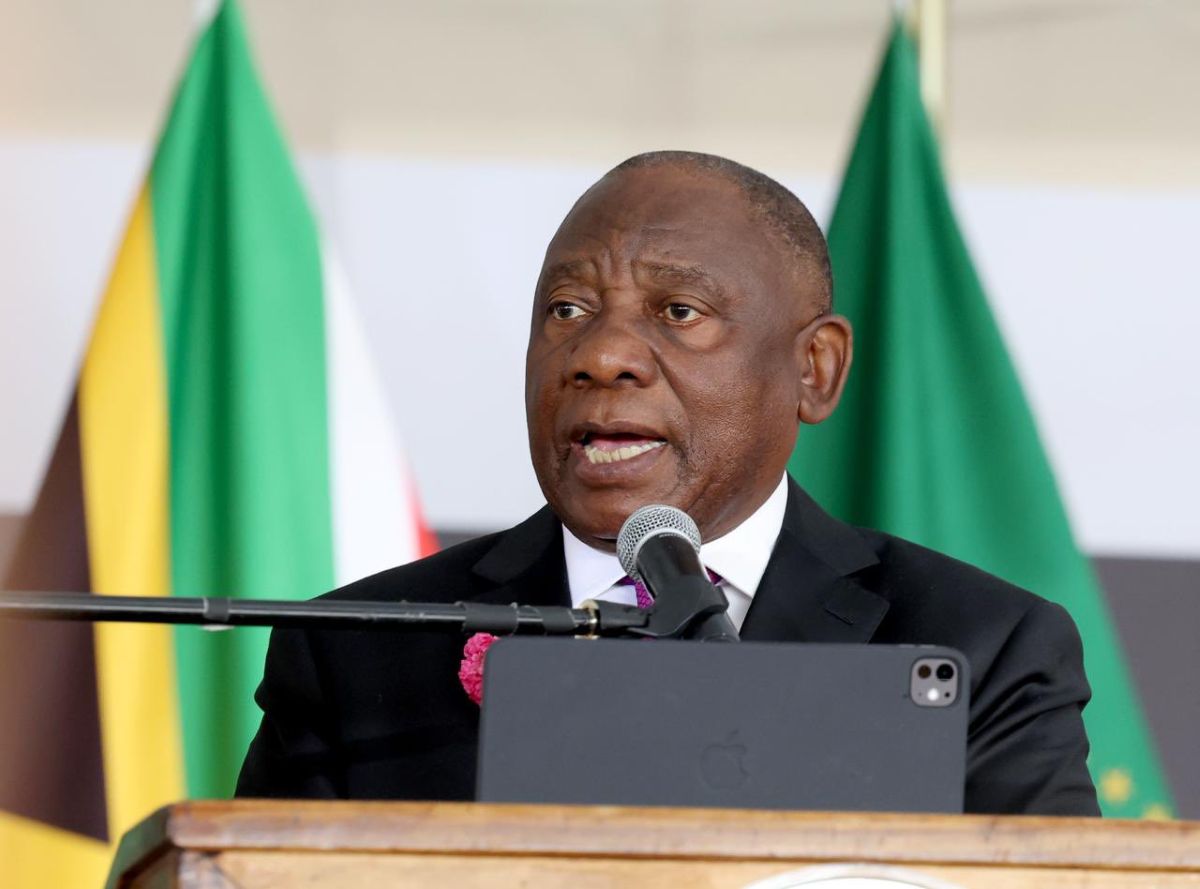
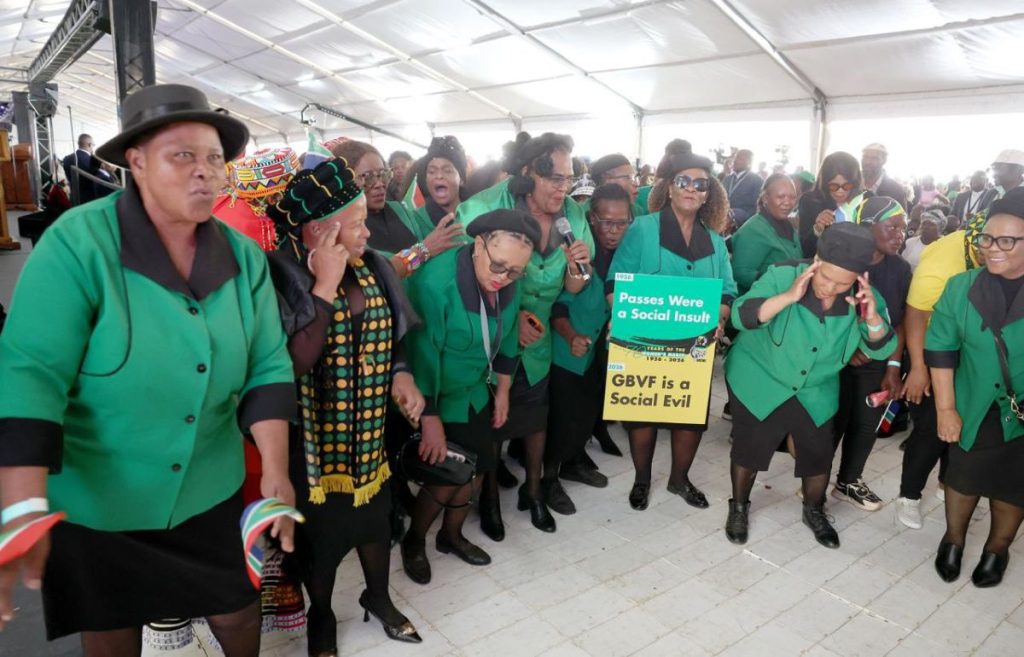
TSHWANE — Standing on the historic lawns of the Union Buildings where 20,000 women gathered seven decades ago to defy the apartheid state, President Cyril Ramaphosa delivered a landmark National Women’s Day address that framed South Africa’s contemporary crisis of gender-based violence and economic inequality not merely as social policy challenges, but as fundamental threats to the nation’s democratic promise.
Opening his address with an evocative homage to the iconic August 9, 1956 march, Ramaphosa invoked the profound thirty-minute silent protest staged by the women after Prime Minister J.G. Strijdom fled his office to avoid receiving their petitions. Reenacting that pivotal moment, the President called for a moment of silence across the Union Buildings grounds, describing the 1956 demonstration as an event that fundamentally altered the trajectory, character, and moral authority of the liberation struggle.
“Prime Minister Strijdom ran away, but his absence did not diminish their presence,” Ramaphosa told the assembled crowd, which included key political figures, judicial leaders, and international dignitaries. “It was not the silence of fear or submission; it was the silence of courage gathering its strength. For thirty minutes, there was no chant, no speech, and no cry. Yet their silence said everything that needed to be said.”
Restoring Forgotten Names to National Memory
A central political theme of the President’s speech was the active reclamation of history. Honoring Mama Sophie Williams-de Bruyn—who at 18 was one of the four principal leaders of the 1956 march alongside Lilian Ngoyi, Helen Joseph, and Rahima Moosa, and was present on stage—Ramaphosa rallied public support for the “Write Her into History” campaign. Championed by the Ahmed Kathrada Foundation and the Sophia and Henry De Bruyn Legacy Foundation, the initiative seeks to record the names and stories of every woman who marched that day to complete the national roll call of honour.
Ramaphosa stressed that the 1956 march was part of a rich, long-standing tradition of female resistance—pointing to Charlotte Maxeke leading the 1913 anti-pass uprising in Bloemfontein, the adoption of the 1954 Women’s Charter, and the integration of gender demands into the 1955 Freedom Charter at Kliptown. He reiterated that true democratic freedom cannot remain an abstract political concept, but must manifest tangibly in homes, workplaces, classrooms, and clinics.
A Global Dimension: Solidarity and Constitutional Progress
In a move that elevated the national commemoration into a broader global discourse on gender equality, Ramaphosa welcomed Nobel Peace Laureate Malala Yousafzai, praising her crusade against systemic misogyny and educational denial. Drawing an explicit line between South Africa’s constitutional journey and global struggles against “gender apartheid,” the President declared that South African emancipation remains intrinsically linked to women’s rights worldwide.
The President highlighted significant constitutional milestones achieved over three decades of democracy, celebrating the prominent institutional leadership of women across key state organs. He noted that women currently occupy top positions within the South African state, serving as Chief Justice (Mandisa Maya), Speaker of the National Assembly (Thoko Didiza), Chairperson of the National Council of Provinces, Public Protector, and Auditor-General. Furthermore, he cited international benchmarks ranking South Africa highly for gender parity, financial inclusion, educational outcomes, and political decision-making.
The Economic Imperative: Closing the Wealth Gap
Despite these high-level political appointments, Ramaphosa’s address delivered a sobering assessment of everyday socioeconomic conditions. Under the official anniversary theme “Empowered women empower nations,” he acknowledged that women—despite constituting more than half of the population—do not yet hold an equal share of the country’s wealth, land, or corporate enterprises.
To confront these structural economic disparities, the administration outlined targeted state interventions:
- Public Procurement Reform: Leveraging state spending to direct government procurement explicitly toward women-owned businesses.
- Value Chain Integration: Utilizing the Women Economic Assembly (WECONA) to incorporate female entrepreneurs into major industrial value chains.
- Land Tenure Security: Ensuring women secure direct legal title to the agricultural land they cultivate.
- STEM & Technical Expansion: Bridging training gaps to ensure women transition into engineering, technology, science, and skilled artisanal trades.
Gender-Based Violence as a National Disaster
Turning to South Africa’s persistent social crisis, Ramaphosa drew a stark parallel between the existential fear women endured under apartheid law and the pervasive threat posed by contemporary gender-based violence (GBV) and femicide.
“In 1956, women lived in fear of being arrested for not having a pass. Today, women live in fear of the gender-based violence that stalks them in the streets, even in their homes,” Ramaphosa declared, defending his government’s classification of GBV as a national disaster and the establishment of the National Gender-Based and Femicide Council.
Directing his message squarely at men, the President demanded an end to societal silence, cultural justifications, and bystander apathy. He asserted that patriarchy, cultural norms, or relationship dynamics can never justify abuse, harassment, rape, or murder. “Gender-based violence is not a women’s problem. It is a problem of society. It is a problem of violent men,” he said, calling on men and boys to actively step forward under the banner of Not in My Name.

Healthcare Rights and the Benchmark of Progress
Concluding his address, Ramaphosa highlighted that comprehensive, quality healthcare access—encompassing maternal care, cervical cancer screenings, reproductive rights, and HIV prevention—is fundamental to equality, dignity, and bodily autonomy. He noted that investing in women’s health is a direct investment in the productivity and future of the entire nation.
Reflecting on the legacy of the 1956 petition, the President insisted that the ultimate measure of this landmark 70th anniversary will not be the speeches delivered or ceremonies held, but whether a young girl can grow up safe, whether equal pay is realized, whether female farmers own land, and whether survivors of violence receive swift justice.
“Each generation must answer the question posed by the women of 1956: Will we fear the power of women, or will we build our nation with it?” Ramaphosa stated. “We will ensure that the answer is found in our laws, in our budgets, in our institutions, in our homes, and in our conduct towards one another.”