
 By
By 
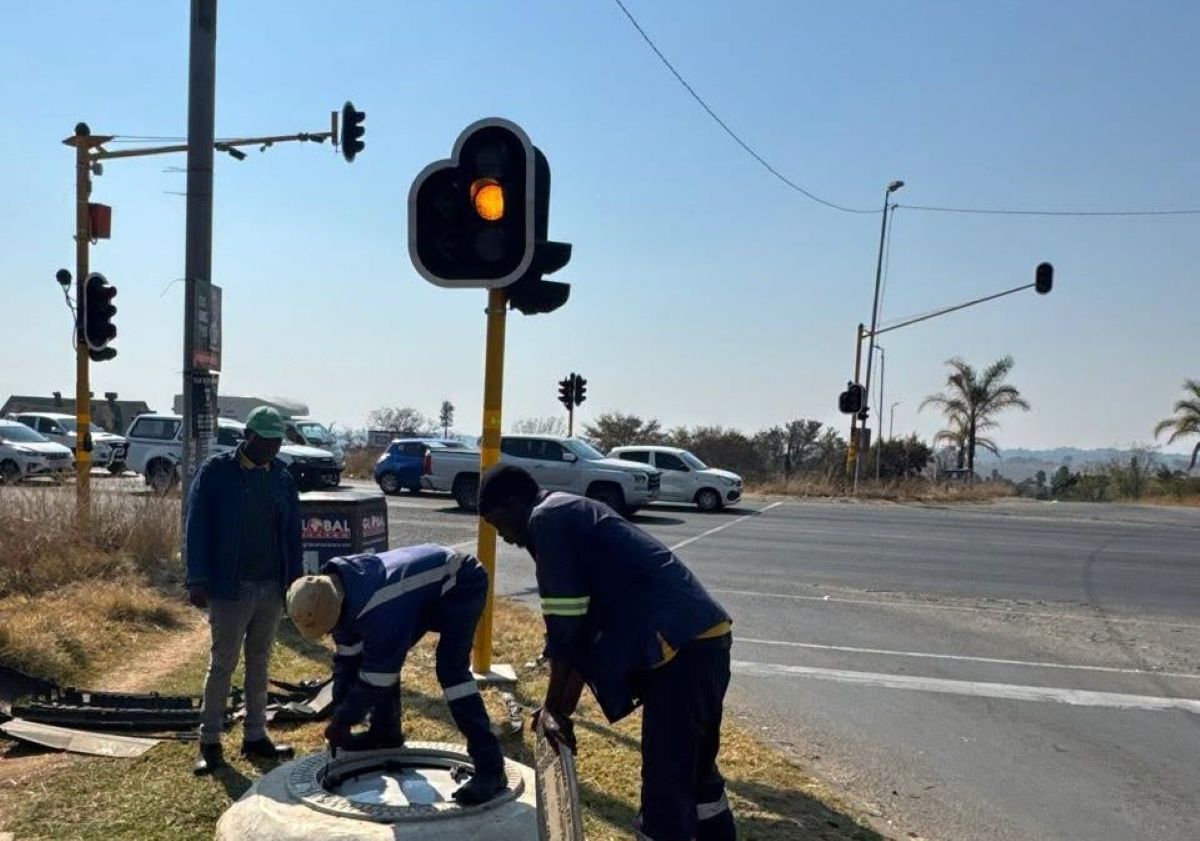
The economic engine of South Africa is taking direct action against the costly drag of infrastructure sabotage. The Gauteng Department of Roads and Transport has launched an intensified restoration campaign to repair and fortify vandalised traffic signals across key provincial transport corridors.
Vandalism, persistent cable theft, and vehicle accidents have severely impacted traffic flow across Greater Johannesburg and Ekurhuleni. The resulting congestion hampers public transport, slows emergency services, and delays the movement of goods—a friction the regional economy can ill afford.
To break the cycle of repeated destruction, the provincial government is moving beyond simple quick fixes. The department is deploying technology-driven upgrades designed to harden intersections against criminal syndicates. Modernised security measures now being rolled out include strengthened controller boxes, fortified underground chambers, protective bollards around signal poles, and smart CCTV cameras equipped with real-time video analytics.
Reconstruction efforts are already underway across crucial commercial and commuter nodes. In Greater Johannesburg, teams are focused on heavy-traffic corridors, including Cedar Road in Fourways, Winnie Mandela Drive at Kingfisher, and multiple major intersections along Christiaan de Wet Road and Hendrik Potgieter Road. In Ekurhuleni, repairs target key intersections along the R23 (Heidelberg Road), covering vital trade hubs near the N12 in Benoni, Mall@Carnival, and Makro in Brakpan.

Gauteng MEC for Roads and Transport Kedibone Diale-Tlabela emphasized that the financial toll extends far beyond direct repair costs. Constant infrastructure destruction drains public funds that could otherwise drive economic development. To mitigate these financial losses, the department is exploring mechanisms to recover repair costs from negligent drivers involved in accidents that destroy traffic signals.
However, provincial officials stress that physical barriers and law enforcement alone cannot solve the problem. Calling for a unified front, MEC Diale-Tlabela urged motorists, local communities, and business stakeholders to report suspicious activity immediately to law enforcement agencies. The department is also coordinating with the South African Police Service (SAPS), municipal police services, and local Community Policing Forums to step up patrols around vulnerable transport corridors.
Restoring traffic flow to Gauteng’s arteries is ultimately an economic imperative. By pairing modern technology with community vigilantism, the province aims to safeguard public capital, reduce transit costs, and keep South Africa’s commercial heartland moving smoothly.