 By
By 
CAPE TOWN — South Africa’s Special Economic Zones (SEZs) have long been heralded as the silver bullets for the nation’s stagnant economic growth. Yet, while the blueprint for these industrial hubs promises waves of foreign investment and employment, the reality on the ground tells a more complex story of brilliant potential constrained by bureaucratic friction.
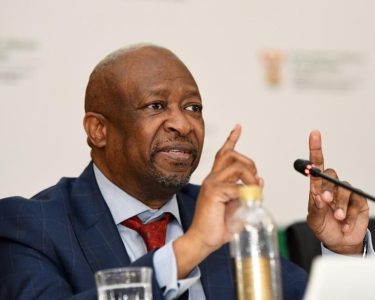
Speaking to the Portfolio Committee on Trade, Industry, and Competition, Deputy Minister Alexandra Abrahams delivered a candid assessment of the country’s flagship industrial zones, calling for an urgent shift from “business-as-usual” policy to bold, experimental economic reforms.
Following recent parliamentary oversight visits to the Atlantis SEZ and the Saldanha Freeport IDZ in the Western Cape, Abrahams validated lawmakers’ operational concerns. However, she reframed these challenges not as systemic failures, but as critical diagnostic pointers to refine South Africa’s national industrial strategy.
Dual Engines of the Western Cape
The two economic hubs at the centre of the legislative spotlight represent distinct, vital pillars of South Africa’s modern industrial ambitions:
- The Atlantis SEZ: Positioned as a continental frontrunner in the green economy, Atlantis focuses heavily on renewable energy manufacturing and eco-friendly technologies. It acts as a localized engine for South Africa’s Just Energy Transition, transforming global climate mandates into physical factories and stable jobs.
- The Saldanha Bay IDZ: Leveraging world-class, deep-water port infrastructure, Saldanha serves as a critical maritime and logistics gateway. It is uniquely positioned to handle heavy ship repairs, service the oil and gas sectors, and build out the infrastructure required for the emerging green hydrogen economy, all while utilizing a specialized customs-controlled area to streamline international maritime logistics.
“Together, these zones prove that South Africa can attract world-class investors and develop sophisticated global supply chains,” Abrahams noted. “But despite their incredible potential, these vital economic engines unfortunately are not yet operating with all cylinders firing.”
The Three-Box Test for True Investment
To measure whether these hubs are genuinely moving into a higher gear, the Deputy Minister introduced a stringent “three-box test” for the quality of investment they attract:
- Additionality: The investment must be entirely new capital.
- Necessity: It must be investment that would not have occurred anyway under normal economic conditions.
- Geography: It must be investment that would not have simply gone elsewhere within South Africa, avoiding mere internal displacement.
To achieve this caliber of investment, Abrahams echoed recent reform proposals from the Centre for Development & Enterprise (CDE), agreeing that an SEZ must be “truly special” by offering investors entirely different rules and drastically better operating conditions than the rest of the domestic economy.
┌────────────────────────────────────────────────────────┐
│ THE SEZ SUCCESS BENCHMARK │
├────────────────────────────────────────────────────────┤
│ [✓] New Investment Only │
│ [✓] Investment wouldn’t have happened otherwise │
│ [✓] Capital wouldn’t have gone elsewhere in SA │
└────────────────────────────────────────────────────────┘
Cutting Through the Regulatory Thicket
South Africa has been trapped in a low-growth, high-unemployment rut for over a decade. The culprit behind the slow conversion of investor interest into operational brick-and-mortar factories is frequently the state’s own cumbersome regulatory environment.
To counter this, the Department of Trade, Industry, and Competition is advocating for SEZs to be treated as “experimental environments” designed specifically for aggressive red tape reduction. A key mechanism in this strategy is the “Fusion Centre,” an intervention aimed at eliminating bureaucratic bottlenecks and accelerating the transition from an expression of interest to an active, job-creating factory Floor.
However, fixing the internal mechanics of the SEZs is only half the battle. The cost of doing business remains a steep hurdle. Resolving these friction points requires a coordinated, “whole-of-government” approach to address broader systemic issues—ranging from streamlining visa allocations for foreign experts to fast-tracking regulatory licensing and lowering utility overheads.
Looking Global for the Road Ahead
South Africa does not need to reinvent the wheel. The blueprint for highly functional economic zones has already been successfully executed globally. By studying and adopting the economic lessons of international success stories—such as China, Mauritius, Colombia, and Turkey—South Africa can re-engineer its industrial hubs.
If the government can successfully transition these zones from heavily regulated enclaves into streamlined, highly competitive ecosystems, the latent investor appetite is waiting to be unlocked. Reimagined effectively, the Atlantis and Saldanha Bay zones could finally become the powerful tools needed to attract the capital, technology, and skills required to tackle the nation’s unemployment crisis and spark sustained economic growth.