 By
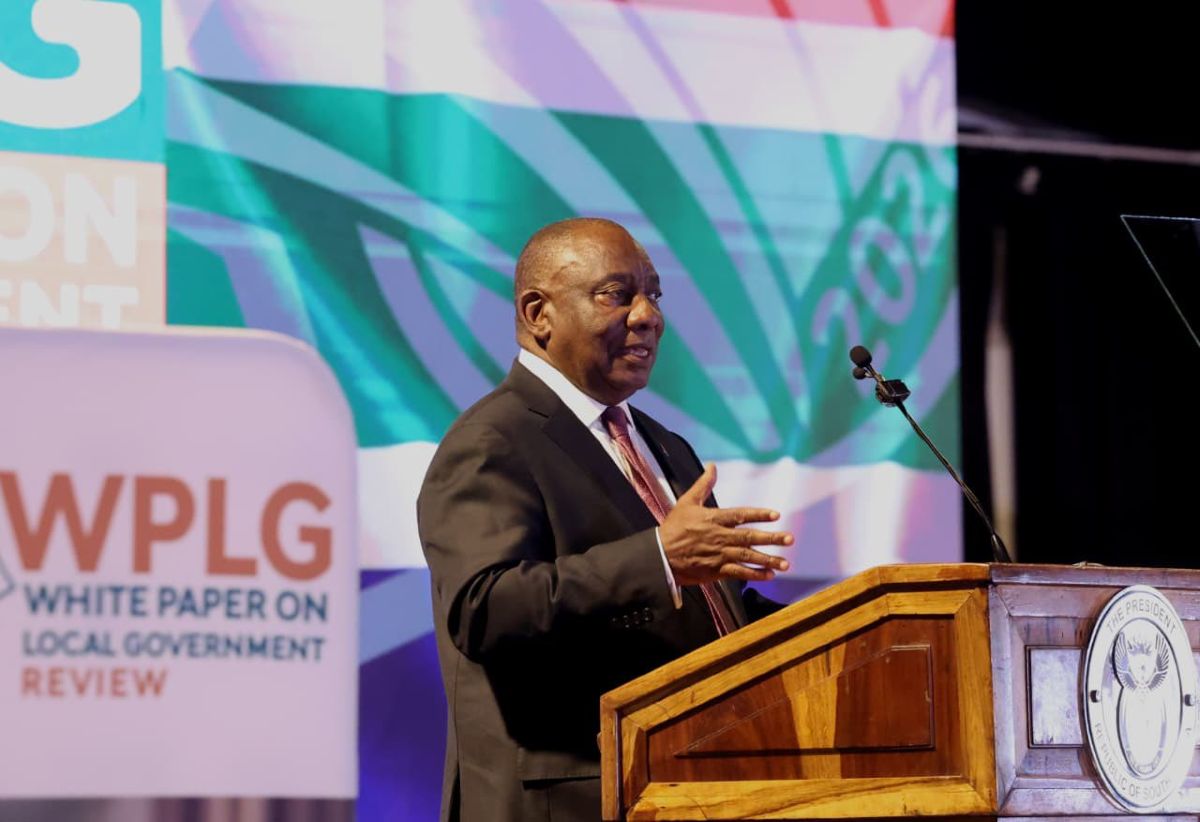
Nearly three decades after laying the foundation for post-apartheid municipal governance, South Africa has initiated a sweeping overhaul of its local government system. Addressing the nation, President Cyril Ramaphosa unveiled the Revised White Paper on Local Government, marking what he termed a landmark moment to fix systemic dysfunctions, deteriorating infrastructure, and widespread service delivery failures.
“Local government is the sphere of government closest to the people,” President Ramaphosa stated, emphasizing that for millions of citizens, the reality of democracy is measured by basic amenities—running water, stable electricity, safe roads, and functioning waste collection.
Confronting Systemic Failures and Apartheid’s Legacy
While noting significant post-1994 achievements—such as expanding electricity access to over 90 percent of households and piped water to nearly 16 million residents—the President acknowledged profound systemic shortcomings.
He noted that many municipalities remain trapped in historical structural divides inherited from apartheid, which paired wealthy tax bases with impoverished, under-resourced areas.
Over the years, compounding challenges including overlapping mandates, unsustainable finances, political infighting, corruption, and a lack of technical capability have pushed many local administrations to the brink. Notably, municipal arrears to power utility Eskom have ballooned past R120 billion, while numerous entities remain in debt to regional water boards.
Five Pillars of the Revised White Paper
The newly launched White Paper charts a comprehensive, long-term reform agenda anchored in five core pillars designed to transform municipal governance:
- Differentiated Powers and Functions: Moving away from a rigid “one-size-fits-all” model, the state will align municipal responsibilities with actual institutional capacity, scale, and performance, introducing regionalized service delivery or public-private partnerships where local capacity falls short.
- Integrated Systems and Cooperation: Reinforcing the District Development Model to ensure national departments, provinces, and state-owned entities coordinate planning and budgeting around regional realities.
- Financial Sustainability: Implementing stricter financial management, enhanced revenue collection, and mandatory ring-fencing of water and electricity revenues strictly for infrastructure maintenance rather than diversion to other operational expenses.
- Professionalization and Accountability: Restricting political interference in administration, enforcing merit-based hiring of competent professionals, and applying strict, consistent consequences for corruption or dereliction of duty.
- Economic Growth and Risk Planning: Positioning municipalities as facilitators of economic activity through predictable regulatory environments and proactive disaster risk management.
A Phased Implementation and Political Unity
To oversee the transition, Cabinet has endorsed a phased implementation strategy supported by a time-bound Local Government Transition Management Body, jointly coordinated by the Department of Cooperative Governance, The Presidency, and National Treasury.
With local government elections approaching on November 4, President Ramaphosa issued a direct call to political parties and prospective leaders. He urged that regardless of political affiliations, coalitions, or electoral outcomes, elected officials share a binding obligation to ensure basic services remain uninterrupted and that citizens are never held hostage by political instability.
“We must implement the reforms that are needed to fix local government, even when they are difficult,” Ramaphosa concluded. “Let us build municipalities that work for every South African.”