 By
ANTALYA, Türkiye — When a massive 8.8-magnitude earthquake tore through the seabed off Russia’s Kamchatka Peninsula in July 2025, the difference between catastrophe and survival came down to a ten-minute window. Within moments of the tremor, the Pacific Tsunami Warning Centre issued its first threat alerts.
Across the ocean, Japanese authorities mobilized the evacuation of roughly 1.9 million people, while thousands of miles away in Ecuador’s Galápagos Islands, more than 2,300 residents were moved to higher ground hours before 1.3-metre waves battered the coast.
Yet for roughly a third of the world’s nations, that ten-minute lifeline simply does not exist.
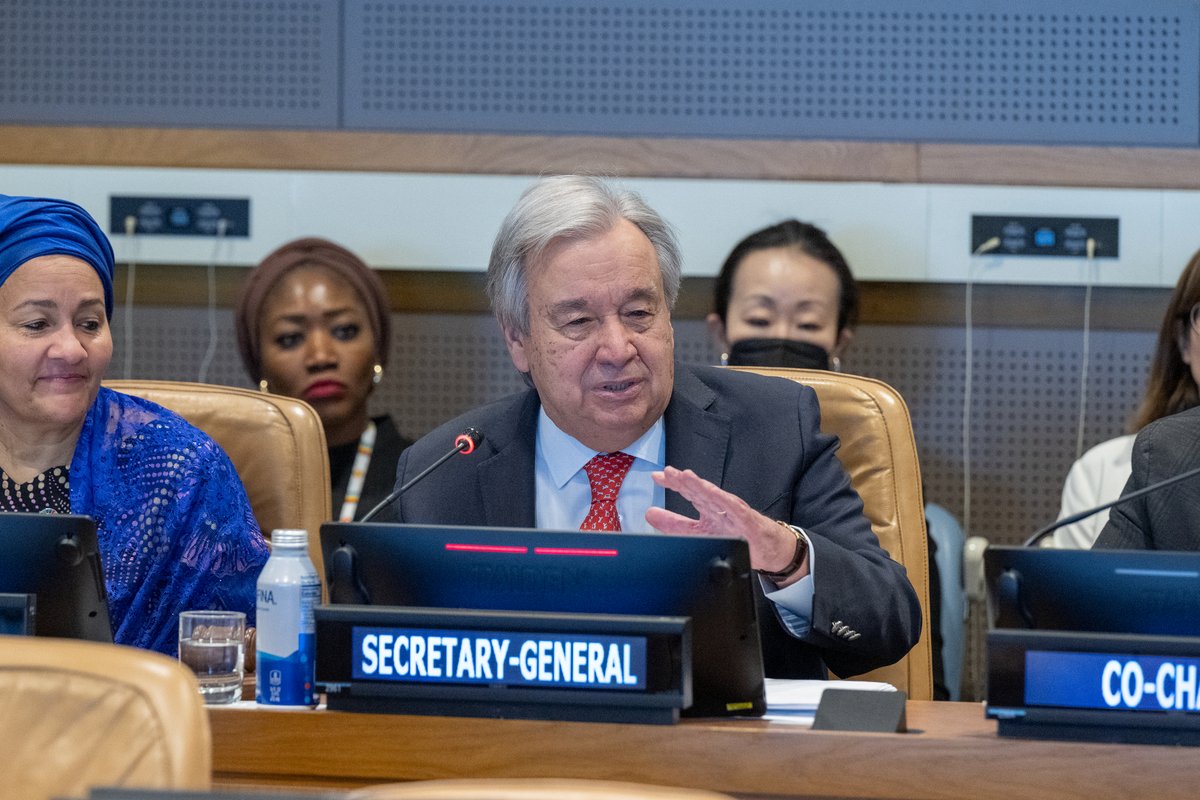
Speaking on Wednesday at the COP31 climate summit in Antalya, Türkiye, UN Secretary-General António Guterres issued an urgent call to close the global disaster-preparedness divide before a brewing, potentially record-breaking El Niño weather pattern unleashes new extremes.
“No one should lose their life simply because a warning came too late – or never came at all,” Guterres told world leaders and delegates at a high-level event for the UN’s Early Warnings for All initiative, which aims to shield every person on Earth with disaster alert systems by the end of 2027.
The Secretary-General’s appeal coincided with the release of the Global Status of Multi-Hazard Early Warning Systems 2026, a joint assessment by the UN Office for Disaster Risk Reduction (UNDRR) and the World Meteorological Organization (WMO). While the report charts significant momentum—136 countries, or 70 per cent of the world, now operate multi-hazard early warning systems, up by 17 nations since March 2025—it underscores a stark climate injustice: the communities most exposed to intensifying weather shocks remain the least equipped to see them coming.
The Data Behind Survival
For climate negotiators in Antalya grappling with the escalating costs of adaptation, the UN report offers compelling proof that forecasting and rapid communication are among the highest-return investments available.
Countries equipped with substantial-to-comprehensive early warning systems record disaster-related death rates 6.1 times lower than nations with limited or moderate infrastructure, and see 3.2 times fewer people affected overall.
Crucially, the report demonstrates that effective warnings do not always require high-tech satellite networks; rather, they depend on reaching the “last mile” in formats communities trust and can act upon.
In Madagascar, ahead of Tropical Cyclone Gezani’s landfall in February, the Malagasy Red Cross activated an early action plan that sent volunteers on roughly 600 door-to-door visits, delivering alerts and evacuation support to between 80,000 and 100,000 people. In Rwanda’s hilly Karongi district, an integrated network of women’s cooperatives, SMS messages, local radio broadcasts, and community loudspeakers gave a tea farmer and her daughters 48 hours’ notice of torrential rain—enough time to reinforce agricultural terraces, clear drainage channels, and safely store dried tea leaves before the deluge hit.
Across the globe, these proactive measures are gaining traction. In 2025 alone, 146 “anticipatory action” activations across 54 countries reached 9.6 million people before hazards fully materialized.
Blind Spots in a Warming World
Despite these gains, approximately one in three countries still lacks any multi-hazard early warning system. The blind spots are heavily concentrated in least developed countries, small island developing States, and nations fractured by armed conflict.
“They did the least to cause the climate crisis, but are being hit first and hardest,” Guterres said.
A central bottleneck is a severe global imbalance in basic meteorological infrastructure—the ground-level weather stations and radar networks needed to feed accurate data into forecasting models. Guterres highlighted a glaring disparity: individual European nations operate more weather stations meeting global standards than the entire continent of Africa.
“We cannot warn people about what we cannot see,” he warned.
That observational blindness carries heightened peril as atmospheric indicators point toward an intensifying El Niño event. WMO Secretary-General Celeste Saulo cautioned delegates that the current El Niño “could be literally off our monitoring charts,” threatening to supercharge droughts, floods, and extreme heat-waves across vulnerable regions.
“While we cannot stop El Niño, we can prevent many of its worst human consequences,” Saulo said.
From Fragmented Projects to Permanent Protection
Since the Early Warnings for All initiative launched in 2022, international partners have mobilized roughly $2 billion, extending technical and financial support to around 160 countries. However, UNDRR head Kamal Kishore noted that while progress is undeniable, “too many people remain unprotected” as the 2027 deadline draws near.
To bridge the remaining gap, Guterres urged governments and donors in Antalya to shift away from piecemeal, donor-driven pilot programs and treat early warnings as a permanent, foundational public service.
He outlined three core priorities: embedding early warning systems directly into national budgets and adaptation plans; closing persistent financing and technical capacity gaps; and replacing fragmented projects with coordinated, long-term backing for country-led strategies.
Sustained funding, Guterres emphasized, cannot stop at meteorological satellites or supercomputers—it must span the entire chain of survival, “from weather forecasting to communication tools to volunteers knocking on doors”.
With COP31 negotiations running through November 20, the message from UN leadership to world capitals was unambiguous: climate breakdown is outpacing global preparedness, and closing the warning gap is an immediate moral and practical imperative.
“The climate crisis is accelerating. Our protection of people must accelerate with it,” Guterres said. “Together, let us make sure that every warning arrives in time”.