 By
By 
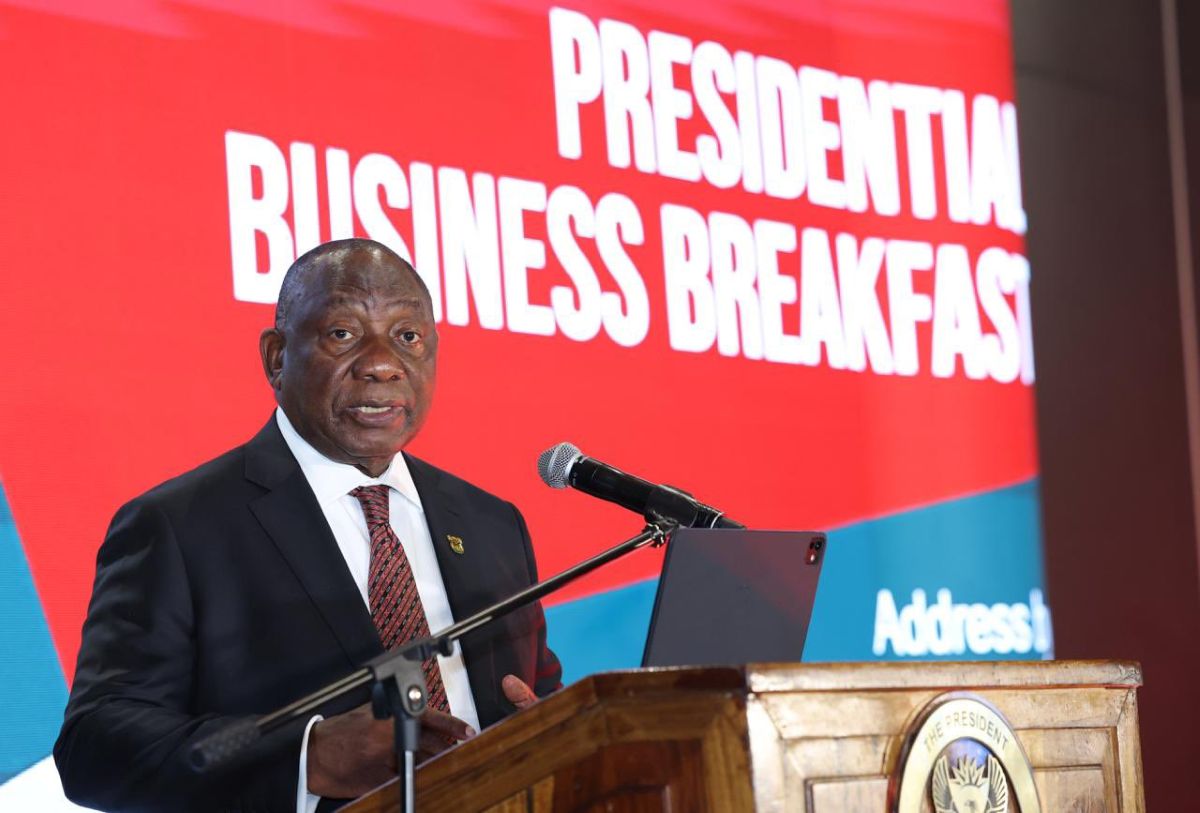
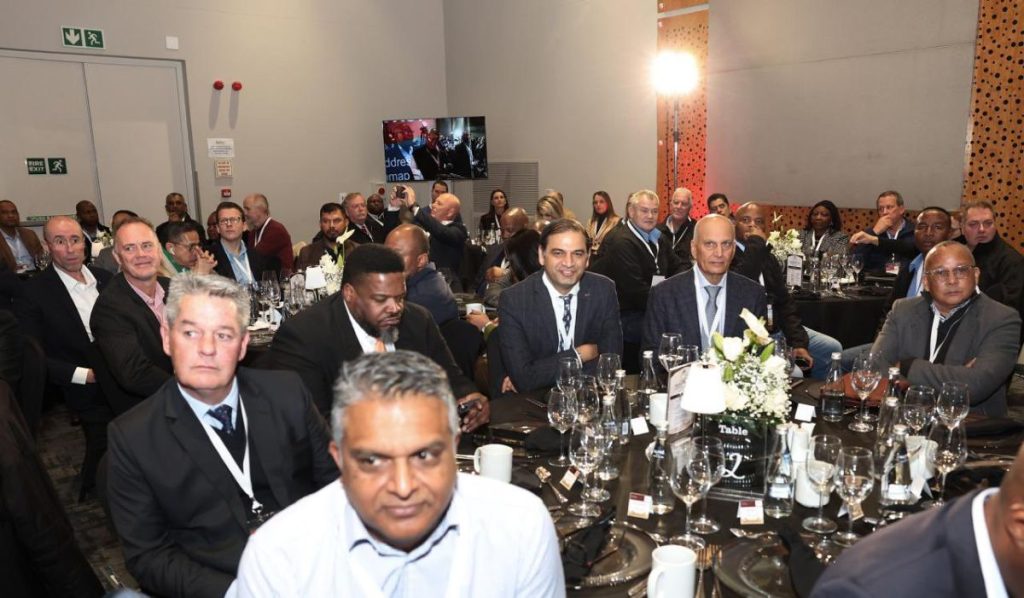
EKURHULENI — Addressing captains of industry, board members, and trade union leaders at the Steel and Engineering Industries Federation of Southern Africa (SEIFSA) Presidential Business Breakfast at Or Tambo on Thursday, President Cyril Ramaphosa unveiled a bold blueprint aimed at converting South Africa’s R1 trillion infrastructure drive into an engine for domestic industrial renewal.
Speaking to over 1,300 member companies representing the heart of the country’s manufacturing capacity; Ramaphosa directly confronted the severe structural headwinds that have long battered the metals and engineering sectors—from weak domestic demand and volatile global steel markets to soaring municipal electricity tariffs and acute logistics bottlenecks.
However, rather than dwelling solely on these systemic constraints, the President’s address signalled a strategic pivot: leveraging state procurement, energy market deregulation, and continental trade integration to transform South Africa from a consumer of imported capital equipment into the premier “engineering workshop of the African continent.”
Key Infrastructure & Industrial Drivers
R1 Trillion Infrastructure Pipeline (Next 3 Years) │ ├── 14,000 km Transmission Line Expansion (Eskom Grid Restructuring) ├── Railway System Recapitalisation (Private Freight Rail Access) ├── Port Equipment Modernisation (Transnet Terminal Reform) └── Municipal Water & Sanitation Projects (R24bn/Year Investment)Electricity Reform: From Grid Stability to Cost Competitiveness
While acknowledging that the Energy Action Plan under Operation Vulindlela has effectively brought load shedding to an end, Ramaphosa emphasized that power reliability alone is insufficient for energy-intensive manufacturers and smelters. Unprecedented tariff increases over the past two decades have pushed high-energy operations to the brink of collapse, threatening permanent job losses and structural industrial decay.
To address cost pressures, government is pushing forward with two major power sector transformations:
- wholesale Power Market: Scheduled to go live next year, the South African Wholesale Electricity Market will introduce direct competition among multiple private power generators to drive down long-term electricity prices.
- Eskom Transmission Unbundling: The Eskom Restructuring Task Team is overseeing the rollout of an independent, state-owned transmission company designed to ensure non-discriminatory grid access while safeguarding Eskom’s financial sustainability.
“The energy transition must become an industrial transition,” Ramaphosa stressed. He pointed specifically to the massive grid expansion plan—requiring 14,000 kilometres of new high-voltage transmission lines over the next decade—as a once-in-a-generation procurement opportunity for domestic producers of fabricated steel, transformers, cables, switchgear, and civil engineering systems.
Strategic Pillar: Localisation with Global Competitiveness
Ramaphosa outlined key policy pillars across transportation, water infrastructure, trade policy, and labour development aimed at ensuring that state capital expenditure stays within the South African value chain.
| Operational Sector | Policy Strategy & Structural Reform | Industrial Opportunity for Local Sector |
| Freight Rail & Ports | Open third-party private operator access to rail corridors; modernize port terminals under Operation Vulindlela. | Rebuild local capability to build locomotives, wagons, wheels, axles, and port cranes. |
| Water Infrastructure | Roll out the National Water Action Plan; operationalise the SA National Water Resources Infrastructure Agency with R24bn/year municipal grants. | Surge domestic demand for steel pipes, industrial pumps, control valves, and water treatment equipment. |
| Trade Policy & Tariffs | International Trade Administration Commission (ITAC) balancing protection for primary steel with downstream input costs. | Safeguard local mills against global dumping while maintaining competitive inputs for fabricators. |
| AfCFTA Market | Integration under the African Continental Free Trade Area, representing 1.3 billion consumers across Africa. | Export mining machinery, power equipment, structural steel, and engineering services across the continent. |
However, the President issued a clear caution regarding industrial policy: local procurement will not serve as a cover for inflated prices or structural inefficiency. “Localisation must be competitive. It must meet technical standards, deliver quality, and deliver on time,” Ramaphosa warned. In return, government committed to publishing long-term infrastructure project pipelines spanning 5, 10, and 15 years to provide manufacturers with the demand visibility needed to commit capital to new factories and tooling.
Rebuilding the Artisan Pipeline

A central thesis of the President’s address was the urgent need to restore the country’s historic industrial training culture. He called on business and organized labour to embed mandatory skill-building criteria directly into public sector contracts.
“Every major infrastructure contract should ask not only how many kilometres of railway or transmission line will be built. It should ask: How many apprentices will be trained? How many artisans will qualify? How many local suppliers will be developed?”
— Cyril Ramaphosa, President of South Africa
Concluding his address, Ramaphosa urged industry leaders to pivot from discussing the multi-decade decline of South African manufacturing toward actively building its renewal. With abundant mineral reserves, deep engineering expertise, and expanding continental trade corridors, South Africa stands positioned to reassert its role as an industrial heavyweight—provided government, business, and labour execute the strategic vision together.