
 By
By 
South Africa’s National Treasury has agreed to release the remaining July 2026 Local Government Equitable Share allocations to 69 defaulting municipalities. However, Finance Minister Enoch Godongwana warned that local governments remain on probation and face further financial embargoes if systemic governance failures are not rectified.
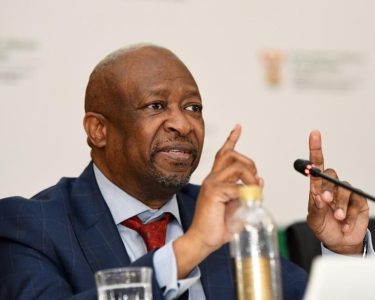
Speaking at a media briefing in Pretoria alongside Cooperative Governance and Traditional Affairs Minister Velenkosini Hlabisa, Godongwana clarified that the funds—totalling roughly R13.5 billion—are being unlocked conditionally to safeguard basic service delivery for poor households, rather than as a reprieve for non-compliant municipal administrations.
The release will begin on Thursday, July 31, ahead of the statutory 30-day withholding deadline on August 3.
Service Delivery Over Governance Reprieve
The initial decision to freeze the funds on July 7 followed persistent, widespread failure by local councils to comply with the Municipal Finance Management Act (MFMA). Affected local authorities include key economic hubs and metropolitan areas such as the City of Johannesburg, Mangaung, and Nelson Mandela Bay, alongside dozens of secondary municipalities across all nine provinces.
Treasury’s intervention was triggered under Section 216(2) of the Constitution, which empowers the central government to halt transfers to organs of state guilty of serious or persistent material breach of financial management frameworks.
However, the complete withholding of funds threatened to derail critical municipal functions, including water supply, electricity distribution, and refuse removal.
“National Treasury must balance its constitutional responsibility to enforce financial management requirements with the need to avoid communities carrying the immediate consequences of failures by municipal institutions and officials,” Godongwana stated, emphasizing that the allocation is a conditional measure intended to protect vulnerable citizens.
Fiscal Cracks and Budgetary Illusion
The 30-day withholding period exposed structural vulnerabilities across local government finances. Treasury’s evaluation revealed that the crisis extends far beyond isolated incidents of Unauthorised, Irregular, Fruitless, and Wasteful Expenditure (UIFWE).
Key financial strains highlighted during the assessment include:
- Unfunded Budgets: In the 2024–25 financial year, 116 municipalities—nearly half of the country’s total—adopted unfunded budgets, signalling a systemic disconnect between projected revenue and actual operational costs.
- Ballooning Debt Obligations: Municipalities accumulated R3.40 billion in interest arrears owed to Eskom and R1.21 billion to water boards, posing a direct threat to the financial viability of national bulk service providers.
- Escalating Financial Mismanagement: Municipalities have recorded R145.21 billion in irregular expenditure since 2021–22, with R40.14 billion generated in 2024–25 alone. Fruitless and wasteful expenditure over the same period reached R24.12 billion.
- Lax Oversight and Accountability: Municipal Public Accounts Committees (MPACs), councils, and accounting officers have routinely failed to investigate UIFWE, enforce disciplinary actions, or recover lost public funds.

Godongwana noted that the immediate cash-flow paralysis experienced by councils when the equitable share was paused demonstrated how dependent municipalities have become on central government transfers to fund everyday operations, often masking unrealistic revenue collection assumptions and unmanageable salary bills.
Strict Compliance Roadmap
To retain access to subsequent funding tranches, the affected municipalities must adhere to a strict compliance and monitoring roadmap established by National Treasury.
Under the conditions of the release:
- First Assessment Deadline (30 September 2026): Municipalities must submit formal progress reports detailing corrective measures, financial recovery plans, and progress made in investigating past financial misconduct.
- Evaluation Window (October–November 2026): Treasury will evaluate municipal cash-flow management, debt settlement agreements with Eskom and water boards, and the processing of UIFWE through functional MPACs.
- Decisive Action: Should a municipality fail to demonstrate measurable improvement by the end of November, Treasury will re-impose Section 216(2) sanctions, withholding the December 2026 and March 2027 equitable share allocations.
Minister Hlabisa added that Cooperative Governance and Traditional Affairs (CoGTA) will work alongside Treasury to provide hands-on technical support to troubled councils. However, both ministers emphasized that administrative assistance will no longer serve as a shield against legal consequence management for local leadership.
For South Africa’s struggling municipalities, the conditional release offers temporary cash-flow relief—but the message from financial authorities is clear: without structural governance reforms and fiscal discipline, the tap will be shut off again before the end of the year.