
 By
By 
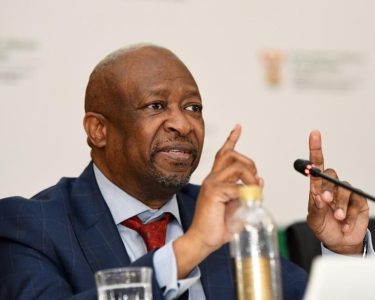
PRETORIA — In a wide-ranging address at the University of South Africa, South African Reserve Bank (SARB) Governor Lesetja Kganyago outlined the structural evolution of emerging markets (EMs) over the past three decades.
Moving from the deep financial fragility of the late 1990s to modern-day macroeconomic resilience, EMs have redefined their standing in the global economy. However, Kganyago warned that resilience alone is insufficient to secure prosperity, calling on South Africa to pivot aggressively toward economic growth.
From Fragility to ‘Home-Grown’ Resilience
Opening his lecture, Kganyago referenced a famous 1999 Time magazine cover titled “The Committee to Save the World,” which featured top United States financial officials following a wave of EM crashes—including the 1994 Mexican Tequila crisis, the 1997 Asian financial crisis, and Russia’s 1998 default. During that era, severe currency devaluations, double-digit inflation, and output collapses forced many nations into International Monetary Fund (IMF) bailouts.
South Africa was similarly battered, with prime interest rates reaching 25.5% in 1998, foreign exchange reserves running dry, and annual GDP growth slumping to 0.5%.
However, the narrative that developing nations permanently require Washington-led rescue packages has expired. When the 2007–2009 global financial crisis hit—originating in the US—a core group of EMs, including South Africa, Brazil, India, Indonesia, Mexico, and Thailand, proved far more durable. According to Kganyago, this shift stemmed from three fundamental, home-grown institutional reforms:
- Monetary Credibility: Moving away from fixed exchange rate pegs and foreign currency borrowing (“the Original Sin of EMs”) toward central bank independence, inflation-targeting, and flexible exchange rates.
- Reserve Accumulation: Building substantial foreign exchange reserve “war chests” to cushion external shocks.
- Prudential Supervision: Strengthening oversight of private sector borrowing to mitigate balance sheet risks before crises occur.
Consequently, the share of world GDP generated by EMs has expanded from just over 40% in 1999 to over 60% today.
The South African Case: Text-Book Stability Meets Structural Stagnation
Evaluating South Africa’s position within this global framework, Kganyago highlighted several clear institutional successes. The SARB’s constitutional independence, the adoption of inflation-targeting in 2000, and a floating exchange rate have dramatically narrowed South Africa’s inflation differential with the US—from nearly 7 percentage points in the 1990s to under 1 percentage point this decade. Furthermore, foreign exchange reserves have expanded from near zero 25 years ago to approximately $74 billion.
Despite these strengths, South Africa’s economic landscape presents severe lingering vulnerabilities, particularly regarding fiscal sustainability and GDP growth.
- Fiscal Dynamics: Following the 2008 global financial crisis, South Africa’s government debt rose from under 30% of GDP to nearly 80%, resulting in sovereign credit rating downgrades and rising debt-service costs. However, recent fiscal consolidation efforts have stabilized debt levels. Citing research by economists Charles Goodhart and Manoj Pradhan, Kganyago noted that South Africa and Mexico stand out as rare global examples of nations running primary budget surpluses “out of prudence” rather than forced crisis intervention. This stance has lowered long-run borrowing costs by roughly 300 basis points over the past year.
- The Living Standards Crisis: Kganyago described South Africa’s growth trajectory as a “silent crisis,” pointing out that average living standards are lower now than in the early 2010s because population growth has outpaced economic expansion.

Rejecting arguments that blame macroeconomic policy for stagnation, Kganyago attributed the slowdown to institutional damage caused by state capture, which weakened national capacity, damaged state-owned enterprises, and disrupted municipal governance. This environment forced the country’s sophisticated private sector into “survival mode,” stalling capital investment.
While state-led structural reform initiatives like Operation Vulindlela are working to restore key network sectors like freight rail and ports, recovery remains slow, with overall output in many infrastructure segments still below 2019 levels.
A Call to Action: “Betting on Growth”
Concluding his address, Kganyago argued that South Africa must make economic growth its paramount national priority, referencing work by economist Lant Pritchett to emphasize that sustained growth is the primary driver of human well-being.
He urged policymakers and business leaders to abandon risk-averse tendencies that protect incumbents through heavy regulation and red tape. Referring to Stefan Dercon’s concept of Gambling on Development, Kganyago called for a decisive shift in mind-set:
“South Africans love to gamble, but when it comes to growth, it turns out we are risk-shy… We would be much better off if we could stop betting on sports and start betting on growth instead.”