
 By
By 
KRUGERSDORP — In a political landscape often dominated by local government dysfunction, Gauteng’s provincial leadership is attempting to write a different narrative in Mogale City.
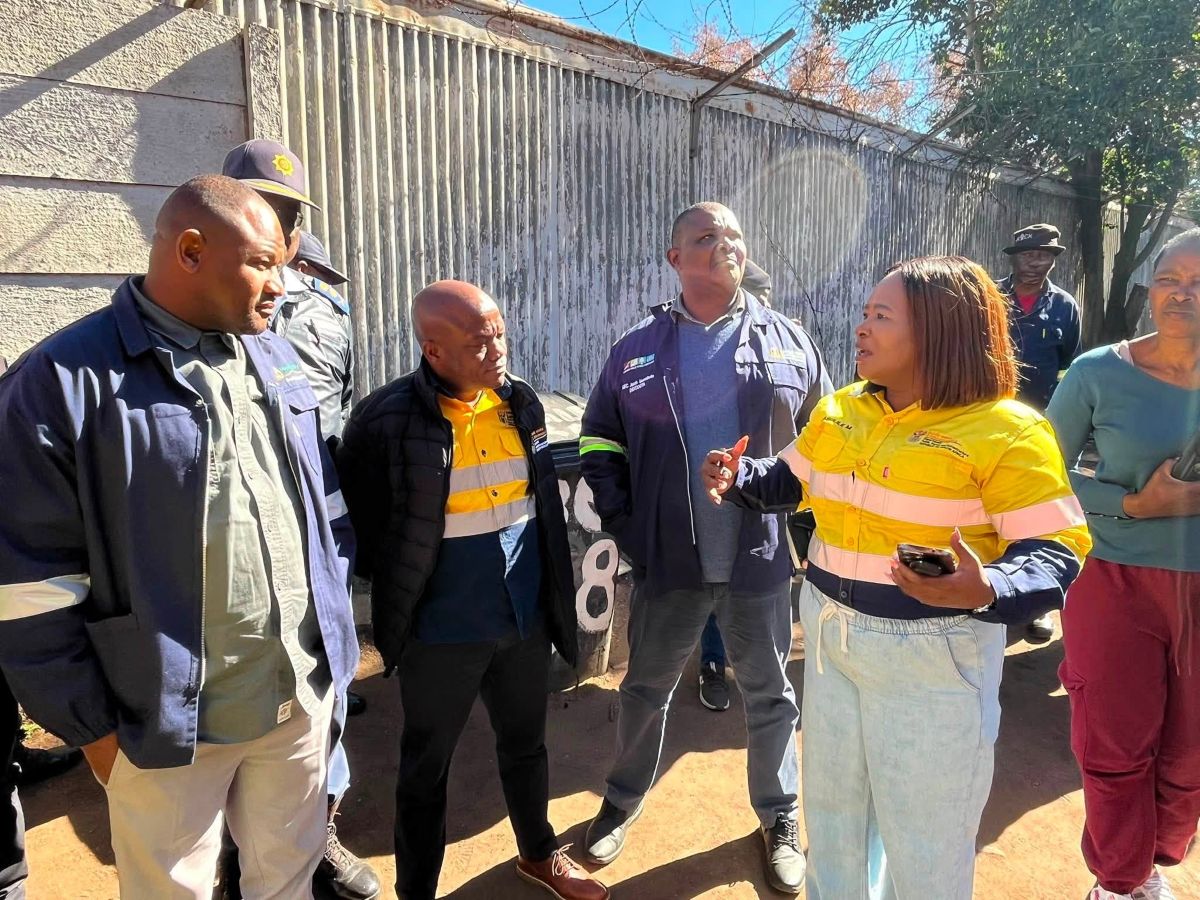
On Thursday, 16 July 2026, Jacob Mamabolo, the Gauteng MEC for Cooperative Governance and Traditional Affairs (COGTA) and Infrastructure Development, convened a high-stakes meeting with Mogale City Executive Mayor, Cllr Lucky Sele. The objective was clear: review the province’s support interventions and hammer out an aggressive, six-month implementation plan to fast-track service delivery.
Backed by senior officials from COGTA, provincial infrastructure departments, and the Gauteng Infrastructure Financing Agency (GIFA), the bilateral meeting represents a crucial test of Section 154 of the South African Constitution, which mandates provincial governments to actively support and strengthen the capacity of local municipalities.
A Structured Six-Month Sprint
The newly minted six-month program is not just a loose collection of promises; it is a structured intervention aligned with the Local Government Turnaround Strategy (LGTAS). The strategy aims to coordinate municipal support across key pillars, including financial management, public safety, infrastructure delivery, and spatial transformation.
With both leaders agreeing to weekly progress reviews and regular public reporting, the clock is now ticking for Mogale City’s administration.
Plugs, Pipes, and Power: Tackling Infrastructure Losses
At the heart of the municipality’s immediate challenges are utility losses—specifically water and electricity—which heavily drain local coffers. The agreed intervention plan addresses these head-on:
- The CSIR Water Partnership: To combat severe water losses, MEC Mamabolo committed to establishing a strategic partnership with the Council for Scientific and Industrial Research (CSIR).
- High-Tech Leak Detection: The partnership will pilot advanced water management technologies—similar to those currently used in Johannesburg—to detect leaks quickly, reduce non-revenue water, and stabilize the local water supply.
- Funding Infrastructure: Mogale City is actively applying for funding through the Water Services Infrastructure Grant to bolster its water meter replacement drive.
- Energy and Revenue Protection: On the electricity front, the municipality is accelerating its Integrated Energy Losses Reduction and Revenue Enhancement Programme. This initiative relies on smart technology and tighter operational management to curb electricity theft and improve revenue collection.
Commercialising Assets and Revitalising the CBD
Beyond basic services, the turnaround strategy focuses heavily on economic revitalization. MEC Mamabolo and Mayor Sele reaffirmed their commitment to unlocking value from underutilized public assets:
The Government Precinct Commercialisation
The municipality plans to commercialize government-owned properties and municipal assets. The goal is to draw in private investment, create local jobs, and drive spatial transformation to make the municipal precinct more accessible and business-friendly.
Krugersdorp CBD Revitalisation
The Krugersdorp Central Business District (CBD) is slated for a major facelift. The core anchor project of this economic renewal will be the redevelopment of the Bob van Reenen Stadium. Officials hope this project will stimulate broader private investment and upgrade deteriorating public infrastructure in the inner city.
A Rare Bright Spot in Financial Governance
Perhaps the most surprising aspect of the Mogale City briefing is its financial health. In a province where municipal audit outcomes are frequently plagued by irregular expenditure, Mogale City has emerged as an outlier.
MEC Mamabolo commended the municipality for its significant progress in strengthening financial governance. Notably, Mogale City is one of only two municipalities in Gauteng to enter the 2026/27 financial year with a zero opening balance on unauthorized, irregular, fruitless, and wasteful expenditure.
This clean slate has been achieved through:
- The early adoption of interim audits to catch and correct financial discrepancies before they hit final reports.
- The implementation of a fully funded municipal budget.
- Strict adherence to cost-containment measures and sustained fiscal discipline.
Political Will vs. Public Skepticism
While the policy framework is robust, the ultimate test lies in execution. Both leaders have assumed direct responsibilities under the LGTAS. Mayor Sele chairs the Municipal Infrastructure and Service Delivery Workstream, while Cllr Francis Makgatho, the MMC for Public Safety, leads the Disaster Management and Climate Resilience Workstream.
Recognizing that trust in local government is fragile, the meeting partners agreed that improving strategic, transparent communication with residents must be a priority over the next six months.

“We welcome the province’s commitment to partnering with us,” Mayor Sele stated, noting that the focus on water conservation, energy loss reduction, and commercializing public assets is vital to “restoring the dignity of our communities”. He expressed determination to ensure that Mogale City’s new leadership team delivers tangible improvements across every ward.
MEC Mamabolo echoed this sentiment, framing the intervention as a constitutional obligation to build capable local institutions.
“Over the next six months, the interventions agreed to today will be implemented through a structured programme supported by weekly progress reviews and regular public reporting,” Mamabolo said, emphasizing that the CSIR partnership demonstrates a concrete commitment to a “service-oriented Mogale City”.
For the residents of Mogale City, the promise of smart water meters, revitalized stadiums, and cleaner audits sounds promising. However, in South African local government, plans are only as good as their implementation. With weekly progress reviews on the cards, the next six months will reveal whether this provincial-municipal partnership is a genuine blueprint for local government recovery or simply another well-drafted executive plan.