 By
SANDTON, JOHANNESBURG — President Cyril Ramaphosa has called for mobilising public and private resources to fund dedicated computing power and crowd in early-stage venture capital for small businesses, warning that South Africa’s broader economic ambitions will falter if micro, small and medium enterprises (MSMEs) are left behind.
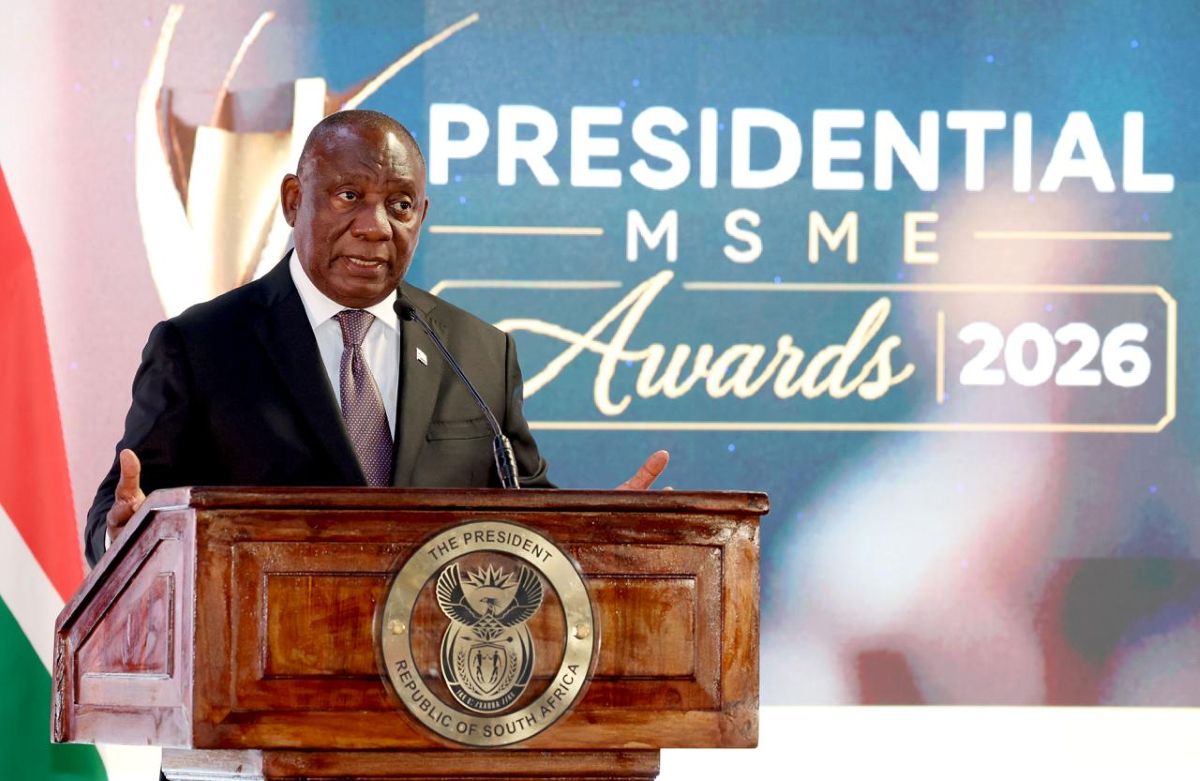
Addressing entrepreneurs, policymakers and private-sector partners at the Presidential MSME and Cooperatives Breakfast in Sandton on Thursday ahead of the fourth edition of the Presidential MSME and Cooperatives Awards, Ramaphosa said emerging firms must sit at the centre of the country’s push toward artificial intelligence and industrial expansion.
“Around R890 billion in investments was pledged at the South Africa Investment Conference earlier this year. These are welcome commitments, but we will not see sustainable economic change if small businesses are left behind,” Ramaphosa said.
Computing Power and AI Ambitions
Drawing on recent engagements in Silicon Valley, the President argued that innovation flourishes when research is backed, capital is mobilised and founders have clear pathways to commercialise ideas. For smaller enterprises, he framed access to computing power as a potential equaliser in a market being reshaped by artificial intelligence, advanced computing and automation.
To translate that vision into practical support, Ramaphosa outlined plans to:
- Mobilise public and private funding for computing power dedicated to small enterprises.
- Deploy development finance institutions, including the Small Enterprise Development and Finance Agency (SEDFA), to crowd in early-stage venture capital.
- Partner with universities to build artificial intelligence centres of excellence and link start-ups into a cohesive support ecosystem.
The goal, he said, is to position South Africa as a leading hub for artificial intelligence on the African continent while ensuring small firms can capture value from new technologies.

Policy Urgency and Structural Bottlenecks
Ramaphosa acknowledged that business owners at the breakfast had spoken candidly about persistent operational hurdles, including tight access to finance, limited market access, regulatory friction and uneven infrastructure and technology.
Those concerns, he noted, must sit squarely within the “National MSME One Plan” championed by Small Business Development Minister Stella Ndabeni alongside wider economic reforms.
The scale of the opportunity—and the pressure to deliver—is underscored by South Africa’s long-term employment targets. The National Development Plan envisions 11 million additional jobs by 2030, with roughly 9 million expected to come from small and expanding enterprises.
With around three million MSME owners operating across the economy, Ramaphosa said small businesses have room to expand output, deepen local value chains, lift exports and scale hiring.
He pointed to specific growth horizons he wants to see realised: small manufacturers supplying major industrial players, township enterprises scaling across provinces and the continent, and South African technology firms building solutions adopted globally.
Private-Sector Backing and Next Steps
While government agencies such as the Department of Small Business Development and SEDFA are tasked with easing structural constraints, Ramaphosa stressed that corporate partnerships remain vital. He thanked Absa for its continued backing of the Presidential Awards, as well as Huawei and the Wholesale and Retail SETA for supporting this year’s edition, urging more companies to contribute through procurement, supplier development, mentorship, technology transfer and financing.
Ahead of the awards ceremony, the President praised this year’s nominees—spanning women, youth, persons with disabilities, and township and rural entrepreneurs across agriculture, manufacturing, financial services, technology and the green economy—and urged established founders to mentor newer entrants, particularly young people.
Expanding small business participation in public and private procurement, strengthening ties between established industries and emerging firms, and preparing entrepreneurs to trade under the African Continental Free Trade Area remain central questions for policy and business leaders alike.
As Ramaphosa put it, the task ahead is straightforward in principle: make it easier to start and grow a business, and ensure every entrepreneur with a viable idea has a seat at the table.