 By
MANILA — As the global economy navigates a turbulent landscape marked by geopolitical fragmentation and economic uncertainty, the Association of Southeast Asian Nations (ASEAN) continues to stand out as a beacon of dynamism and resilience.
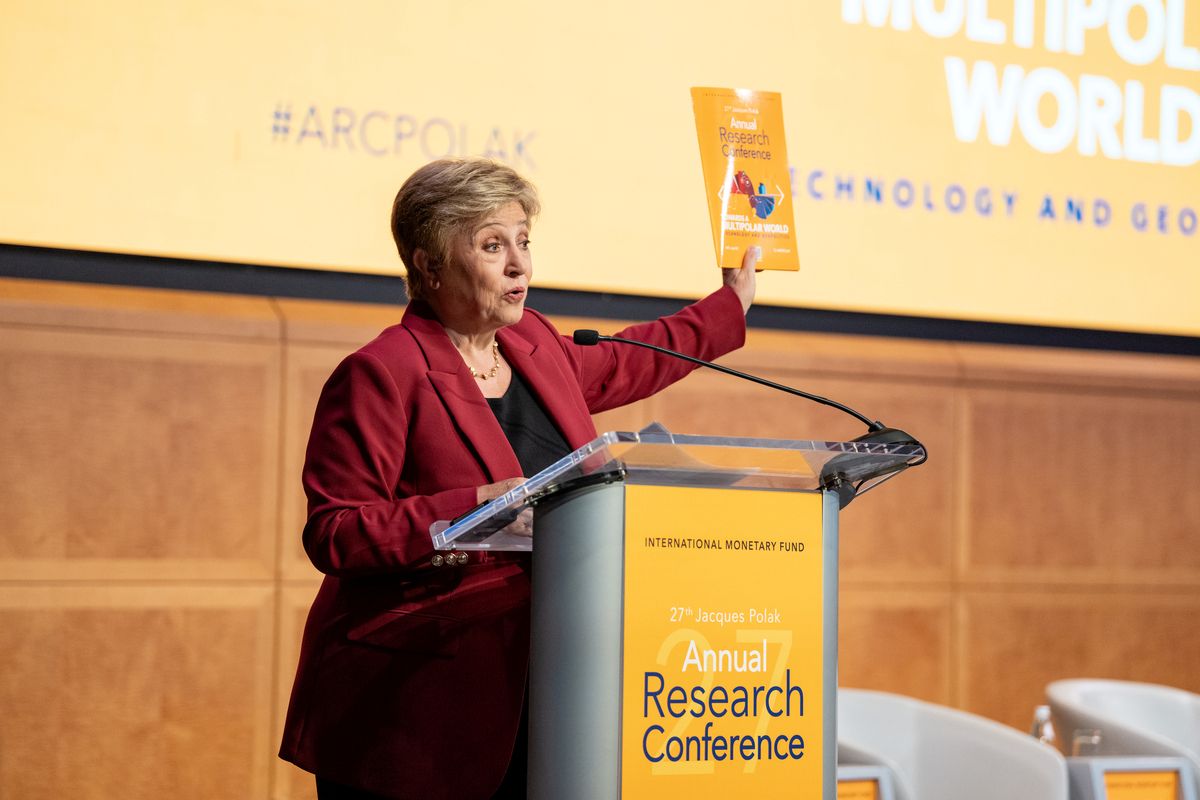
Speaking at the 49th ASEAN Summit in Manila, International Monetary Fund (IMF) Managing Director Kristalina Georgieva underscored the region’s robust performance, pointing to an impressive growth rate of 4.9 percent that significantly outpaces the global average of 3.1 percent.
Despite facing severe headwinds from a negative energy shock and direct threats from a super El Niño, the region’s commitment to integration and reform proves that economic interdependence continues to drive policy over isolationism.
Navigating the Global Crosscurrents: Energy and AI
Addressing the 191 member countries’ recent insights from annual discussions, Georgieva highlighted two opposing forces currently shaping the macroeconomic trajectory worldwide:
- The Negative Energy Shock: A persistent drag on global growth that continues to exert upward pressure on inflation.
- The Positive AI Investment Shock: A powerful countervailing force pushing growth higher, though similarly carrying inflationary implications.
With both major shocks driving up inflation, central banks across the globe are responding with higher interest rates, creating widespread ripple effects. Yet, amid these global crosscurrents, ASEAN has carved out a position of relative strength.
Unleashing Growth Through Intra-Regional Trade and Digital Integration
A cornerstone of ASEAN’s success lies in its openness to trade and its proactive approach to cross-regional cooperation. Georgieva congratulated regional leaders—including Philippine President Ferdinand Marcos Jr.—on the landmark establishment of the new ASEAN Digital Economy Framework Agreement, calling it a major milestone for the bloc.
While ASEAN economies have traditionally traded more with the rest of the world than with each other, the potential for intra-regional commerce is immense:
- GDP Boost: Eliminating non-tariff barriers could elevate ASEAN’s long-term Gross Domestic Product (GDP) by 4.3 percent.
- Service Sector Gains: Up to 2.5 percent of that growth could stem solely from targeted services trade reforms.
- Job Creation: Coupled with smart labour market policies, deeper integration could generate up to 4 million new jobs.
Furthermore, the new Digital Economy Framework will foster digital payments integration, creating a frictionless environment to bolster intra-regional supply chains and commerce.
Riding the Artificial Intelligence Wave
As the world grapples with the transformative and disruptive nature of Artificial Intelligence (AI), ASEAN finds itself at a critical crossroads. Georgieva noted that several ASEAN economies are currently at the vanguard of the global AI building boom, experiencing surging investments, trade, and economic output.
To sustain this momentum, the IMF urges all regional members to act as smart AI adopters by:
- Increasing technological preparedness and improving regulatory frameworks.
- Safeguarding financial stability against systemic tech risks.
- Ensuring broad access and managing employment transitions, particularly protecting job opportunities for the youth.
- Participating actively in global cybersecurity initiatives.
Fiscal Resilience and the Road Ahead
While ASEAN’s macroeconomic fundamentals remain solid, Georgieva cautioned that members face varying debt burdens and developmental pressures. Preserving economic resilience will require letting established economic frameworks and institutions effectively manage inflation and public debt containment.
A notable area requiring immediate attention is fiscal mobilization:
- Tax-to-GDP Ratio: ASEAN’s current average stands at 12 percent, trailing behind the 15 percent average seen in other parts of Asia. Strengthening tax collection will be crucial for long-term fiscal health.
To support these efforts, the IMF has pledged deep partnership commitments, focusing on helping the region build deep and liquid capital markets while evaluating the broader structural impacts of AI on growth, employment, and financial stability.
As Georgieva concluded in her address to regional leaders: “ASEAN: you have the wind in your sails, and you can count on the IMF as a partner on this voyage.”