
 By
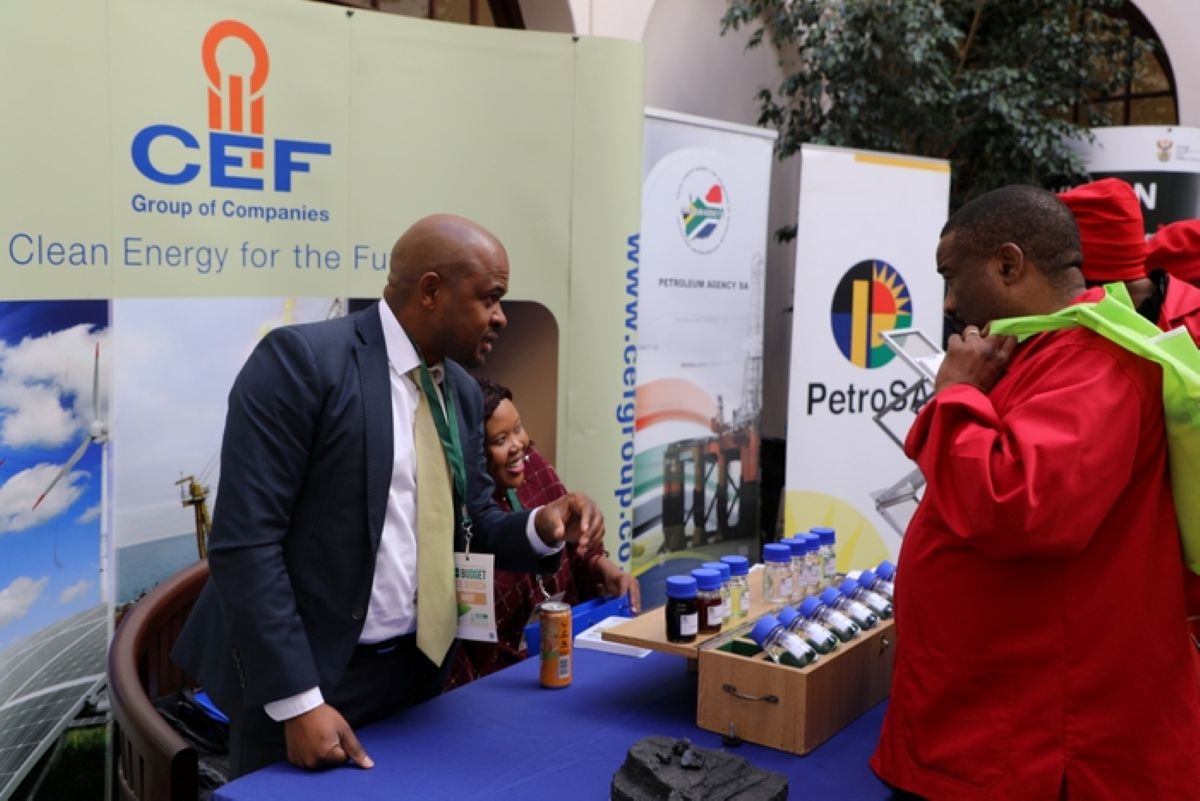
By JOHANNESBURG — The Central Energy Fund (CEF) Group presented its comprehensive five-year financial performance, operational updates, and governance outcomes to Parliament’s Portfolio Committee on Mineral and Petroleum Resources.

Against a backdrop of severe geopolitical instability, volatile oil prices, and rising domestic market pressures, the briefing laid bare a portfolio of stark contrasts: robust, cash-generative returns from entities like iGas and the Strategic Fuel Fund (SFF) sitting alongside deep, structural liquidity and operational challenges at PetroSA.
Led by Group CEO Dr Tshepo Mokoka, the state-owned energy conglomerate is leaning heavily into strategic stabilization, asset diversification, and the phased rollout of the South African National Petroleum Company (SANPC) to shore up long-term national energy security.
iGas and SFF: Pillars of Group Resilience
Despite macroeconomic headwinds, key segments of the CEF portfolio delivered stellar financial results over the five-year review period, providing essential balance-sheet buffering for the broader group.
- iGas Profit Surge: iGas recorded cumulative net profits of approximately R4.2 billion over the five-year window. Annual net profits surged by 143%, rising from R408.4 million in FY2021/22 to R993.5 million in FY2025/26. This growth was heavily underpinned by increased equity-accounted income following the acquisition of an additional 15% interest in ROMPCO, alongside robust interest income.
- Strong Balance Sheets: iGas closed out FY2025/26 with total assets of R6.2 billion, shareholder equity of R5.5 billion, and a cash balance of R1.53 billion. Its debt-to-equity ratio improved markedly from 43% in FY2022/23 down to 17% in FY2025/26.
- SFF Liquidity: The Strategic Fuel Fund (SFF) maintained an exceptionally strong liquidity and solvency posture, boasting a liquidity ratio of 24.97 and a solvency ratio of 7.59 in FY2025/26. SFF maintained average cash balances of roughly R5 billion over the period, even after absorbing approximately R2.3 billion in payments related to a Constitutional Court judgment on strategic stock transactions and channeling roughly R2 billion directly to the National Treasury.
PetroSA Under the Microscope: Navigating Severe Strain
While upstream and midstream entities performed admirably, the briefing highlighted acute distress at PetroSA, which remains under severe financial, operational, and liquidity pressures.
PetroSA’s flagship Mossel Bay Gas-to-Liquids (GTL) refinery and FA Platform have remained offline and on preservation mode since November 2020. Consequently, the entity has pivoted to a product-importing and trading model, which generates thinner margins than manufacturing and leaves the firm highly exposed to volatile international product pricing and tight funding conditions.
- Financial Strain: PetroSA reported net losses in four of the last five financial years. Operating costs ballooned from roughly R2.2 billion to R3.5 billion due to mounting labor, demurrage, maintenance, and plant-preservation expenses.
- Deteriorating Ratios: Technical insolvency is reflected in PetroSA’s negative debt-to-equity ratios, while its current ratio weakened from 1.74 in 2022 down to 0.81 in 2025. Cash reserves have dwindled, restricting working capital required to secure cargo purchases on standard credit terms.
- Legal and Creditor Pressures: PetroSA faces substantial legacy liabilities, including an outstanding South African Revenue Service (SARS) tax debt of roughly R3.6 billion (inclusive of R1.5 billion in interest and penalties), for which a revised compromise settlement proposal of R1.5 billion has been submitted. Furthermore, a provisional liquidation application filed by Nako Energy (Pty) Ltd over a disputed ~R600 million claim is currently being defended in court. A separate liquidation threat by Gunvor was successfully averted after the underlying debt was settled in August 2026 using a shareholder loan and internal cash resources.
To counter these pressures, PetroSA has launched an aggressive commercial turnaround program targeting 1.4 billion litres in sales volume for FY2026/27, aiming to restore market share through strategic SOE-to-SOE procurement channels, multi-month nominations with integrated oil companies (IOCs), and expanded jet-fuel contracts with carriers like SAA and FlySafair. Crucially, the company finalized a business case in August 2026 to reinstate the Mossel Bay GTL refinery via a phased approach, targeting an initial 18,000 barrels per day under Phase 1.
SANPC and the R130-Billion Refinery Masterplan
A cornerstone of the CEF’s parliamentary presentation centred on the ongoing operationalization of the South African National Petroleum Company (SANPC), which officially came online on May 1, 2025.
Designed to consolidate national petroleum infrastructure, SANPC is executing a Risk-Adjusted Plan backed by a CEF-led Value Realisation Office and advisory support from AT Kearney.
Addressing South Africa’s growing reliance on imported fuels—which now account for roughly 61% of domestic demand compared to just 22% in 2019—SANPC has mapped out an ambitious, multi-phase refinery development program with an estimated total investment of approximately $7.15 billion.
- Phase 1 (2026–2027): Focuses on stabilization, storage leasing, tank commercialization, fuel blending, and LPG import infrastructure, requiring an estimated $305 million.
- Phase 2 (2027–2028): Involves rail siding refurbishment, detailed feasibility studies, and regulatory approvals at an estimated cost of $45 million.
- Phase 3 (Post-FID): Envisions the construction of a full-conversion refinery yielding approximately 400,000 barrels per day, backed by an estimated capital expenditure of $6.8 billion.
Once fully realized, the ambitious program is projected to generate up to 12,500 construction jobs, 2,850 permanent operational roles, and contribute roughly R16 billion to the national GDP.
Strengthening Governance and Consequence Management
Amid strategic expansions, CEF addressed legacy governance failures head-on. The Group confirmed that internal processes concerning SFF’s strategic stock transactions have concluded, though Hawks investigations remain active. Internal forensic investigations into the Enviroshore matter—conducted by Gobodo—have concluded with recommendations for criminal proceedings, while recovery efforts continue regarding Zimbabwe/Line Petroleum diesel transactions.
Dr Mokoka emphasized that the Group remains unwavering in its commitment to ethical leadership and transparent stewardship: “Our task is to stabilise what requires stabilisation, unlock the value in our strategic assets, accelerate SANPC’s development and restore refining capability in a manner that strengthens energy security and creates sustainable value for South Africa”.