 By
By JOHANNESBURG — Bilateral diplomacy is often measured in handshakes and communiqués, but in the executive boardrooms and industrial corridors of Johannesburg, economic ties are increasingly being defined by heavy capital, local value addition, and shared industrial futures.

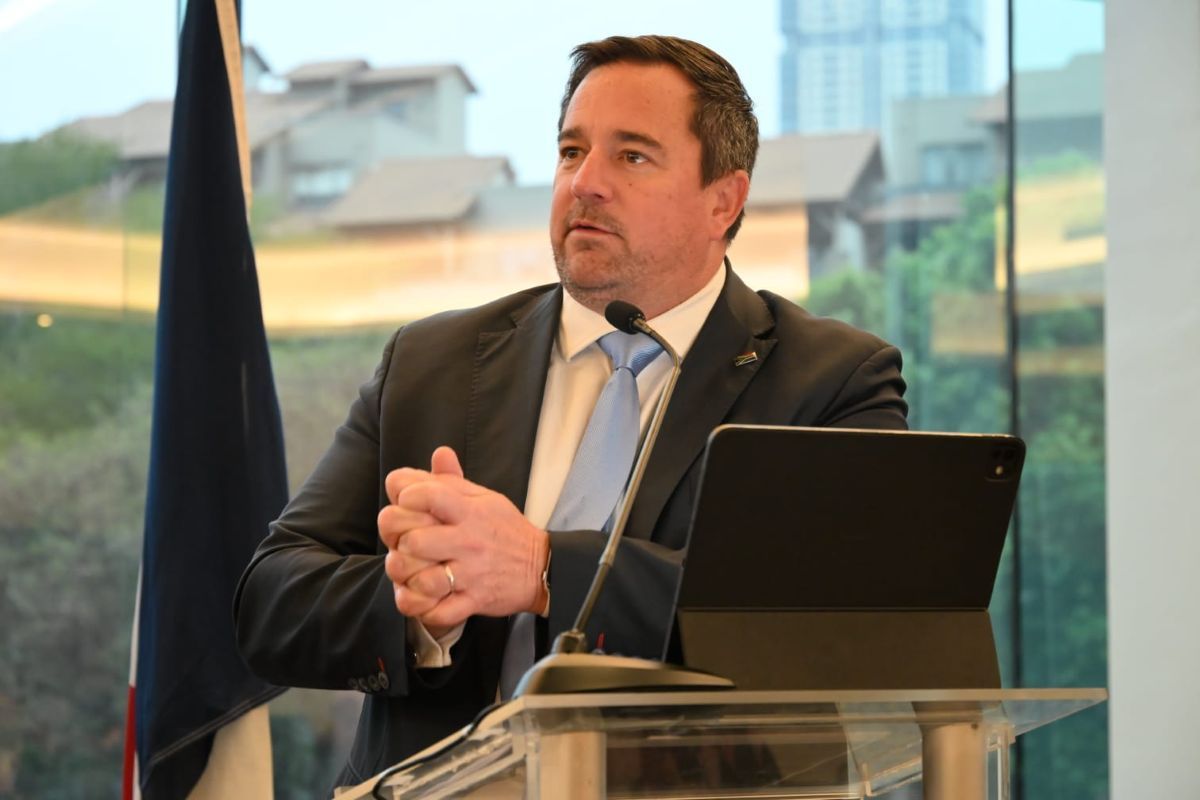
Speaking at the 5th France-South Africa Business Forum, Deputy Minister of Trade, Industry and Competition John Steenhuisen delivered a clear, pragmatic message to investors from both nations: South Africa is open for business, and the bilateral relationship must now transition from commercial announcements to tangible, integrated execution.
With bilateral trade hovering at approximately $3.4 billion Euros (roughly R65 billion) in 2024, the foundation is robust. French enterprises already maintain a formidable footprint in South Africa, anchored by more than 480 establishments that collectively sustain nearly 100,000 jobs. Yet, for economic policymakers in Pretoria, the true measure of success lies not in maintenance, but in structural evolution.
From Trade to Industrialisation and Green Transition
The economic architecture binding Paris and Pretoria is shifting away from traditional commodity-and-goods exchange toward high-value sectors: industrialisation, technology transfer, infrastructure development, and the green economy.
A prime illustration of this shift is the R2 billion investment by French agribusiness leader Soufflet Malt into a state-of-the-art malting facility in Gauteng. Such ventures signal confidence not just in South Africa’s consumer market, but in its capacity to anchor regional manufacturing and agricultural value chains.
This momentum was further underscored at the recent South Africa Investment Conference, where roughly 30 French firms pledged an impressive R20.7 billion in fresh capital commitments. Steenhuisen stressed that the imperative now is implementation—converting board-level pledges into physical plants, local employment, and export-ready outputs.
The Gateway Strategy: Europe and SADC
For South African firms looking outward, France is increasingly viewed as a vital strategic bridgehead into the broader European market, offering access to advanced technologies, institutional capital, and strategic joint ventures.
Simultaneously, South Africa is pitching itself to French investors as the premier gateway into the Southern African Development Community (SADC) and the wider African Continental Free Trade Area (AfCFTA) market. Corridor development and regional logistics integration emerged as central themes during the forum’s panel discussions. By leveraging South Africa’s advanced financial, logistics, and industrial infrastructure, foreign investors can effectively scale across the continent’s rapidly expanding consumer and industrial bases.
Building What We Share
As the global economy navigates persistent supply chain realignments and green transition imperatives, the Franco-South African economic axis offers a blueprint for North-South cooperation built on mutual industrial benefit.
As Steenhuisen aptly summarised during the forum, the next chapter of this economic relationship must be measured less by the sheer volume of what the two nations trade, and more by what they choose to build together. For businesses on both sides of the equator, the challenge—and the opportunity—is now to turn ambition into action.