
 By
By For more than a decade, Erika Gilfilin navigated a world reduced to shadows and memory. Living in isolation with failing eyesight, she faced the quiet struggles of day-to-day existence until a compassionate neighbour and local social workers intervened during the height of the COVID-19 pandemic.
Referred to the Zanele Mbeki Frail Care Centre in Nigel, Erika stepped into a strange new environment that would eventually transform her life.

As a health journalist, I have often witnessed how institutional care can serve as a mere safety net. Yet, stories like Erika’s remind us that facilities such as the Zanele Mbeki Frail Care Centre can transcend basic sheltering to become crucibles of deep human healing, dignity, and resilience.
A Sanctuary Through Storms
Erika’s early days at the facility were far from easy. Placed into an isolation room under strict pandemic protocols, she was cut off from familiar surroundings at a time when she was already grappling with profound vulnerability. Social worker Mihloti Shilubane noted that Erika was heavily burdened by the cumulative weight of losing her vision and managing life independently.
However, time and unwavering compassion turned the tide. The centre evolved into a tight-knit community where Erika found surrogate family and steadfast emotional support. That support was tested to its absolute limits when tragedy struck: Erika received the devastating news that her son had died by suicide shortly after being released from prison.
Confined by her circumstances and grief, she could not participate fully in funeral arrangements, save for the painful task of being assisted to identify his body.
“My late son was arrested for committing a crime, and when he was released from prison, they told me he had committed suicide when he arrived home,” Erika shared, her voice heavy with lingering heartbreak. “Even today, I ask myself why he did it because I was looking forward to spending my remaining days with him.”
The Miracle of Sight
Despite navigating this profound emotional abyss, Erika was cocooned by the love of the centre’s staff and residents. Then came the turning point that would alter the physical landscape of her life. Through the intervention and coordination of the centre’s dedicated team, Erika was connected with specialized medical care for cataract surgery.
After more than ten years enveloped in visual darkness, the surgery was a resounding success. Light flooded back into her world.
For social worker Mihloti Shilubane, the reunion following the procedure remains etched in emotion. “The first time we met after her surgery, we both cried and hugged each other,” Shilubane recalled. “It was an incredibly emotional moment.”
Reclaiming Dignity and Independence
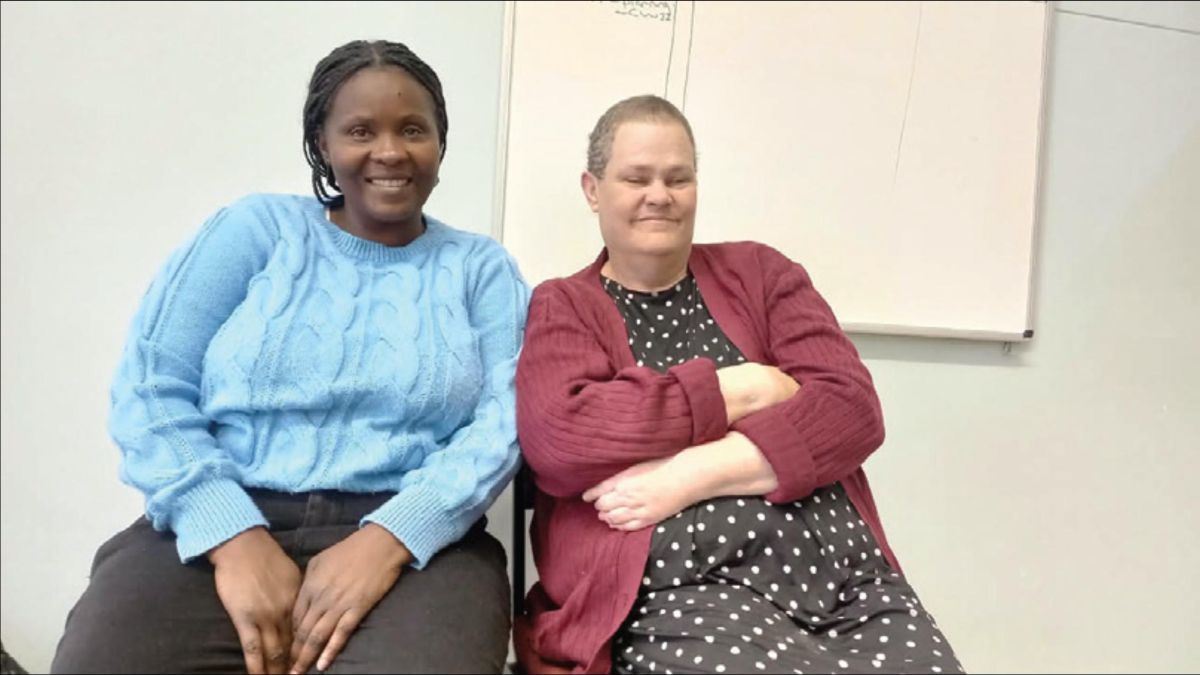
The restoration of Erika’s sight unlocked a profound psychological and physical rebirth: independence. No longer confined to asking for continuous assistance, she moves through the corridors with newfound confidence. She proudly demonstrates her self-reliance, walking hand-in-hand with her roommate and close friend, Hester Themistocles, to their shared room.
For Themistocles, witnessing Erika’s transformation has been a source of immense joy. “I am happy to see Erika doing things for herself,” Themistocles noted. “Before, I had to take her to the bathroom at night and assist her with many things.” Their bond has since evolved into a true partnership built on mutual care, understanding, and shared triumph.
The Vital Role of Community Care
Erika’s journey shines a powerful light on the indispensable value of public and residential care facilities. Far beyond offering a roof over vulnerable heads, institutions backed by the Gauteng Department of Social Development provide comprehensive health access, restore human dignity, and foster life-affirming companionship.
Though Erika still maintains deep ties to her personal history—including children living in the Free State—the relationships she has forged at the Zanele Mbeki Frail Care Centre have become an indelible cornerstone of her existence.
Erika’s transition from the isolating darkness of physical blindness and profound grief to a life illuminated by sight and self-reliance stands as a testament to the human spirit. With the right medical intervention, professional dedication, and a compassionate community, new beginnings are possible at any stage of life.